US-Iran Talks: Trump Weighs Diplomacy Over Renewed Military Action
White House reviews options on Tehran policy while extending space for nuclear negotiations and avoiding wider regional escalation.
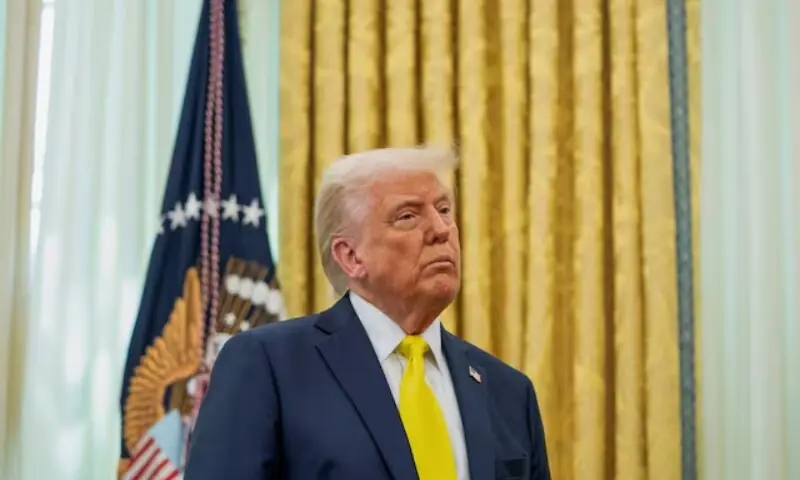
Donald Trump reviews US policy options as negotiations with Iran continue.
WASHINGTON: US President Donald Trump has reviewed options for future policy towards Iran, including whether to continue diplomatic negotiations or consider broader military action, according to a report published by the Wall Street Journal.
The report, citing US officials familiar with internal discussions, said Trump has been briefed on scenarios involving a possible return to wider military confrontation. However, for now, he has chosen to continue diplomatic engagement with Tehran.
Senior national security officials, including Defence Secretary Pete Hegseth and Joint Chiefs Chairman Gen. Dan Caine, reportedly took part in discussions assessing whether Washington should end negotiations and pursue military escalation.
Some officials involved in the internal debate described the tougher approach as an effort to “finish the job”, according to the report
Lahore Roof Collapse: Tuition Centre Tragedy Kills 14 Children.
Despite renewed pressure from some advisers, Trump has not made a final decision and is understood to favour keeping negotiations alive. Officials said the administration believes large-scale military action could undermine fragile progress on Iran’s nuclear programme.
The report also said Trump has indicated flexibility over the timeline for diplomacy and is willing to allow talks to continue beyond the previously referenced August 18 deadline.
Officials cited in the report said the administration wants to avoid committing itself to a rigid timetable while negotiations remain active.
At the same time, Washington is reportedly keeping limited military options available. These include targeted responses to any Iranian actions that breach understandings designed to preserve regional stability.
Indirect negotiations are continuing through mediation efforts in Doha. According to the report, US representatives Steve Witkoff and Jared Kushner are present for a new round of discussions, although Iran has rejected direct engagement with Washington in Qatar.
One of the main areas of disagreement remains Iran’s proposal to introduce service charges on commercial shipping moving through the Strait of Hormuz, one of the world’s most strategically important energy routes.
The United States has opposed the proposal and maintains that maritime traffic should continue under established international transit principles.
US Energy Secretary Chris Wright reportedly said Iran had shown limited cooperation in broader discussions while arguing that American naval operations had helped maintain stability in global energy markets.
Officials also confirmed the existence of an active crisis communication channel between the Islamic Revolutionary Guard Corps and US Central Command to reduce the risk of accidental escalation during ongoing tensions.
Analysts quoted in the report said Washington still has alternatives to direct military action, including economic pressure and financial measures linked to Iranian assets.
However, they warned that such tools may offer limited progress if fundamental disputes over Iran’s nuclear programme and regional influence remain unresolved.
The latest developments highlight continuing divisions inside Washington over how to balance diplomacy with military deterrence while avoiding a wider conflict in the Middle East.