Sindhri Mangoes: Disease, Export Delays and Weak Demand Deepen Crisis for Sindh Growers
Crop disease, pest attacks, market disruptions and export challenges leave contractors and orchard owners facing mounting losses across Sindh.
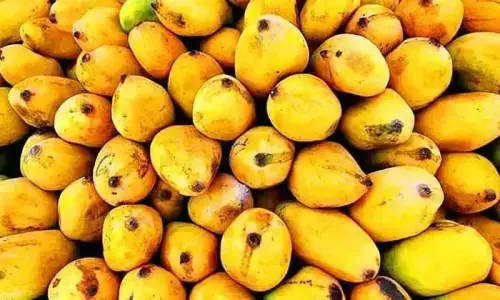
Harvested Sindhri mangoes at an orchard in Sindh amid concerns over quality and market conditions.
Sindh’s mango industry is facing renewed pressure this season as disease outbreaks, pest attacks, weak market demand and export disruptions combine to reduce quality and profitability for growers and contractors.
At a mango orchard near Hyderabad in Tandojam, contractor Jam Siraj expressed frustration over the condition of harvested Sindhri mangoes. Looking over piles of fruit marked by uneven ripening and blackening scars, he said much of the produce was unlikely to secure competitive prices in the market.
Siraj, a contractor from Punjab working under agreements with orchard owners in lower Sindh, said deteriorating fruit quality and difficult trading conditions had significantly reduced returns.
Operation Ghazb Lil Haq: Security Forces Target Militant Hideouts Across Afghan Border Regions
He attributed losses to disease and pest pressure on Sindhri mangoes, combined with reduced market access following the closure of the Afghanistan border. According to him, some contractors abandoned orchard agreements midway after concluding they could not recover production and marketing costs.
Industry stakeholders said unusual weather patterns linked to climate variability contributed to disease outbreaks and later intensified pest attacks. Contractors and orchard owners increased chemical spraying after early signs of hopper infestations appeared, but losses remained significant.
Growers identified mango malformation — locally known as batoor — as one of the most damaging diseases affecting orchards during the flowering season. The disease weakens flowering and creates conditions that increase vulnerability to pests including hopper and thrips.
Farmers reported that disease pressure has affected fruit appearance, size and quality, resulting in a larger share of second-grade produce that attracts lower market prices.
According to figures from the Sindh Agriculture Research Department, orchard acreage declined to 58,900 hectares in 2025 from 62,455 hectares in 2016.
Mahmood Nawaz Shah, president of the Sindh Abadgar Board, described this season’s pest attacks as unusual and said mango malformation remains difficult to control. He stressed the need for stronger agricultural research and evidence-based responses to emerging production challenges.
Marketing conditions have also intensified pressure on growers. Contractors and traders linked market oversupply to delayed exports, weaker regional demand and the continued closure of trade routes to Afghanistan. Consumers, however, benefited from relatively lower retail prices.
Multan-Lodhran Road: Rs4.6bn Approved to Launch Highway Dualisation Within a Month
Contractors reported that lower-grade fruit sold at prices insufficient to cover production costs, while commission agents in Hyderabad observed that Sindhri mango prices remained below last year’s levels due to abundant supply.
Orchard owners are now considering changes to cultivation practices. Some growers plan to reduce tree height and improve canopy management to increase airflow, improve sunlight exposure and enhance spray effectiveness.
Export performance also became a point of debate within the industry. Some growers argued that delayed export openings contributed to oversupply, while exporters maintained that international demand, fruit maturity standards and shipping disruptions linked to instability in the Middle East played a greater role.
Exporters added that improving fruit quality, appearance and size remains essential for increasing export volumes and strengthening Pakistan’s competitiveness in international mango markets.