Pakistan Iran Must Build New Economic Architecture Says Murad Nemati in Karachi
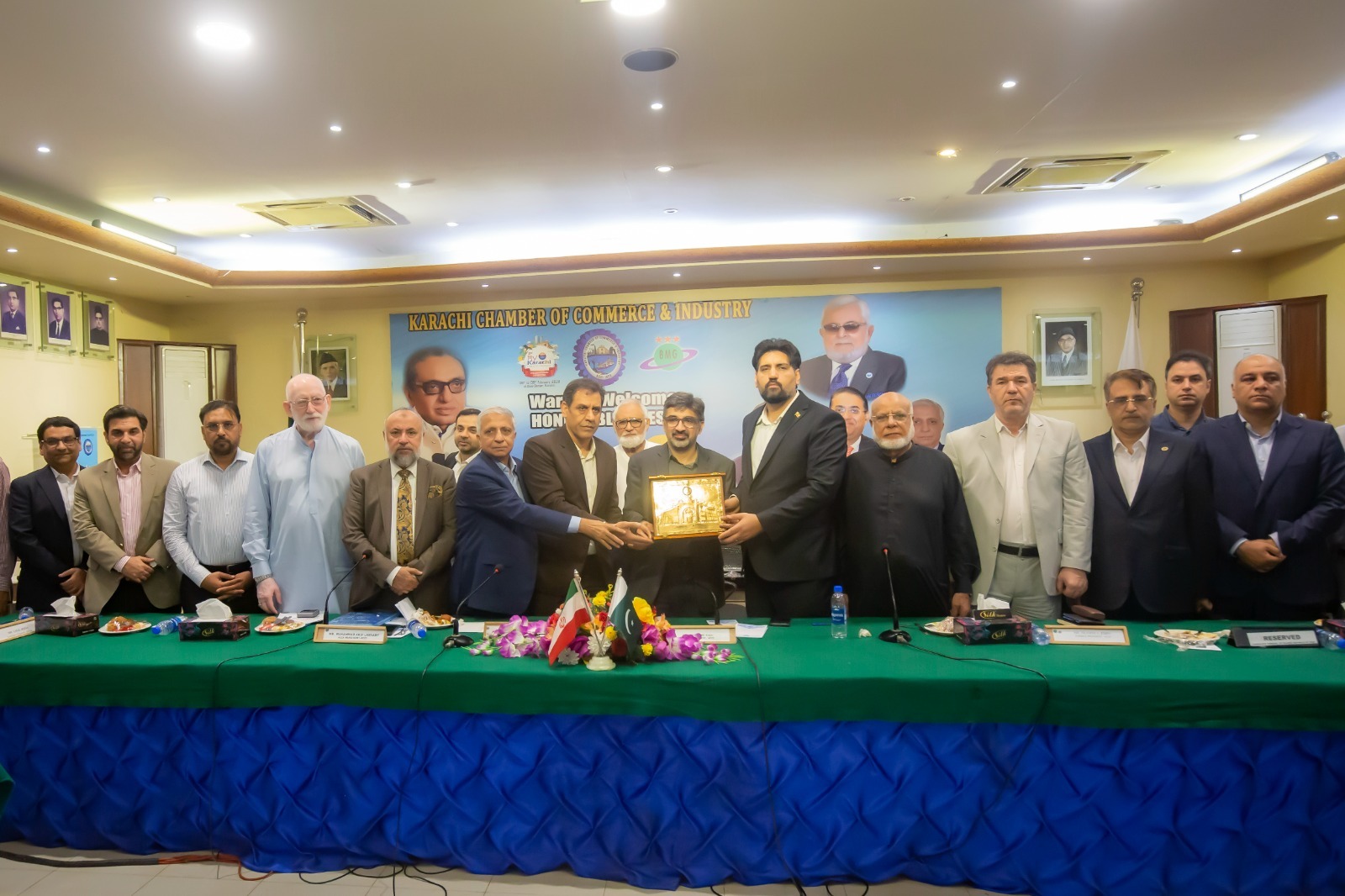
Pakistan and Iran business leaders discuss trade connectivity and joint ventures during KCCI meeting in Karachi.
Pakistan Iran trade relations require a new economic structure based on connectivity and joint ventures.
The Pakistan Iran trade dialogue in Karachi focused on long-term regional cooperation and investment growth.
The discussion took place at the Karachi Chamber of Commerce & Industry.
It brought together business leaders, diplomats, and trade officials from both countries.
Moreover, the talks emphasized shifting from traditional trade to strategic partnerships.
As a result, both sides expressed optimism about future economic integration.
Mohammad Ali Haider Welcomes Iranian Delegation for LPG Pakistan Deal in Karachi
Murad Nemati calls for economic shift
Murad Nemati stressed the need for a new economic architecture.
He stated that Pakistan Iran trade must evolve into joint ventures and connectivity-based cooperation.
He appreciated Pakistan’s support during challenging regional circumstances.
Additionally, he highlighted historical brotherhood between the two nations.
He remarked that mutual trust remains strong despite geopolitical challenges.
Therefore, he called for deeper industrial and commercial integration.
His remarks reflected a push for long-term strategic alignment.
KCCI hosts Iranian delegation
The meeting was held at Karachi Chamber of Commerce & Industry.
A trade delegation from Khorasan Razavi Province of Iran attended the session.
The delegation was led by Mohsen Fallah.
Officials from both sides discussed trade expansion opportunities.
Furthermore, they explored ways to improve bilateral connectivity.
The session was attended by business leaders and chamber members.
It aimed to strengthen Pakistan Iran trade cooperation.
Muhammad Raza supports strategic shift
Muhammad Raza emphasized the need for strategic partnerships.
He stated that Pakistan Iran trade must move beyond simple buyer-seller relations.
He highlighted current regional uncertainties and emerging opportunities.
Additionally, he expressed optimism about long-term regional stability.
He noted that stronger cooperation could unlock untapped economic potential.
Therefore, he urged deeper industrial collaboration between both countries.
His remarks focused on future-oriented economic planning.
Pakistan Iran connectivity focus
Speakers stressed improving connectivity between key trade hubs.
They specifically mentioned Karachi, Gwadar, Bandar Abbas, and Chabahar.
Better infrastructure was identified as essential for trade expansion.
Moreover, customs and logistics reforms were strongly recommended.
Both sides agreed that smoother trade routes would boost efficiency.
Consequently, Pakistan Iran trade could expand significantly.
This connectivity vision aims to strengthen regional economic corridors.
Joint ventures and industrial growth
Participants highlighted the importance of joint ventures in multiple sectors.
They stressed mining, manufacturing, IT, and SME development.
Karachi Chamber of Commerce & Industry reaffirmed support for business partnerships.
It also proposed greater delegation exchanges between the two countries.
Furthermore, speakers emphasized investment-friendly policies and cooperation.
They noted that joint ventures could generate long-term economic benefits.
Thus, industrial collaboration remains a key pillar of Pakistan Iran trade.
Regional trade and future outlook
The meeting concluded with optimism about future Pakistan Iran trade growth.
Both sides agreed that stronger economic ties would benefit regional stability.
Speakers emphasized that political challenges should not block trade progress.
Additionally, they highlighted the importance of institutional cooperation.
The Iranian side pledged continued engagement with Pakistani stakeholders.
Therefore, both countries aim to build a more integrated economic future.
The discussion marked a step toward deeper bilateral economic transformation.