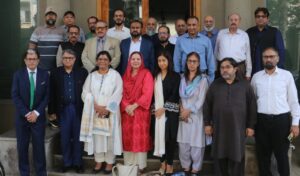
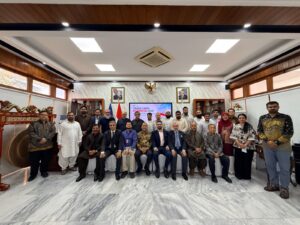
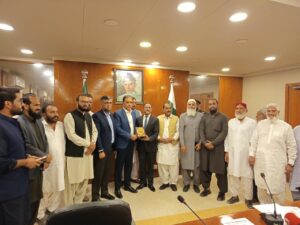
FPCCI Hosts High-Level Iranian Trade Delegation, Eyes $10 Billion Bilateral Trade Target
Web Desk May 12, 2026KARACHI: Federation of Pakistan Chambers of Commerce and Industry (FPCCI) hosted a high-level Iranian trade and government delegation at Federation House in Karachi, with business leaders from both countries expressing confidence that bilateral trade between Pakistan and Iran could reach $10 billion in the coming years.
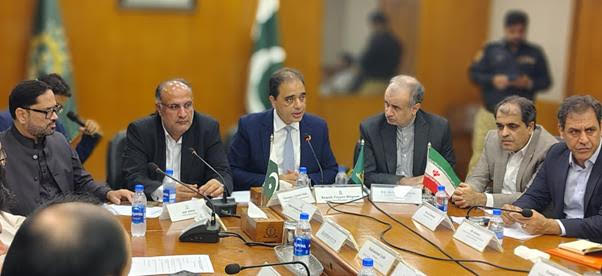
KARACHI: Federation of Pakistan Chambers of Commerce and Industry (FPCCI) hosted a high-level Iranian trade and government delegation at Federation House in Karachi, with business leaders from both countries expressing confidence that bilateral trade between Pakistan and Iran could reach $10 billion in the coming years.
Pakistan-China Economic Relations Enter New Sustainable Era, Says Malik Muhammad Bostan
Speaking on the occasion, Atif Ikram Sheikh said the visit marked an important step toward expanding economic cooperation and strengthening cross-border trade ties between the two neighboring countries.
He stated that after detailed business-to-business (B2B) meetings and policy-level discussions, FPCCI leadership believes the $10 billion trade target is achievable through strategic coordination, removal of technical trade barriers, and enhanced regional connectivity.
The Iranian delegation included Hasani, Akbar Eissa Zadeh, and Mohammad Saeed Arbabi, along with prominent Iranian business representatives.
Saquib Fayyaz Magoon said the discussions mainly focused on immediate commercial opportunities in sectors including logistics, transportation, maritime connectivity, rice exports, and halal meat trade.
He emphasized that achieving the projected trade target would require the full operationalization of barter trade systems and regional trade mechanisms between the two countries.
Abdul Mohamin Khan highlighted the importance of direct B2B connections and secure alternative payment systems to reduce business costs and overcome existing trade bottlenecks.
Meanwhile, Nasir Khan stressed the need for regional maritime and logistics integration, urging both countries to view Gwadar Port and Chabahar Port as complementary trade hubs rather than competitors.
He said integrated logistics and transport strategies could transform the region into a major global transit and trade corridor while supporting joint industrial projects.
Asif Sakhi highlighted Pakistan’s export potential in agriculture and food sectors, stating that Pakistan’s premium rice and halal meat industries are capable of meeting Iran’s growing food demands.
He called on authorities from both countries to simplify customs procedures, modernize border management systems, and ensure uninterrupted cold-chain logistics to facilitate smoother trade flows.
The visit concluded with a consensus on establishing dedicated follow-up mechanisms to strengthen B2B cooperation and accelerate bilateral trade initiatives.
FPCCI reaffirmed its commitment to pursuing the $10 billion trade target through sustained economic diplomacy and active private-sector engagement.