Pakistan Awaits Tehran’s Revised Proposal as Iran–US Talks Stall Amid Escalating Tensions and Oil Disruption
Pakistan Awaits Tehran’s Revised Proposal as Iran–US Talks Stall Amid Escalating Tensions and Oil Disruption
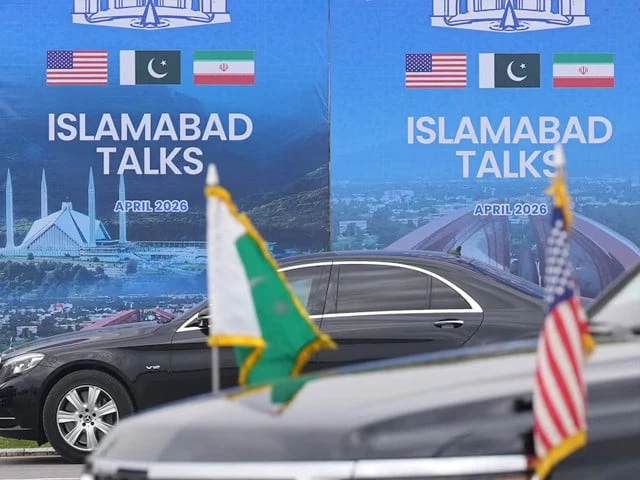
ISLAMABAD: Diplomatic efforts mediated through Pakistan between Iran and the United States have failed to produce a breakthrough, with Islamabad now awaiting a revised set of proposals from Tehran aimed at ending the ongoing conflict that has disrupted global oil flows and heightened economic uncertainty.
According to diplomatic developments, initial exchanges between Tehran and Washington—facilitated through Pakistani backchannels—did not succeed in bridging key differences, leaving negotiations at a standstill. Officials indicate that Pakistan continues to play a mediating role, but progress now depends on Iran’s next response.
Mixed signals from Washington and Tehran
Amid stalled diplomacy, messaging from both sides remains sharply contrasting. US President Donald Trump issued a series of posts on his Truth Social platform, including a warning to Iran and a stylized image portraying himself with a firearm and aviator sunglasses accompanied by the phrase “NO MORE MR. NICE GUY.”
In another post, Trump said Iran “can’t get their act together” and warned that Tehran must move quickly toward a non-nuclear agreement, suggesting frustration over the lack of progress in talks.
Despite the rhetoric, diplomatic sources suggest that backchannel communications remain active in an effort to prevent further escalation in the region.
Pakistan confirms mediation efforts
Prime Minister Shehbaz Sharif, speaking to the federal cabinet, provided rare public details of Pakistan’s mediation role, confirming that communication has taken place between Iranian Foreign Minister Abbas Araghchi and Islamabad.
The prime minister said Araghchi had visited Islamabad twice before engaging in further discussions in Oman and Russia, and later spoke directly with him by telephone.
“He assured that after consultations with the leadership, a detailed response would be shared soon,” Shehbaz Sharif said, indicating that Tehran’s formal reply on a potential settlement is still awaited.
Pakistan’s stance at the United Nations
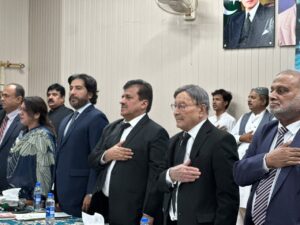
Separately, Pakistan reiterated its diplomatic position at the United Nations Security Council, calling for respect for international law and peaceful resolution of disputes in the Middle East.
Pakistan’s Permanent Representative to the UN, Ambassador Asim Iftikhar Ahmad, said the unresolved Palestine issue remains the core driver of regional instability.
He stated that more than 800 Palestinians had been killed since the ceasefire announcement, urging full respect for the truce and immediate, unhindered humanitarian assistance.
“The only viable path to lasting peace is a two-state solution and the end of occupation,” he said, stressing that stability in the region cannot be achieved without addressing the root cause of the conflict.
Ongoing uncertainty
With oil markets already under strain and regional tensions elevated, analysts say the stalled Iran–US dialogue is contributing to global economic uncertainty. Pakistan’s mediation efforts remain active, but officials acknowledge that the next move now rests with Tehran’s revised proposal.