US Vice President JD Vance Arrives in Pakistan for Historic Talks with Iran
US Vice President JD Vance Arrives in Pakistan for Historic Talks with Iran
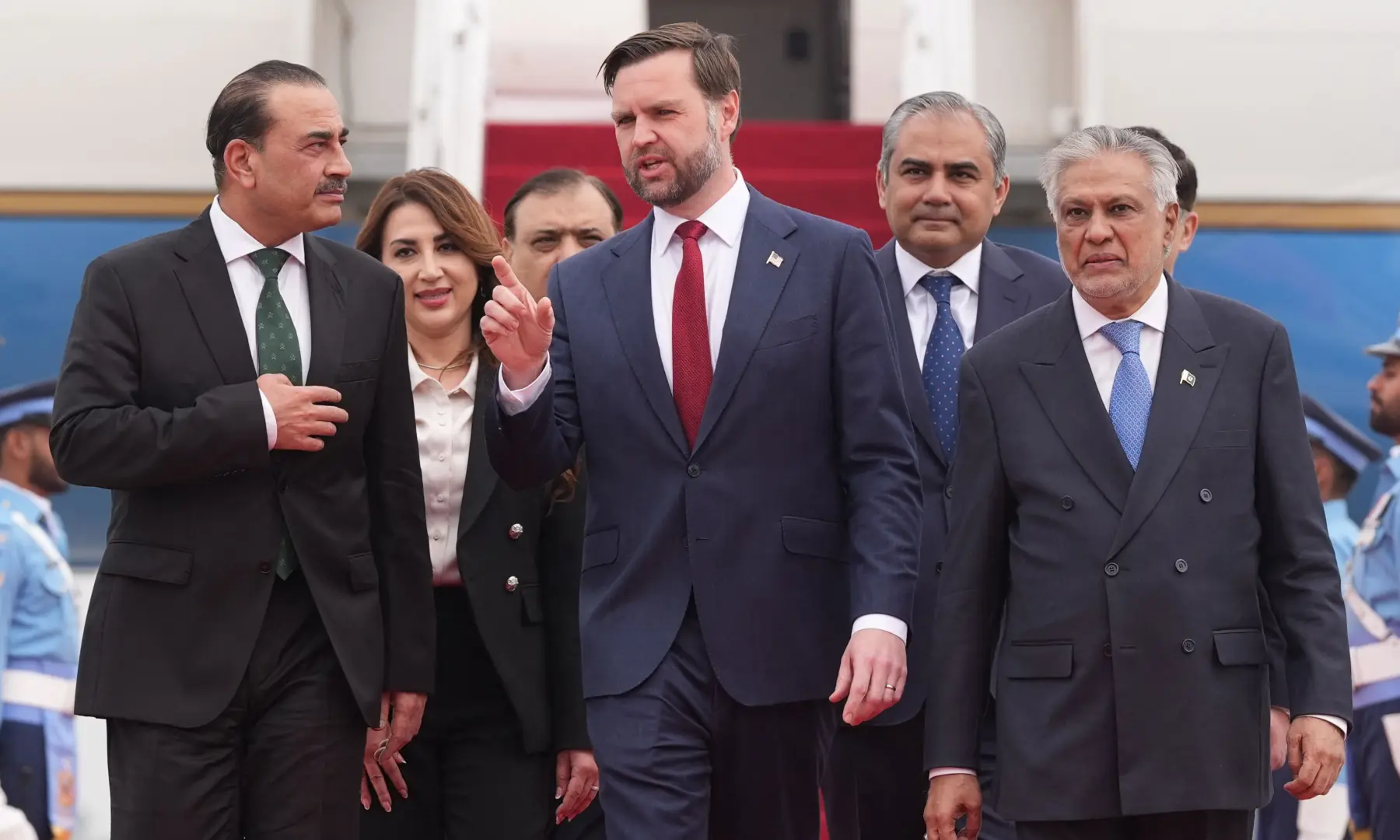
ISLAMABAD: JD Vance arrived in Pakistan on Saturday morning, leading a high-level United States delegation for landmark negotiations with Iranian leadership aimed at turning a fragile ceasefire into a lasting peace agreement.
SSGC Announces 24-Hour Gas Suspension for Industrial Sector in Karachi
The talks come in the wake of a six-week conflict between the US and Iran, which began on February 28 and triggered widespread instability across the Middle East. A temporary ceasefire was brokered on April 8 with Pakistan playing a key mediating role.
Upon arrival at Nur Khan Air Base, Vance was received by Ishaq Dar, Asim Munir, and Mohsin Naqvi. Pakistan’s Foreign Office said the leadership welcomed the US commitment to regional peace and expressed hope for constructive engagement.
The Iranian delegation, led by Mohammad Bagher Ghalibaf, also reached Islamabad after initial hesitation over continued Israeli strikes in Lebanon. Tehran had made a halt in attacks on Lebanon a precondition for participation in the talks.
Senior US officials, including Jared Kushner and Steve Witkoff, are part of the delegation, while Iran’s team includes Foreign Minister Abbas Araghchi.
The negotiations mark the first direct high-level engagement between Washington and Tehran in decades, underscoring the urgency of de-escalation following a conflict that has had severe human and economic consequences globally.
However, key challenges remain. Iran insists that any ceasefire must extend to all fronts, including Hezbollah, while the US maintains that the Lebanon situation falls outside the scope of the truce. The disagreement continues to threaten progress.
Ahead of the talks, Iran demanded a formal ceasefire in Lebanon and the release of billions in frozen assets as confidence-building measures. Meanwhile, US President Donald Trump warned that military options remain on the table if diplomacy fails.
The agenda is expected to cover critical issues such as Iran’s nuclear programme, sanctions relief, regional security, and navigation in the Strait of Hormuz. Analysts believe immediate breakthroughs are unlikely, but the talks could lay the groundwork for sustained dialogue.
Prime Minister Shehbaz Sharif termed the talks a vital opportunity to resolve disputes through diplomacy, while acknowledging the complexities involved.
With tensions still high and trust limited, the Islamabad dialogue is being closely watched as a crucial test of diplomacy in a volatile region.