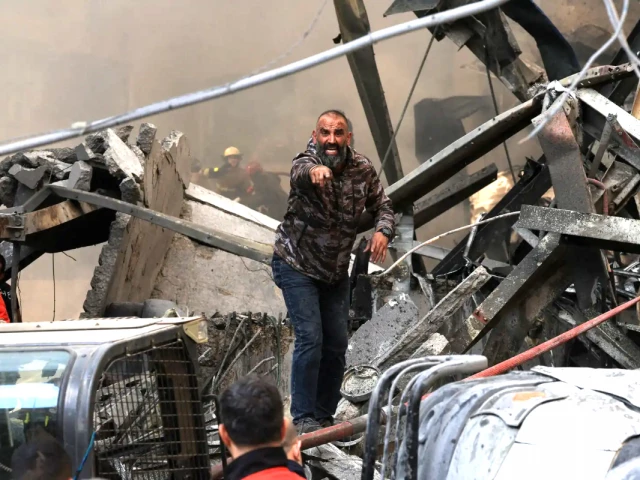
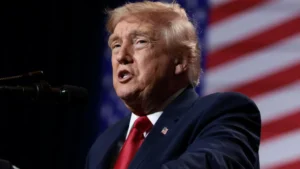
Israel intensified its military campaign in Lebanon on Thursday, carrying out the largest strikes of the ongoing war and killing over 250 people, threatening to derail the United States-Iran ceasefire brokered by President Donald Trump. The attacks have cast doubt over the inclusion of Lebanon in the truce, a point of dispute between Israel, the U.S., Iran, and Pakistan, which mediated the ceasefire.
Karachi to Host Global Conference on Quality Assurance in Higher Education
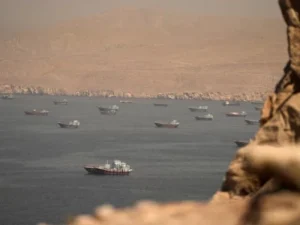
Daily shipping traffic through the Strait of Hormuz remains at less than 10% of normal levels, with only a single oil tanker and five dry bulk carriers passing through in the first 24 hours of the ceasefire. Tehran has signaled no intention of lifting its near-total blockade of the strait while Israeli attacks on Lebanon continue.
Israel maintains that the ceasefire does not cover Lebanon, citing its ongoing operations against Hezbollah, while Iran and Pakistan insist that Lebanon is explicitly part of the agreement. Iran’s Parliament Speaker Mohammad-Bagher Ghalibaf emphasized that Lebanon and other regional allies are inseparable from any viable ceasefire.
Inside Iran, the halt to six weeks of US-Iran airstrikes has been portrayed as a major victory by state media. Huge crowds observed 40 days of mourning for former Supreme Leader Ayatollah Ali Khamenei, who was killed at the start of the war, with Iranian flags, portraits of Khamenei, and Hezbollah banners displayed across major cities.
Despite Trump’s declaration of a truce, Washington has not achieved its initial objectives, which included eliminating Iran’s ability to attack neighbors, dismantling its nuclear program, and weakening its government. Iran retains significant missile and drone capabilities, along with over 400 kilograms of near weapons-grade uranium, and has demonstrated effective control over the Strait of Hormuz despite the U.S. military presence.
Iran is pushing for additional concessions in final negotiations, including a total lifting of sanctions and recognition of its control over the strait, while the U.S. continues to demand a halt to uranium enrichment, a reduction in missile capabilities, and an end to support for regional allies. The Iranian Revolutionary Guards issued maps marking major shipping channels as unsafe, directing vessels closer to the Iranian coast and potentially imposing tolls.
The situation in Lebanon has sparked international concern, with countries including Britain, France, and Pakistan calling for the ceasefire to fully cover Lebanon. The conflict continues to drive energy prices to record highs, with European and Asian refineries paying nearly $150 per barrel for physical oil deliveries, and U.S. diesel prices reaching $5.69 a gallon.