NASA Launches Artemis II, Sending Astronauts on Historic Moon Flyby
Four astronauts blasted off from Florida on NASA’s Artemis II mission, a landmark crewed flight around the moon that marks the United States’ boldest push toward returning humans to the lunar surface.
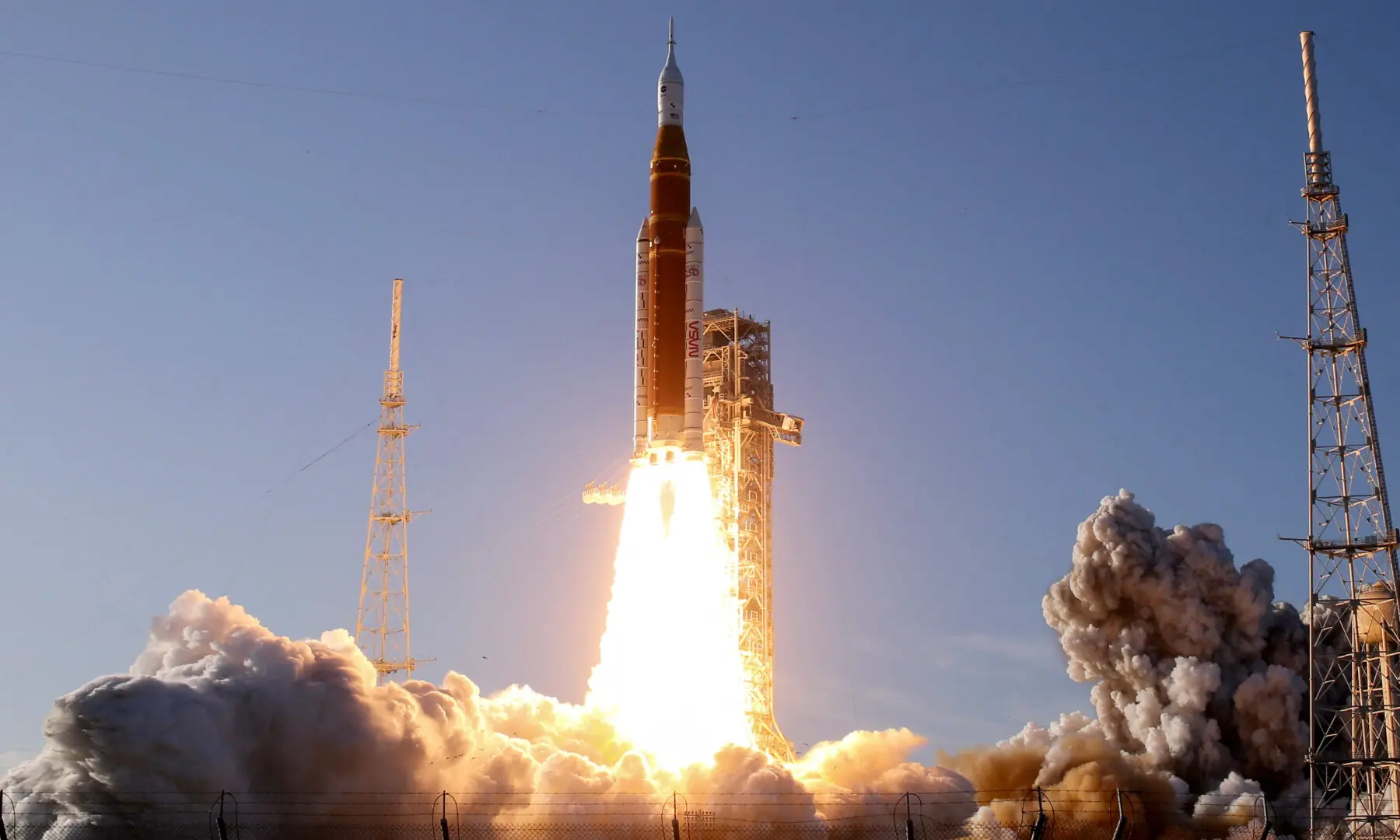
Four astronauts blasted off from Florida on NASA’s Artemis II mission, a landmark crewed flight around the moon that marks the United States’ boldest push toward returning humans to the lunar surface.
SpaceX Files for IPO, Eyeing Potential $75 Billion Public Offering
The Space Launch System (SLS) rocket, carrying the Orion crew capsule, lifted off from Kennedy Space Center just before sunset, sending astronauts Reid Wiseman, Victor Glover, Christina Koch, and Canadian Space Agency astronaut Jeremy Hansen into orbit. The 32-story-tall rocket roared through clear skies, leaving behind a towering trail of white vapour.
“This is an opening act for future missions, including building a sustainable moon base,” said NASA Administrator Jared Isaacman, emphasizing the mission’s role in establishing a long-term lunar presence.
The nearly 10-day mission will take the crew farther from Earth than humans have traveled in more than five decades, testing Orion’s systems while orbiting the moon. Artemis II is the first crewed flight in NASA’s Artemis program, which succeeds the Apollo missions and sets the stage for a planned South Pole moon landing in 2028, potentially ahead of China’s lunar mission projected for 2030.
Minutes before launch, astronaut Hansen told mission control: “This is Jeremy, we are going for all humanity.” Launch director Charlie Blackwell-Thompson praised the crew, saying they carry “the hopes and dreams of a new generation.”
The mission has already achieved key milestones: the SLS rocket’s upper stage successfully separated, and the astronauts began manually testing Orion’s maneuvering capabilities. The flight validates NASA’s new launch system and reassures contractors Boeing and Northrop Grumman that SLS is ready for crewed missions.
Artemis II will take astronauts roughly 406,000 kilometers (252,000 miles) from Earth, surpassing Apollo 13’s previous record of 248,000 miles. The mission will also test Orion under operational conditions before Artemis III, NASA’s first planned crewed moon landing.
President Donald Trump praised the launch, calling the astronauts “brave people” and wishing them Godspeed.
The Artemis program, initiated in 2017, is a multibillion-dollar venture aiming to establish a permanent lunar presence and serve as a stepping stone for future Mars missions.