Virginia Lt. Governor Ghazala Hashmi calls for inclusion of US Muslims during Ramazan
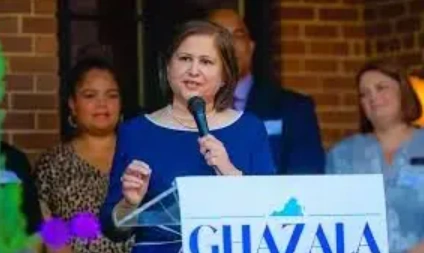
Virginia Lt. Governor Ghazala Hashmi calls for the inclusion of American Muslims during Ramazan, emphasizing resilience and community engagement in her inspiring message.
WASHINGTON: In the US capital, the first week of Ramazan is unfolding with the familiar quiet of fasting and prayer — accompanied by a clear message: American Muslims will not be defined by fear or exclusion.
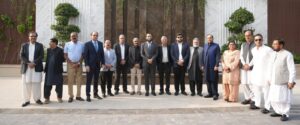
That message resonated on a Saturday night Iftar hosted by the Pakistani American Press Association, where Ghazala Hashmi, the 43rd lieutenant governor of Virginia, spoke about her journey into politics.
She recounted that she had never planned to run for office, but the 2016 proposal for a Muslim registry during Donald Trump’s campaign made her realise the country was moving in the wrong direction.
When she first ran for the Virginia Senate in 2019, she was told she was “not the right type” and that nobody would vote for her. Yet she defeated a Republican incumbent by more than 10 points, a sign, she said, that voters were ready for change.
She remained in the Senate, focusing on education, before running for lieutenant governor in 2024 — a campaign that culminated in her becoming the first Muslim woman elected to statewide office in the United States.
“Virginia is a place that is changing,” she told the audience.
“It is inclusive. A state that was once the capital of the Confederacy has shown that it does not care about race or religion. Muslims also have the right to speak about our faith and values, and every community feels represented here.”
Speakers at the gathering drew connections between her political success and the spirit of Ramazan.
Community leader Ghulam Nabi Fai described her rise as “an inspiration for all”.
Highlighting Islam’s inclusiveness, he said Ramazan was “a month of blessing for all — Muslims and non-Muslims alike, even for those who have not been kind to you”.
Pakistan’s Ambassador to the United States, Rizwan Saeed Sheikh, called Ghazala Hashmi “the living example” of what can be achieved by refusing to retreat in the face of obstacles.
He added: “This is a great accomplishment, but it is not the end — it is the beginning.”
The significance of her victory “can only be fully realised if you integrate yourself into the political and economic mainstream”, he said. “Following the path Ms Hashmi has shown is advisable, prudent and wise.”
The first days of fasting carried that spirit of inclusiveness into homes, mosques, and community halls across the US capital. As sunset approached, Muslims prepared to break their fast with dates and water, pausing to offer Maghrib prayers in quiet reflection.
Muslim communities in Virginia, Washington, and Maryland have set up food distribution centres across the region, providing free groceries and meals. Most recipients do not share the Islamic faith.
Even as Washington moved at its usual hurried pace, the city’s mosques and community centres became spaces of both devotion and affirmation. The act of fasting — coupled with the knowledge of a historic political achievement — lent the day a sense of resilience and belonging.
At interfaith Iftars across the city, neighbours of other faiths were invited to witness the breaking of the fast and learn about Islam, reinforcing the message that American Muslims are present, participating, and unapologetically part of public life.
For a community that has long navigated moments of suspicion and exclusion, the first week of Ramazan in Washington this year was more than spiritual — it was also a quiet, visible assertion: Muslims fast, pray, serve, and belong, and they refuse to be defined by fear or marginalisation.