Adaptive Beta-Cell Resilience: Argentina’s Breakthrough in Diabetes Treatment and Its Global Impact
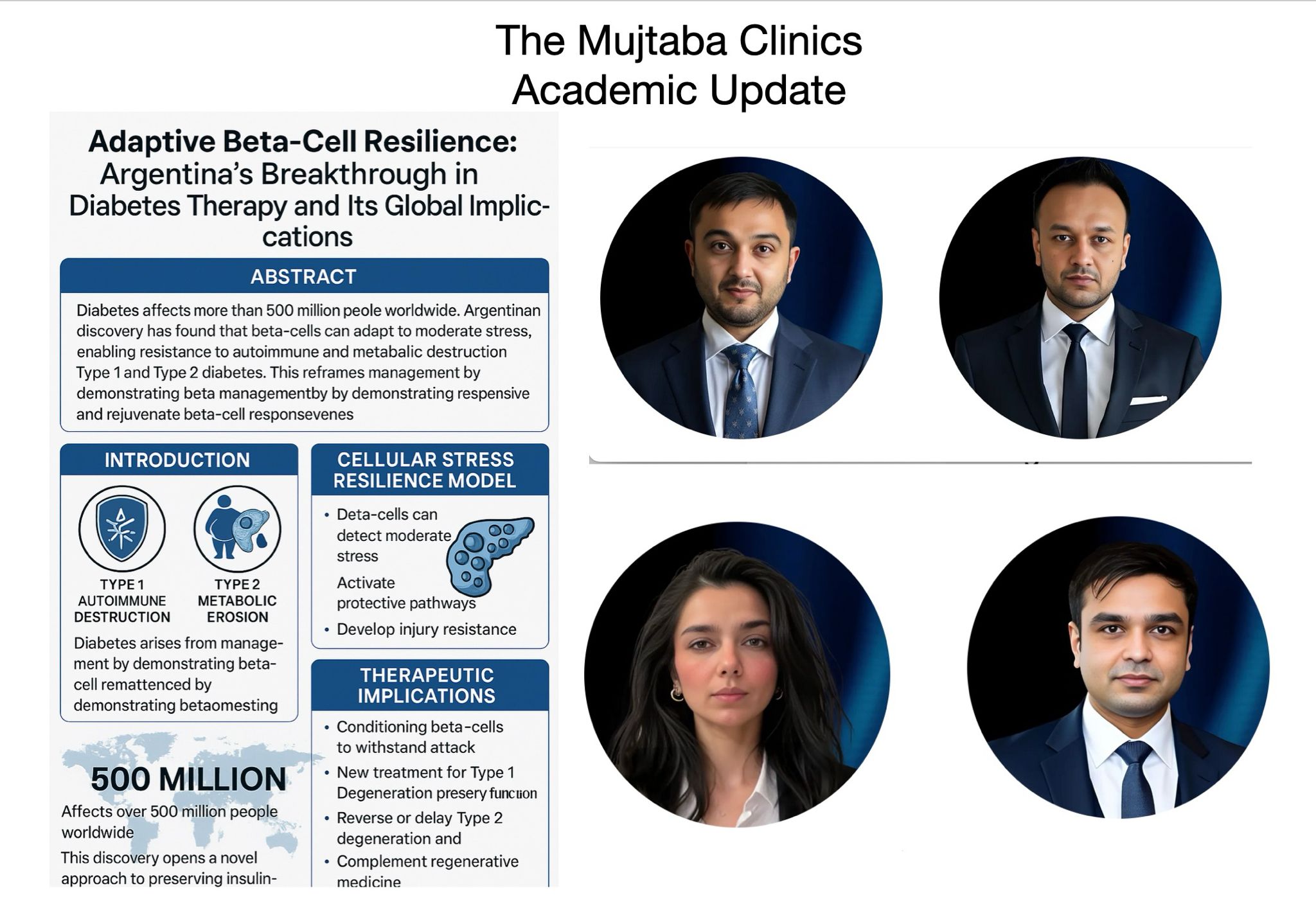
Adaptive Beta-Cell Resilience: Argentina’s Breakthrough in Diabetes Treatment and Its Global Impact
By: Dr. Athar Mujtaba, DNP-FNP, MS, MBA, MD
Dr. Assad Mujtaba, DNP-FNP, MS, MBA, MD
Dr. Ayesha Mujtaba, MS, MSN, MBA, CNM, MD,FNP
Hyder Mujtaba, BS, MS, MSN, RN, FNP-Candidate
Abstract
Diabetes mellitus is a worldwide epidemic, impacting over 500 million people globally. Recent research by Argentinian scientists at the Immuno-Endocrinology, Diabetes & Metabolism Laboratory of CONICET-Austral, led by Marcelo J. Perone, shows that human pancreatic beta-cells have an innate adaptive response to moderate stress, which helps them resist autoimmune and metabolic damage. This discovery offers a promising biological approach to protect and regenerate insulin-producing cells in both Type I and Type II diabetes. This review summarizes the findings, places them within the existing literature, and discusses their potential therapeutic significance.
Introduction
Diabetes mellitus results from impaired insulin production or action, mainly due to the loss or dysfunction of pancreatic beta-cells. In Type I diabetes, autoimmune destruction eliminates beta-cells, while Type II diabetes develops gradually from metabolic decline caused by obesity, chronic inflammation, and glucotoxic stress. Traditional treatments focus on controlling blood glucose but rarely protect the structural survival of beta-cells.
The Argentinian discovery redefines diabetes management by showing that beta-cells are not passive casualties but active biological systems capable of adapting if given proper support through targeted intervention.
Study Overview—Argentina’s Cellular Stress Resilience Model
The research team led by Marcelo J. Perone uncovered that pancreatic beta-cells can:
Detect moderate biological stress
Activate intrinsic protective pathways.
Develop resistance to inflammatory or metabolic injury.
These results propose that early-stage regulated stress exposure or metabolic conditioning could:
• Prevent premature beta-cell apoptosis
• Induce a cellular “training effect” similar to immune memory
• Maintain insulin biosynthesis capacity
Mechanistic Insights
Published extracts indicate:
1. Stress adaptation pathways induced by metabolic insults activate autophagy, antioxidant signaling, and unfolded protein response (UPR).
2. Controlled stress thresholds improve beta-cell resilience.
3. Excessive stress leads to failure of these protective mechanisms—supporting the graded exposure hypothesis.
This aligns with emerging literature on hormesis, where sub-lethal stress triggers compensatory strengthening at the cellular level.
Therapeutic Implications
1. Beta-Cell Conditioning Approaches
Drugs or biological formulations could pre-prime beta-cells to withstand immune or metabolic attack.
2. New Disease-Modifying Treatment for Type I Diabetes
If beta-cells can adapt before autoimmune escalation, partial function may be preserved.
3. Reversal and Delay of Type II Degeneration
Metabolic stress training could reduce glucotoxicity and chronic inflammation effects on beta-cells.
4. Complement to Regenerative Medicine
Stem-cell or islet transplantation therapies may achieve longer survival through preconditioning.
Global Relevance
With over 500 million diabetics worldwide, including disproportionately affected populations in Asia and the Middle East, this discovery:
• Opens a novel therapeutic paradigm
• Suggests disease modification rather than symptom management
• Adds biological rationale for preventive metabolic restructuring
Discussion
This research supports the idea that beta-cell failure is not unavoidable—it can be influenced by environmental factors. The discovery connects endocrinology, molecular immunology, and regenerative medicine, and encourages worldwide collaboration on:
Stress-response drug design
Beta-cell exercise models
Immunomodulatory co-therapies
It challenges diabetes scientists to rethink disease pathogenesis from passive destruction toward an active resilience model.
Conclusion
Argentina’s scientific breakthrough highlights a pioneering shift in diabetes management—focusing on strengthening beta-cells rather than simply replacing lost insulin. This aligns with the future of precision medicine, in which cellular adaptability and metabolic conditioning could become the foundation of strategies for a diabetes cure.
References
1. Perone M.J. et al., CONICET Austral Immuno-Endocrinology Laboratory Report (2025).
2. International Diabetes Federation Atlas (2024) — Global prevalence data.
3. Coppieters K. & von Herrath M. (2019). Immunological mechanisms of beta-cell injury, Nature Reviews Immunology.
4. Eizirik D. & Cnop M. (2020). The stress response of pancreatic beta-cells in diabetes, Cell Metabolism.
5. Skyler J. (2022). Type I diabetes pathogenesis and intervention approaches, Diabetes Care.
6. Donath M. (2023). Inflammation and metabolic stress in Type II diabetes progression, Lancet Endocrinology & Metabolism.
7. Hotamisligil G. (2017). Hormesis and adaptive cellular stress response systems, Annual Review of Physiology.