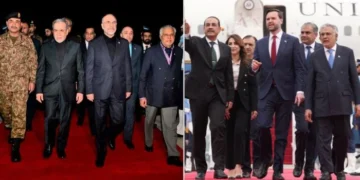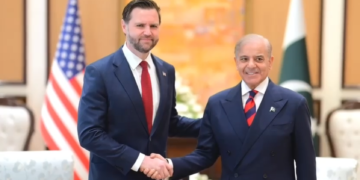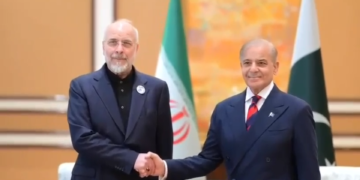


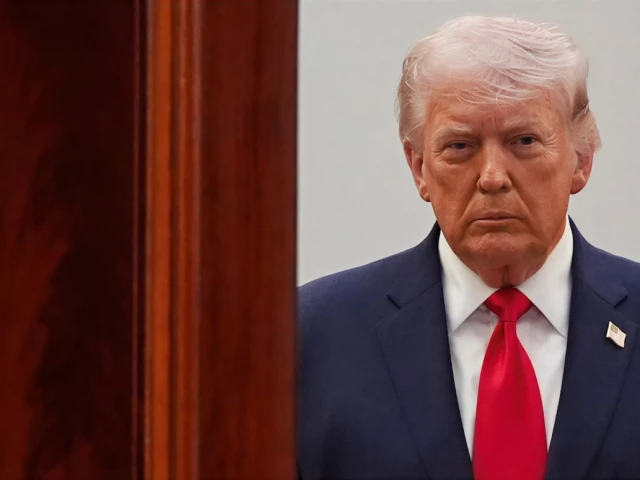
ISLAMABAD: United States President Donald Trump on Sunday announced that the US Navy would begin a blockade of the Strait of Hormuz after high-stakes talks between Washington and Tehran held in Islamabad failed to produce an agreement.
Almarah Foundation Signs Welfare MoUs to Expand Community Support in Karachi
The marathon negotiations, which lasted around 21 hours and were aimed at ending the ongoing conflict between the two countries, ended without a breakthrough. Both sides later blamed each other for the failure to reach a deal, particularly over Iran’s nuclear programme.
Trump, in a post on social media platform Truth Social, thanked Pakistan for hosting and facilitating the talks, and praised Prime Minister Shehbaz Sharif and the country’s military leadership for their role in enabling dialogue.
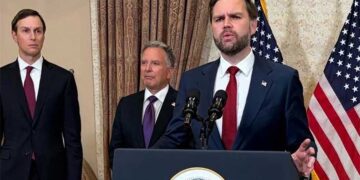
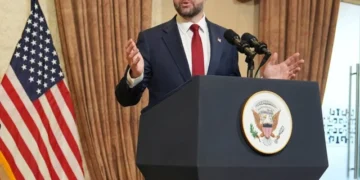
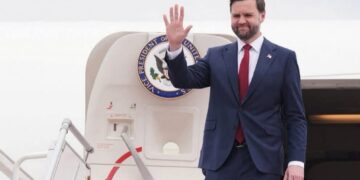
“I have been fully debriefed by Vice President JD Vance, Special Envoy Steve Witkoff, and Jared Kushner on the meeting that took place in Islamabad through the kind and very competent leadership of Field Marshal Asim Munir and Prime Minister Shehbaz Sharif of Pakistan,” Trump said, calling them “extraordinary men.”
However, he said the key issue remained unresolved.
“The meeting went well, most points were agreed to, but the only point that really mattered, nuclear, was not,” he said.
Trump said Iran remained unwilling to abandon its nuclear ambitions despite lengthy negotiations. “Iran is unwilling to give up its nuclear ambitions,” he added, warning that the US would not accept a nuclear-armed Iran.
He further announced that the US Navy would begin blocking the Strait of Hormuz with immediate effect, describing the move as a response to what he called Iranian “extortion” through disruption of global shipping routes.
“The US Navy will begin the process of blockading any and all ships trying to enter or leave the Strait of Hormuz,” Trump said, adding that vessels suspected of paying tolls to Iran would be intercepted.
He also warned Tehran of consequences if it targeted US or commercial shipping, stating, “Any Iranian who fires at us, or at peaceful vessels, will be blown to hell.”
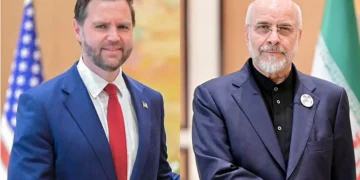
Meanwhile, Iranian officials said the talks had been “intensive” and acknowledged progress on some issues but insisted major differences remained over the nuclear programme and the Strait of Hormuz.
Senior Iranian adviser Ali Akbar Velayati said the strategic waterway remained under Iran’s control, adding, “Today the Strait of Hormuz is firmly in our hands.”
Iran has demanded sanctions relief, access to frozen assets, and broader regional ceasefire guarantees, while the US has focused on nuclear restrictions and maritime security.
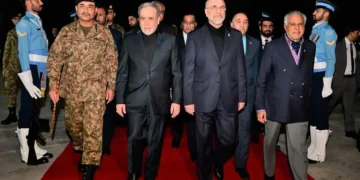
Despite the breakdown, both sides acknowledged Pakistan’s role in hosting and facilitating the negotiations, which marked one of the rare direct high-level engagements between Washington and Tehran in decades.
Diplomatic efforts are expected to continue, though analysts say deep mistrust and core strategic disagreements remain significant obstacles to any immediate breakthrough.