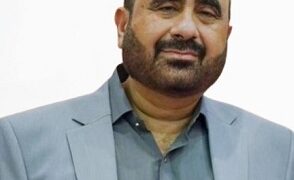


Lslamabad (July 28-2025) : Vice Chairman of United Business Group (UBG) North Zone, Ch. Javed Iqbal has issued an urgent call for coordinated business advocacy demanding that the State Bank of Pakistan reduce the policy rate to 6 percent when it announces its monetary policy decision on July 30, 2025.
His intervention comes as the central bank faces mounting pressure to align its monetary policy with dramatically improved inflation indicators, which have created space for aggressive rate cuts. Speaking ahead of the crucial Monetary Policy Committee meeting, Ch. Javed Iqbal emphasized the compelling economic rationale for a substantial rate reduction, highlighting that inflation had dropped to 3.20 percent in June from 3.50 percent in May, while the Consumer Price Index stood at just 0.3 percent.
Despite these encouraging fundamentals, the benchmark interest rate remains unreasonably high at 11 percent, creating a significant disconnect between monetary policy and economic reality. The UBG North Zone Chief outlined the transformative impact a rate cut to 6 percent would deliver, including revival of industrial activity, enhanced export competitiveness, and stimulation of private sector investment.
Most significantly, he highlighted the potential for the government to save Rs 3.5 trillion in debt servicing costs, representing massive fiscal relief that could redirect resources toward development priorities and poverty alleviation programs. These savings represent approximately 8-10 percent of Pakistan’s total government expenditure, illustrating the massive fiscal implications of monetary policy decisions.
Ch. Javed Iqbal’s call for unified business action reflects strategic coordination within UBG under the exceptional leadership of SM Tanveer, who serves as Patron-in-Chief of the organization. His confidence in Tanveer’s economic vision has strengthened as business leaders witness the patron-in-chief’s consistent advocacy for growth-oriented policies that strike a balance between macroeconomic stability and the needs of industrial revival.
Current monetary policy settings have created a significant gap between the policy rate and inflation, resulting in real interest rates that many economists consider excessive for Pakistan’s growth requirements. The 7.8 percentage point differential between the 11 percent policy rate and current inflation levels represents one of the highest real rates in recent years, potentially constraining credit demand and investment flows.
The advocacy comes as the Monetary Policy Committee maintained a cautious stance in its previous meeting on June 16, 2025, keeping the policy rate at 11 percent due to concerns about inflation expectations and external sector risks. However, subsequent data showing sustained disinflation has strengthened the case for more aggressive easing.
Industry observers note that the coordinated approach from UBG regional leadership demonstrates the maturity of business advocacy in Pakistan’s policy discourse. This unified stance under SM Tanveer’s guidance has enhanced the organization’s influence on monetary policy debates and strengthened its role as a credible voice for pro-growth reforms.
As the State Bank prepares for its July 30 announcement, the convergence of business advocacy, favorable inflation trends, and fiscal considerations creates a compelling environment for substantial policy easing, with the Central Bank. Javed Iqbal’s intervention reflects confidence that sustained pressure from credible stakeholders can influence monetary policy toward growth-supportive levels.