

Introduction
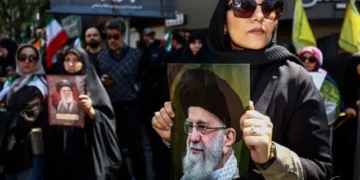
The assassination of Iran’s long-serving Supreme Leader Ayatollah Ali Khamenei during the ongoing U.S.–Israel military campaign against Iran has produced one of the most consequential shifts in the geopolitical and psychological landscape of the Middle East in decades. Within days of the attack, Iran’s Assembly of Experts elevated his son, Ayatollah Mojtaba Khamenei, to the position of Supreme Leader—marking one of the most controversial successions in the history of the Islamic Republic.
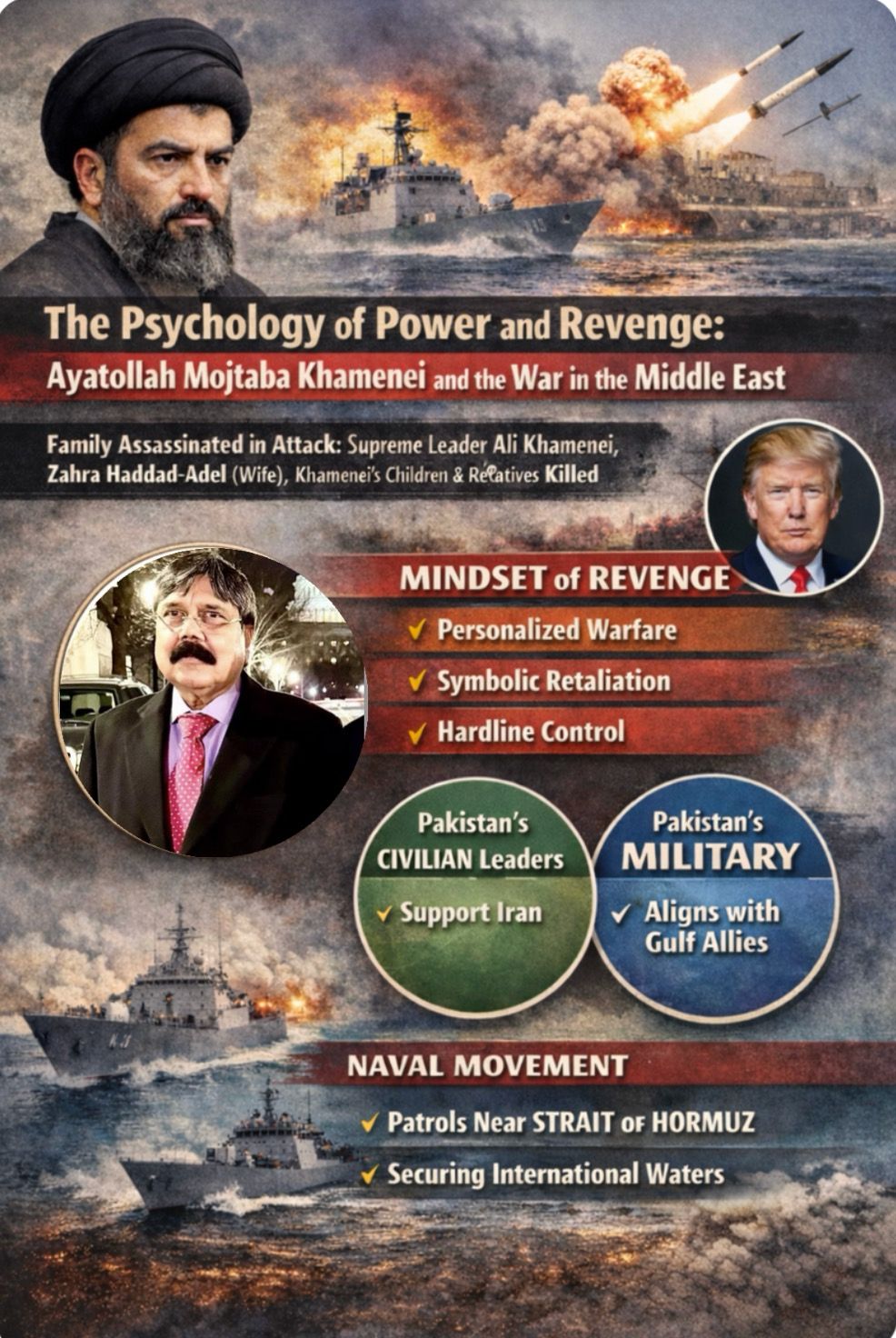
The new leader assumes power under extraordinary circumstances: a wartime environment, devastating personal loss within his own family, and a geopolitical confrontation involving Iran, Israel, and the United States, with reverberations throughout the Gulf region.
At the same time, President Donald J. Trump has indicated that the war may be approaching its final phase, stating in a recent interview that “the war is very complete, pretty much,” suggesting that the campaign’s strategic objectives are nearing fulfillment.¹
Understanding Mojtaba Khamenei’s psychological mindset, personal trauma, ideological background, and the emerging strategic calculations of global powers is, therefore, essential in assessing how the war may evolve in its closing phase.
1. Mojtaba Khamenei: Background and Rise
Mojtaba Hosseini Khamenei, born in Mashhad in 1969, is the second son of the late Supreme Leader Ali Khamenei and has long been regarded as one of the most powerful behind-the-scenes figures in Iran’s political system.
Although he never held a formal government position, he exercised considerable influence through:
* the Office of the Supreme Leader?• close relations with the Islamic Revolutionary Guard Corps (IRGC)?• networks within Iran’s clerical establishment.
* ?
His political profile includes:
* strong ideological loyalty to the revolutionary doctrine of Velayat-e-Faqih (Guardianship of the Islamic Jurist)?• deep ties with senior IRGC commanders?• involvement in political mobilization during Iran’s internal crises and contested elections.
These networks allowed him to rapidly consolidate power after his father’s death, ensuring continuity of authority within the Iranian revolutionary system.
2. The Khamenei Family Tragedy
The attack that killed the elder Khamenei reportedly resulted in multiple casualties within the ruling family—an event that is likely to shape Mojtaba’s emotional and political outlook for years.
Reported victims include:
1Ayatollah Ali Khamenei – Supreme Leader of Iran
2Zahra Haddad-Adel – Mojtaba’s wife
3Members of the extended family reportedly killed during the strikes.
Mojtaba and Zahra had three children:
* Mohammad Amin?• Fatemeh Sadaat?• Mohammad Bagher
Iranian sources indicate that at least one child and other close relatives may also have died in the attack.
For any leader, such personal devastation transforms political decision-making. In psychological terms, the transition from bereavement to absolute authority often produces a leader motivated not merely by strategy but by historical vengeance and ideological vindication.
3. Psychological Dynamics of a Leader Who Survives a Family Assassination
History repeatedly demonstrates that leaders who come to power after family killings or political assassinations often develop revenge-driven strategic mindsets.
Three patterns frequently emerge.
1. Personalization of War
The conflict ceases to be merely geopolitical; it becomes a matter of personal justice.
2. Symbolic Retaliation
Actions are designed to restore family honor and ideological legitimacy.
3. Hardline Consolidation
Internal repression increases as the leader seeks to prove authority and suppress dissent.
Analysts already warn that Mojtaba’s appointment signals a hardline continuation of Iran’s revolutionary confrontation with the West.
Possible responses could include:
* intensified missile or proxy attacks?• expanded operational role for the IRGC?• suppression of dissent within Iran?• symbolic retaliation against perceived enemies.
4. What Should and Should Not Be Expected
What may occur
1Escalation through regional proxies
?Hezbollah
?Iraqi militias
?Yemeni groups
2Asymmetric warfare
?cyber operations
?Maritime disruption in the Persian Gulf.
3Internal consolidation
?strengthens the IRGC’s influence over political institutions.
What may not occur
1Immediate nuclear escalation due to overwhelming global retaliation risk.
2Direct invasion of neighboring countries.
3Early diplomatic compromise.
A leader emerging through war typically prioritizes domestic legitimacy before diplomacy.
5. Trump’s Assessment: The War Entering Its Final Phase
In contrast to fears of a prolonged regional war, President Donald J. Trump recently indicated that the conflict may be nearing completion.
In a national interview, he stated:
“I think the war is very complete, pretty much.”¹
Trump further emphasized that the U.S.–Israel campaign was progressing ahead of schedule, suggesting that its strategic objectives—particularly the degradation of Iran’s military capabilities—had largely been achieved.²
However, he also warned that further action could still occur if Iran escalates attacks or threatens global energy routes such as the Strait of Hormuz.
This dual message—confidence combined with deterrence—indicates that Washington views the current phase of the war as transitioning from active combat toward strategic containment or regime transformation.
6. Pakistan’s Strategic Position: The Asim Munir Visit to Saudi Arabia
Pakistan’s Chief of Army Staff, Field Marshal Asim Munir, reportedly traveled to Saudi Arabia during the conflict and met with senior Saudi defense leadership.
The timing suggests several potential emergency objectives.
1. Gulf Security Coordination
Saudi Arabia and other Gulf states remain vulnerable to Iranian missile and drone attacks on energy infrastructure.
2. Protection of Energy Routes
Nearly 20 percent of the world’s oil supply passes through the Strait of Hormuz, making maritime security critical to global markets.
3. Military Diplomacy
Pakistan has historically maintained strong defense cooperation with Gulf states, including military training and security coordination.
Thus, the visit likely focused on regional contingency planning rather than direct participation in the conflict.
7. Pakistan’s Civil–Military Messaging Divide
One intriguing development during the crisis is the apparent divergence between civilian political rhetoric and military strategic posture.
Civilian statements
Some Pakistani political figures have expressed sympathy for Iran or rhetorical solidarity with Tehran.
Military posture
Pakistan’s military establishment traditionally prioritizes:
* relations with Saudi Arabia and GCC states?• strategic ties with the United States?• regional stability along Pakistan’s western borders.
Consequently, public political rhetoric does not necessarily reflect Pakistan’s actual strategic alignment.
8. Naval Security and the Strait of Hormuz
There are no confirmed public reports that Pakistan’s navy has deployed forces to the Strait of Hormuz specifically to counter Iranian attacks.
However, Pakistan has historically participated in:
* maritime security patrols?• anti-piracy missions?• multinational naval exercises in the Arabian Sea.
Any movement of naval assets near Gwadar or in the Arabian Sea would most likely be related to monitoring sea lanes and protecting maritime trade routes, rather than to direct military engagement.
Conclusion
The rise of Ayatollah Mojtaba Khamenei represents one of the most consequential leadership transitions in modern Middle Eastern politics.
Unlike typical political successions, this one is shaped by:
* personal loss?• ideological rigidity?• wartime urgency.
History shows that such circumstances often produce leaders inclined toward revenge, consolidation of power, and symbolic retaliation.
Yet at the same moment, President Donald J. Trump’s declaration that the war is nearing completion suggests that the conflict may already be entering its strategic endgame.
Whether the war ends swiftly or evolves into a prolonged regional confrontation will depend on how Mojtaba Khamenei balances vengeance with survival—and how global powers manage the final phase of the conflict.
For regional actors such as Pakistan, the priority must remain strategic realism, diplomatic balance, and careful navigation of shifting alliances in an increasingly volatile Middle East.
References
1CBS News interview with President Donald J. Trump on the Iran war, March 2026.
2Axios and AP News coverage of Trump’s statements regarding the nearing completion of the Iran campaign, 2026.
3Reuters, “Iran defies pressure, elevates Mojtaba Khamenei as successor,” 2026.
4AP News, “Son of Iran’s leader named successor amid war,” 2026.
5Time Magazine, “Mojtaba Khamenei and Iran’s new leadership,” 2026.
6Wall Street Journal analysis on Iran leadership succession, 2026.
7Encyclopaedia Britannica biography of Mojtaba Khamenei.
8IranWire and regional analyses of the Khamenei family influence.
9Reuters background profile on Mojtaba Khamenei.
https://medium.com/@greetmujtaba/the-psychology-of-power-revenge-and-the-endgame-of-war-d38ceb916d4b
Advertisements