

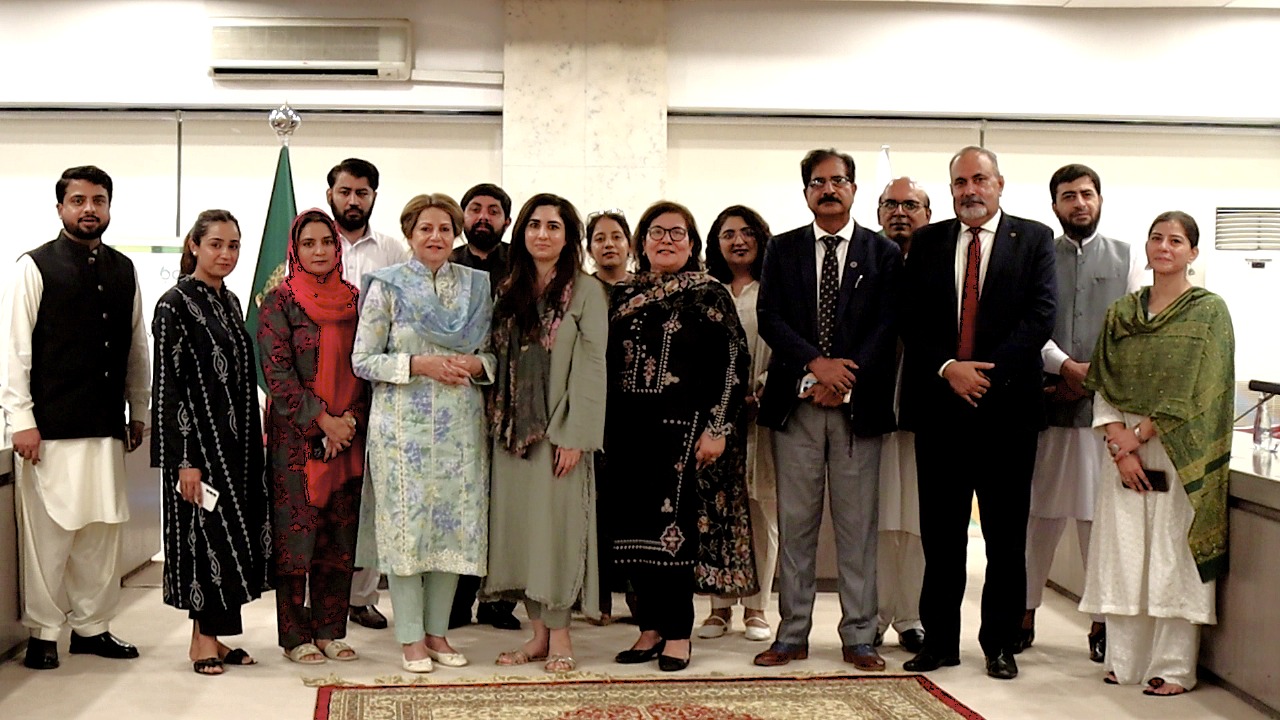
Islamabad, October: Pakistan Youth Change Advocates (PYCA) and the National Parliamentary Taskforce on SDGs jointly organized a parliamentary roundtable briefing at the National Assembly of Pakistan to orient the lawmakers on the hazardous health impacts of Partially Hydrogenated Oils (PHOs) and the urgent need for a complete ban on their production, import, and distribution across Pakistan. The session was also attended by the TRANSFORM Pakistan coalition partners, including the Islamabad Food Authority, Centre for Peace and Development Initiatives (CPDI), Heartfile, the Pakistan National Heart Association (PANAH), and others.
MNA Shaista Pervaiz Malik, Convener of the SDGs Parliamentary Taskforce, opened the session by explaining that she was already aware of the serious health risks associated with the consumption of partially hydrogenated oils in our food and felt it was important to bring the issue to the attention of the Taskforce members so that a way forward could be urgently chalked out in the best interest of public health.
Providing a background on the issue, Ms. Huria Tariq, Program Implementation Lead at PYCA shared, “While we celebrate the approval of a 2% limit on industrial trans fats across all foods by the Pakistan Standards and Quality Control Authority earlier this year, the continued use of partially hydrogenated oils (PHOs)—the primary source of industrial trans fats—remains a major concern. As long as PHOs are still in production, we cannot truly ensure that the food on our tables is free from these harmful fats.”
Delivering the keynote, Mr. Munawar Hussain, Nutrition and Food Policy expert, emphasized that “Partially hydrogenated oils are the single largest source of industrial trans fats in our diet and are among the leading causes of cardiovascular diseases, strokes, diabetes, cancers and obesity in Pakistan.” Emphasizing the severity of the situation, he added, “In Pakistan, someone suffers a heart attack every 90 seconds. Available data shows that heart diseases are a major and growing cause of deaths—including young people—and iTFAs produced from partially hydrogenated oils are a significant contributor to this alarming risk.”
Representing the Islamabad Food Authority, Dr. Tahira Siddique seconded Mr. Hussain’s earlier ask to impose a complete ban on the manufacturing and sale of PHOs. “With minimal cost implications for the industry, shifting from PHOs to other available and less harmful techniques for extending product shelf life and preserving taste can go a long way in preventing hundreds of thousands of premature deaths each year.” She further added that although the Islamabad Food Authority and its provincial counterparts were well aware of the significant risks posed by PHOs, they were unable to take action as there is currently no law in Pakistan that bans their production and distribution. Similarly, Dr. Saba Amjad, CEO Heartfile stressed the importance of sustained policy implementation and public awareness, noting, “35 million adults in Pakistan live with diabetes, over 200,000 people lose their lives because of heart-related ailments annually, and 52% of all the deaths caused in the country are because of non-communicable diseases (NCDs). Eliminating PHOs will help cut down the consumption of industrially produced trans fats, which will significantly reduce the burden of NCDs on our economy and save lives.”
During the briefing, over 20 parliamentarians actively participated, seeking updates on the regulatory capacity of food authorities, public awareness, and industry compliance. Convener Shaista Pervaiz Malik and other members, including Ms. Mahtab Rashdi, Ms. Sharmila Farooqi, Ms. Zeb Jaffar, Ms. Nuzhat Pathan, Ms. Rana Mubashir, Danyal Chaudhary, Ms. Asia Tanoli, Syed Hafizuddin, Mr. Danish Kuman, Ms. Romina Khurshid, and Ms. Munazza Hassan, discussed the need for stronger food regulation, and greater public awareness on the issue.
Ms. Areebah Shahid, Executive Director, PYCA, underscoring the urgency of the matter, said, “We can either wait another 15 to 20 years to build the nationwide capacity needed to test and inspect food samples for industrial trans fats—losing nearly 200,000 lives to heart disease every year in the process—or we can act now. By enacting a simple legislative ban on the PHO process that produces these toxic fats, we can start saving lives immediately.”
Concluding the session, MNA Shaista Pervaiz Malik reaffirmed the task force’s commitment, stating: “The SDG Task Force is aligned with the civil society’s demand for a complete ban on PHOs. We will work closely with the Transform Pakistan campaign partners to ensure legislative progress and parallel awareness across all sectors.” The roundtable underscored a shared resolve between civil society and parliamentarians to protect public health through evidence-based policymaking, ensuring Pakistan moves decisively toward a trans fat-free future.