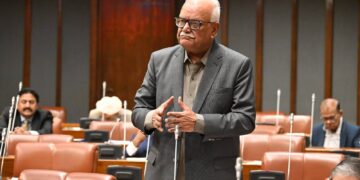


KARACHI – The President of the Korangi Association of Trade and Industry (KATI), Faraz-ur-Rehman,
voiced concerns over the soaring cost of electricity in Pakistan, attributing it to the highest regional rates
that are adversely impacting the competitiveness of Pakistani products in the global market. Speaking at
a luncheon in honor of K Electric Chief Executive Monis Alvi, Rehman highlighted the escalating price of
electricity due to capacity charges, leading to an urgent need for a national awareness campaign.
Rehman emphasized that the burden of additional capacity charges could be mitigated by supplying
power to the industry in bulk. Acknowledging the financial strain on both industries and the public, he
called for a nationwide campaign to address the increasing charges on electricity. Rehman stated that
despite Pakistan producing over 40 thousand megawatts of electricity, the consumption is not exceeding
22 thousand megawatts, resulting in citizens paying capacity charges on unused electricity.
Proposing a solution, President KATI urged the government to invest in improving the transmission
system to utilize excess electricity, providing cheap power to industries. This, he argued, would help
industries avoid capacity charges by consuming more electricity, subsequently boosting production,
improving the economy, and normalizing electricity prices. He criticized policymakers for imposing
additional charges on citizens instead of adopting effective strategies to avoid capacity charges.
In response, K Electric CEO Monis Alvi lauded the electricity system in Karachi as superior to other
provinces. Alvi emphasized that NEPRA’s reports affirmed K Electric’s better services and adherence to
prescribed line loss limits. He clarified that K Electric does not determine prices but abides by rates set
by the government and NEPRA.
The event also saw remarks from Chairman of the Standing Committee, Danish Khan, who expressed
pessimism about a potential decrease in electricity prices in the near future. Khan highlighted the IMF’s
conditions, urging the government to control losses stemming from administrative malpractices and
prevent the burden from falling solely on industrialists and the public.
Vice Chairman of the Standing Committee, Rehan Javed, criticized past agreements with Independent
Power Producers (IPPs) and advocated for suitable policies to use excess electricity, preventing capacity
charges. Javed stressed the importance of upgrading the national transmission system, addressing line
losses, and curbing theft.


ADVERTISEMENT