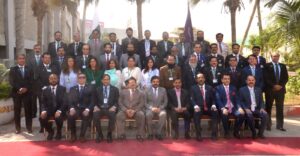
Partnerships Across Maritime Regions AMAN Promotes Cooperation and Peace at Sea
Pakistan Navy’s AMAN exercises highlight the importance of maritime diplomacy, regional security and international cooperation in protecting vital sea routes.

AMAN Exercises highlight Pakistan Navy's commitment to maritime cooperation and peace.
By Muhammad Mohsin Iqbal
The oceans have never been merely geographical boundaries separating nations. They connect economies, cultures and civilisations. They also carry international trade and energy supplies. Today, however, maritime routes face geopolitical rivalries, security threats and competing strategic interests. Their future depends not only on naval strength but also on trust, cooperation and a shared commitment to peace.
The Holy Quran repeatedly draws attention to the seas, their resources and the blessings Allah Almighty has provided through them. It invites humanity to reflect on ships sailing across the waters, the sustenance drawn from oceans and the signs of divine wisdom in creation.
These references carry an important message. Nature’s resources are blessings entrusted to humanity. Their responsible use requires wisdom, gratitude and collective responsibility. Similarly, the Quranic principles of consultation, justice and peaceful coexistence offer valuable guidance for relations among nations.
Against this backdrop, the Pakistan Navy’s AMAN exercises have gained considerable importance. Launched in 2007 under the banner Together for Peace, AMAN has developed into an international platform for regional and extra-regional navies and maritime stakeholders.
Its central philosophy recognises that maritime security cannot depend on isolated national efforts. Threats at sea cross political boundaries. Therefore, international cooperation remains essential to protecting shared maritime interests.
AMAN 2027: Partnerships Across Maritime Regions
The tenth edition carries the theme Partnerships Across Maritime Regions. It highlights the importance of cooperation, confidence-building and connectivity among nations.
The theme also recognises that countries with different geographical positions and strategic interests can still identify common objectives. Through dialogue and practical engagement, they can work towards shared security and prosperity.
Wafi Energy Pakistan Recognises Emerging Entrepreneurs at 13th Tameer Awards 2026
The Indian Ocean provides an important setting for this cooperation. It connects the Middle East, Africa, South Asia and East Asia. Major commercial shipping and energy routes pass through its waters, making maritime security vital to the global economy.
Piracy, maritime terrorism, trafficking and regional conflicts can disrupt these routes. Such threats may also affect economies far beyond the immediate region. Meanwhile, environmental degradation and vulnerabilities in maritime infrastructure add further challenges.
No country can address these issues alone. Effective maritime governance requires information-sharing, professional coordination, operational understanding and respect for international law.
Multinational naval exercises help develop these capabilities. By bringing together forces with different experiences and operational traditions, AMAN promotes professional interaction and mutual confidence. Its importance therefore extends beyond operational preparedness. It also builds relationships that can support cooperation during future crises.
Growing International Participation
AMAN’s expanding participation reflects its increasing international relevance.
The inaugural exercise in 2007 attracted 28 participating countries. By its ninth edition in February 2025, participation had increased to more than 60 countries.
The introduction of the AMAN Dialogue alongside the 2025 exercise added diplomatic and intellectual depth to the initiative. Senior naval and maritime representatives gained an opportunity to discuss emerging challenges and identify areas of common interest.
This development demonstrates how a naval exercise can evolve into a broader instrument of maritime diplomacy.
Pakistan’s Strategic and Economic Interests
For Pakistan, AMAN carries considerable strategic and economic significance. Its coastline along the Arabian Sea places the country close to important international shipping corridors. Karachi and Gwadar also offer opportunities to expand maritime trade and regional connectivity.
Pakistan’s economic prospects are closely linked to its blue economy. Shipping, fisheries, port services, marine tourism and other ocean-based industries offer opportunities for growth and investment.
However, these opportunities require secure sea lanes, reliable maritime infrastructure and regional stability.
The Pakistan Navy’s role in maritime security therefore extends beyond protecting national waters. It also includes safeguarding commercial interests, maintaining sea lines of communication and supporting regional stability.
Initiatives such as the Regional Maritime Security Patrols, alongside multinational engagements, demonstrate Pakistan’s commitment to collective maritime responsibility.
A secure maritime environment benefits coastal states and landlocked countries alike. Both depend on safe access to international markets and reliable shipping networks.
Maritime Cooperation Has a Humanitarian Role
Maritime cooperation also serves an important humanitarian purpose. Search-and-rescue missions, disaster relief and assistance to vessels in distress require immediate coordination.
At sea, saving human lives must take priority over political differences and strategic considerations.
Naval forces that build professional relationships during peacetime are better prepared to cooperate during emergencies. Consequently, multinational exercises serve purposes beyond conventional military training.
They strengthen the relationships and coordination needed to respond effectively when human lives and maritime safety are at risk.
Twenty Years of AMAN: A Milestone in Maritime Diplomacy
The tenth edition of AMAN marks twenty years since the initiative began in 2007. Its continuity reflects a sustained commitment to international cooperation, while growing participation demonstrates the relevance of its founding philosophy.
However, the true measure of its success will not simply be the number of participating warships or the scale of naval manoeuvres.
Its lasting value will depend on the trust it builds, the understanding it promotes and the practical cooperation that continues after the exercise concludes.
At a time when geopolitical competition threatens to turn vital waterways into areas of confrontation, partnerships across maritime regions offer a constructive alternative.
Nations do not need identical political interests to cooperate on protecting commercial navigation, combating maritime crime and preserving the oceans as shared avenues of prosperity.
The seas have connected humanity for centuries. They should not become instruments of division in an increasingly interconnected world.
The Quranic invitation to reflect upon the blessings of the oceans also carries a responsibility to use them wisely and for the collective good. Through AMAN and its enduring message of Together for Peace, the Pakistan Navy seeks to translate this principle into practical international cooperation.
Ultimately, maritime strength should be measured not only by a nation’s ability to defend the seas but also by its willingness to keep them open for peace, stability and shared human progress.