

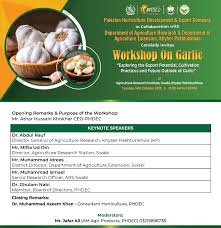
Swabi,14th October 2025 : Garlic holds a significant place in culinary landscape throughout the world and is cherished for enhancing the flavor of diverse dishes. In Pakistan, garlic is cultivated on 13,500 hectares, primarily in Khyber Pakhtunkhwa and Punjab, with a production volume of around 115,000 tones.
Pakistan exports fresh and chilled garlic to various countries, with recent data showing a significant increase in export value, driven by strong performance in markets like Afghanistan, Sri Lanka, and the Malaysia. While Pakistan is ranked 24th in global fresh garlic exports, its export volume has grown substantially, partly due to the introduction of new garlic varieties by NARC & agriculture research department of Khyber Pakhtunkhwa and efforts agriculture extension departments to improve agricultural practices.
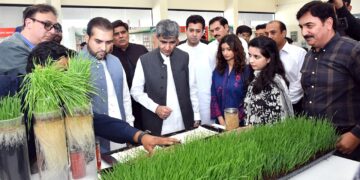
Keeping in view its significance, the Pakistan Horticulture Development and Export Company (PHDEC) organized a workshop on“Exploring the Export Potential, Cultivation Practices and Future Outlook of Garlic”. PHDEC hosted the workshop in Swabi, the major Garlic production hub in Khyber Pakhtunkhwa. The workshop focused on key areas including Integrated Pest Management (IPM), Integrated Nutrition Management (INM), crop diseases & Its control measures, R&D in developing high yielding garlic varieties by Agriculture Research Department (KPK), export potential of garlic varieties being produced in Khyber Pakhtunkhwa& export prospects for majorimporting countries with the aim of enhancing the quality, yield and export of this important vegetable.
CEO PHDEC, Mr. Athar Hussain Khokhar, inaugurated the event, welcoming participants and emphasizing PHDEC’s commitment to supporting garlic stakeholders. He reiterated PHDEC’s dedication to providing comprehensive support to the garlic industry. Mr. Athar highlighted the importance of international exhibitions to boost up exports of horticulture products and offered free of cost stall at FoodAg-2025 for Agriculture Research Station, Swabi
Experts from the Agriculture Extension & Agriculture Research Department, delivered comprehensive presentations on addressing critical challenges in garlic production and post-harvest handling:
Mr. Miftahuddin, Director Agriculture Research Station, Swabi,presented onnutritional characteristics, domestic & global production statistics, garlic export statistics, major importing countries & potential markets. Mr. Miftah also explained the standard packaging methods for international markets.He highlighted R&D efforts of research departmentfor evaluating and comparing various garlic cultivars, both local (like ‘Lehson Gulabi’) and imported (like Italian, Iranian, and Chinese varieties), for different parameters.
Mr. Shad Ali from Agriculture Extension department, Swabi, briefed about common garlic diseases, whichincludesfungal infections like white rot, botrytis rot, downy mildew and leaf blight, as well as nematode and viral issues like bulb and stem nematode and yellow dwarf virus. Control measures include prevention through healthy seed stock and proper storage, crop rotation, sanitation, and the use of biological or chemical controls, when necessary, he added.
Mr. Muhammad Ismael, Senior Scientific Officer Agriculture Research Station, Swabi, addressed the significant garlic export potential. To realize this potential, challenges like high seed costs must be addressed by government, and the focus should be on increasing production to meet domestic demand while developing organic practices and value-added products for the export market.
Dr. Ghulam Nabi, Member BoD, PHDEC highlighted the Pakistan Horticulture Development & Export Company’s (PHDEC) crucial role in enhancing garlic exports by improving quality through training workshop, facilitating market access by involving trade missions, conducting B2B meetings in collaboration with TDAP, and providing support throughout the value chain.
Dr. Muhammad Azeem Khan, consultant horticulture PHDEC, appreciates the efforts of agriculture research department in developing new varieties of garlic, and initiating exports from Swabi region. Swabi could be future hub for garlic crop as well for other horticulture crops, he added. Mr. Azeem offered full support of PHDEC to enhance exports of horticulture products from the region. He emphasized the importance of cold chain developmentto maintain quality, freshness, and safety throughout the supply chain, leading to higher prices for exporters, reduced spoilage, and access to lucrative international markets.