

KARACHI : Pakistan Association for Eastern Medicine (PAEM) in collaboration with Hamdard Pakistan organized 14th National Symposium (two days) yesterday titled: “Role of Shaheed Hakim Mohammed Said in the revival of Tibb-i-Unani” at Bait-ul-Hikmah Auditorium, Madinat al-Hikmah to pay tribute to Shaheed Hakim Mohammed said, a renowned physician, intellectual and social reformer. The opening session was chaired by Ms. Sadia Rashid, President Hamdard Pakistan. Dr. Ahsan Qavi Siddiqui, Chief Executive Officer of Sindh Healthcare Commission, was invited as the chief guest in the symposium. Pro Vice Chancellor of Sindh University-Larkana Campus, Prof. Dr. Azhar Ali Shah attended the symposium as the guest of honor and delivered the keynote speech.
Professor Dr. Azhar Ali Shah stated that Shaheed Hakim Mohammed Said played a crucial role and provided valuable contributions in reviving Tibb-i-Unani despite challenges. Because of his exceptional contributions, the revival of Tibb-i-Unani, an important cultural and historical heritage, became possible. “Recognizing the achievements of remarkable individuals is essential for the progress of society. Through today’s insightful session, the younger generations will gain profound insights into Hakim Mohammed Said’s academic and practical efforts to promote health and education sectors of the country. I hope that the younger minds will find inspiration to emulate his remarkable work and embrace his qualities and follow his footsteps,” he said.
He further said that modern medicine often focuses on specific parts of the body, whereas Tibb-i-Unani offers a comprehensive alternative treatment approach that addresses a person’s physical, medical, and spiritual well-being. “Our knowledge of this method comes from the teachings of Shaheed Hakim Mohammed Said. Today, the global recognition of the effectiveness of Unani medicine is a significant achievement. However, this success was not easily attained; it resulted from the tremendous dedication and effort of Shaheed Hakim Mohammed Said. He worked tirelessly and successfully convinced the World Health Organization of the efficacy of Tibb-i-Unani.”
“Shaheed Hakim Mohammed Said was a prominent researcher, writer, entrepreneur, and advocate for the rich history of Mehran Valley in the modern era. Unani medicine is part of the cultural heritage of Sindh, and he played a vital role in preserving it. Now, it falls upon future generations to carry on this responsibility. Following the principles of Shaheed Hakim Mohammed Said, we should all contribute to the full development and promotion of Unani medicine,” he added.
Dr. Ahsan Qavi Siddiqui mentioned that Shaheed Hakim Mohammed Said played a significant role in nurturing the mental and intellectual growth of three generations through his monthly editorials “Jaago Jgaao,” in the monthly Hamdard Naunehal. A competent physician considers both a patient’s complaints and symptoms when prescribing treatment. Shaheed Hakim Mohammed Said possessed this quality as a physician.
“During his time, Tibb-i-Unani was in decline, and Unani medicine was often seen as a relic of the past in the subcontinent. However, Shaheed Hakim Mohammed Said introduced Unani medicine to the public and restored people’s confidence in it. As a Hakim, he conducted medical examinations of patients with warmth and sincerity. Every morning, thousands of patients eagerly awaited his attention as he addressed their health issues,” he said.
He also said: “Notably, Hakim Mohammed Said did not oppose modern surgery but rather advocated for and promoted the concept of Ittehad-e-Salasa, a revolutionary idea aiming to foster collaboration among ancient wisdom, Unani medicine, allopathy, and surgical expertise. As a physician, Shaheed Hakim Mohammed Said transformed Hamdard Pakistan into a research institution and pioneered innovation and research in Tibb-i-Unani. The rules and regulations established in Shaheed Hakim Mohammed Said’s clinic have now become the industry standard for manufacturing Unani medicine.
Ms. Sadia Rashid expressed her appreciation for the esteemed guest speakers and advised the students to heed the words of Shaheed Hakim Mohammed Said: “Time is a trust from Allah, and using it wisely is an act of worship.” She urged students not to squander their time on mobile devices but to use them only for necessary tasks or gathering information. She mentioned that Hakim Mohammed Said recommended reading books beyond the course materials and encouraged all students to cultivate the habit of reading.
During the first session of the symposium, Prof. Dr. Hakim Abdul Hannan, President of PAEM, and Prof. Dr. Syed Shabib-ul-Hassan, Vice Chancellor of Hamdard University, also spoke about the various qualities of Shaheed Hakim Mohammed Said’s character and his remarkable contributions to the field of Tibb-i-Unani.
Hakims (physicians) from different cities, who participated in the symposium, paid heartfelt homage and tribute to Shaheed Hakim Mohammed Said and highlighted different aspects of his personality and contributions while presenting their research papers.
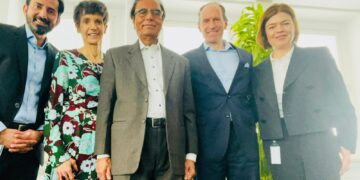
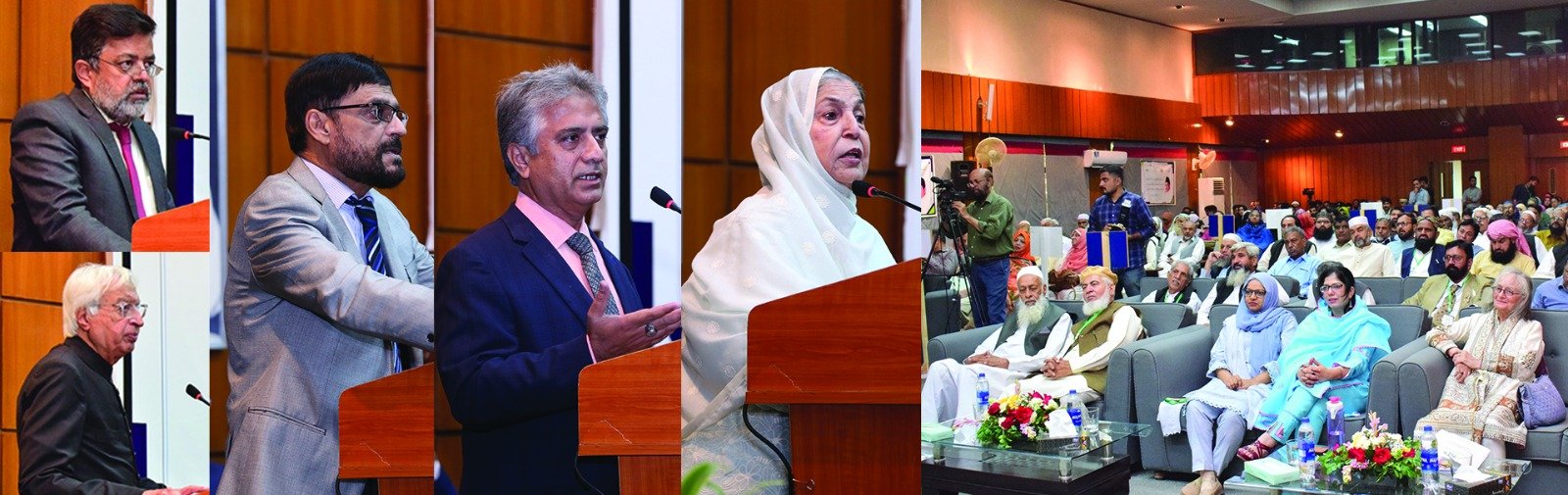
Dr. Ahsan Qavi Siddiqui, Chief Executive Officer of Sindh Healthcare Commission is speaking at the symposium titled: “Role of Shaheed Hakim Mohammed Said in the revival of Tibb-i-Unani”, held yesterday at Bait-ul-Hikmah Auditorium, Madinat al-Hikmah, organized by Pakistan Association For Eastern Medicine (PAEM), in collaboration with Hamdard Pakistan. Ms Sadia Rashid, President Hamdard Pakistan and Prof. Dr. Hakim Abdul Hannan, President PAEM and Prof. Dr. Azhar Ali Shah, Pro-Vice Chancellor, Sindh University-Larkana Campus are also present in the picture.