

Karachi: The NIBD Welfare Society hosted its fundraising event at Tibet House, Karachi, bringing together leading businessmen, donors, and medical professionals to support patients suffering from blood cancers, blood diseases, thalassemia, hemophilia, and those requiring bone marrow transplants (BMT).
Hosted by Mr. Saeed Allawala, Mr. Usama Shamsi, and Dr. Umer Shamsi, the gathering brought together respected members of Karachi’s business and medical community, including Mr. Khalid Tawwab, Mr. Asif Inam, Mr. Razzaq Pardesi, Mr. Zahid Saeed, Mr. Mushtaq Kassim Chhapra, Dr. Shahid Noor, Dr. Syed Siraj-ud-Daula Mr. Shoaib Nizami and Dr. Shahzad Shamim.
Speakers honoured the legacy of Dr. Tahir Sultan Shamsi and reiterated NIBD’s longstanding role as Pakistan’s pioneering and leading institution in bone marrow transplantation (BMT) and comprehensive blood disease support. They underscored the continued need for community-driven assistance, given that the cost of a BMT ranges between PKR 3.5 million to PKR 7 million per patient, an amount often beyond the reach of underprivileged families.
NIBD Welfare Society reported its FY 2025 welfare achievements, including 3,264 diagnostic tests, 597 transfusions, and 34 comprehensive treatments including bone marrow transplants funded through donor support. The Society announced an ambitious target of 100 BMTs for the coming year.
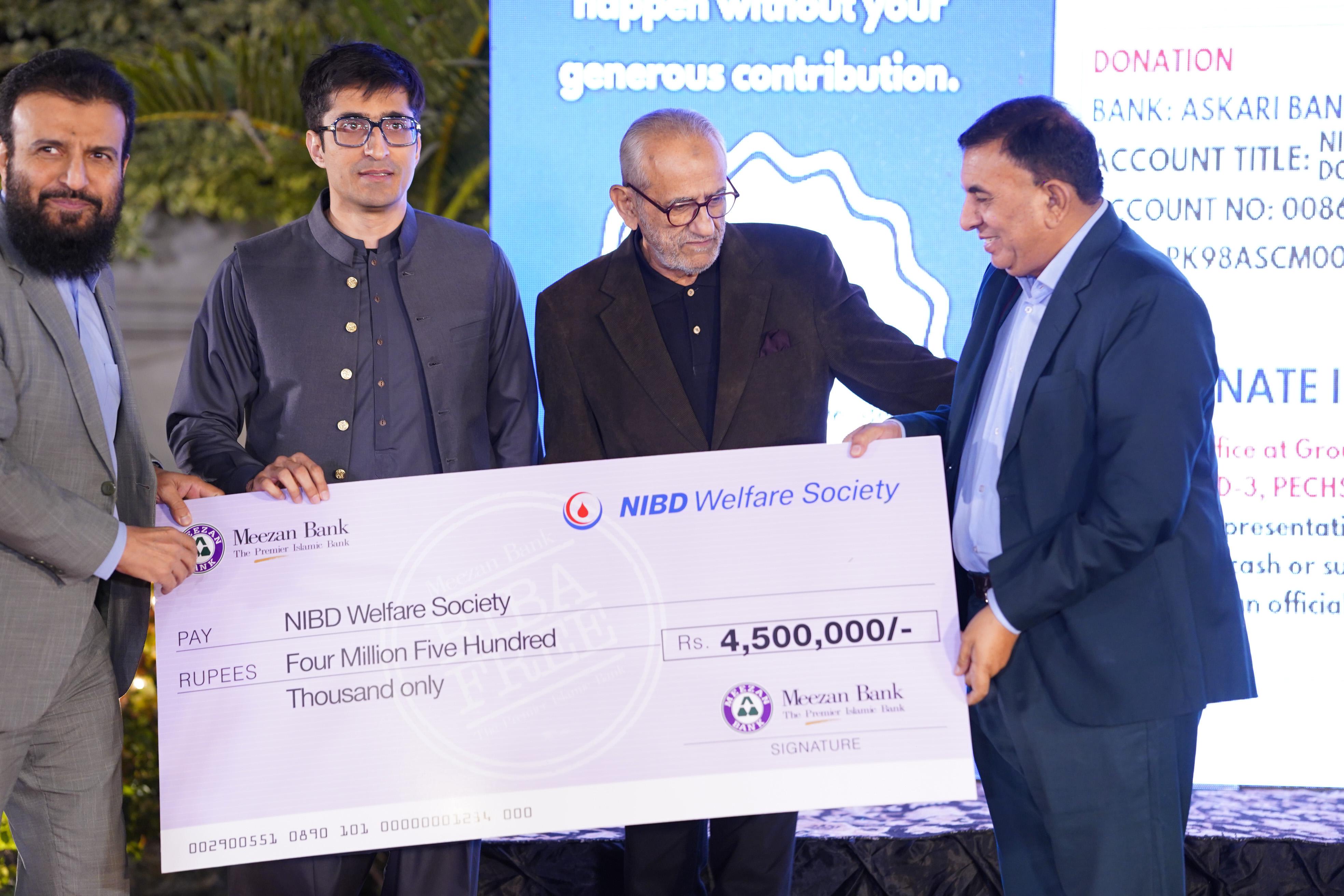
In a notable gesture of support, Meezan Bank presented a cheque of PKR 4.5 million, while Sports in Pakistan (SIP) pledged PKR 350,000 amongst many others ranging from 100,000 to 4 Million rupees, bringing the total pledges for the event to cross PKR 40 million. The presence of several successfully treated BMT patients and their families added a meaningful reminder of the life-changing outcomes donor support makes possible.
The event concluded with an appeal for sustained collaboration from individuals, corporates, and community partners. With patient volumes rising and treatment costs increasing, NIBD Welfare Society reaffirmed its commitment to ensuring that no eligible patient is denied essential, life-saving treatment due to financial constraints.


ADVERTISEMENT