
Nepal Flood Disaster: Rescuers Search for Nearly 3,000 Missing
Nepal flood disaster rescue teams were battling through thick mud and widespread destruction on Saturday as Nepal and China searched for nearly 3,000 people missing after a devastating torrent swept through Himalayan communities.

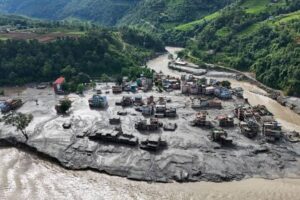
Rescue teams search through widespread destruction after a devastating flood in Nepal.
The disaster struck the Tibet-Nepal border region on Wednesday. A huge surge of water, ice, mud and debris engulfed villages and destroyed infrastructure.
Latest figures from both countries put the number of missing people close to 3,000. Authorities have recovered 633 bodies so far.
Officials also fear that floodwaters may have carried some victims downstream into India.
Rescuers battle thick mud
Emergency teams continued searching through deep mud and debris several days after the disaster.
Kawan Koirala, a rescuer with the Nepal Scout Disaster Response Team, described extremely difficult conditions.
He said families were desperately waiting for news about missing relatives.
Rescue workers have struggled to move through thick mud in devastated communities.
The operation has also taken an emotional toll on emergency personnel.
Koirala said he had worked an 18-hour shift and described the scale of destruction as deeply traumatic.
Survivors said entire settlements near rivers disappeared during the disaster.
“All the settlements near the river were swept away,” survivor Buddhi Ram Dangol told AFP.
“There is nothing left.”
At an army base in Bidur, relatives gathered around lists containing the names of rescued people.
Many families have waited for days without information about missing relatives.
Samjhana Thing said she was still waiting for news about her brother.
Another resident, Kalka Sharda, searched desperately for her son, who worked at a hydropower project.
Hydropower workers and foreigners missing
The disaster struck an area that hosts major hydropower projects.
Nepal’s disaster authority listed 933 hydropower workers among the missing.
The list also included 517 foreigners, including trekkers and pilgrims travelling towards Tibet’s Mount Kailash.
The US Geological Survey said a glacial collapse triggered the devastating disaster.
The collapse unleashed a massive torrent of debris downstream.
However, scientists are still working to understand the exact circumstances surrounding the collapse.
Climate change is increasing risks linked to melting glaciers in mountain regions around the world.
Tens of thousands affected
The Red Cross said the trauma caused by the disaster had been enormous.
It estimated that up to 93,000 people may have been affected.
The death toll could also rise as rescue workers reach more isolated areas.
Meanwhile, many communities face shortages of food and water.
The formation of large lakes following the flood has created another serious concern.
At least one of these formations could trigger further flooding.
As a result, authorities continue to monitor the region while rescue teams search for survivors.
More than 100 trapped in tunnel
On the Nepali side of the border, soldiers worked to reach around 100 people trapped inside a tunnel at the Trishuli 3A hydropower project.
Teams began clearing mud and debris to open access to the tunnel.
A specialised Indian tunnel rescue team also arrived to support the operation.
Nepal reported 626 deaths on Saturday.
Authorities said 2,426 people remained out of contact in Nepal, including hundreds of foreigners.
Across the border, Chinese authorities reported seven deaths in Tibet.
State news agency Xinhua said 554 people remained missing in the affected area.
Chinese authorities also evacuated 555 stranded tourists and 499 Chinese residents.
Meanwhile, Indian authorities recovered seven bodies from rivers flowing from Nepal. Officials believe the victims may have died in the flooding.
Iran War Deepens as Tehran Defies US Sanctions and Gulf Crisis Grows
Workers describe terrifying flood
Nepal’s military located people trapped near the Trishuli 3A hydropower project.
Army spokesman Raja Ram Basnet said rescue teams faced major difficulties because mud and debris had obscured access points.
Authorities dispatched two helicopters to assist the operation.
However, locating the tunnel entrances remained challenging.
The military said it had already brought around 350 workers and residents to safety.
Rescuers continued efforts to reach more than 100 people still trapped in the affected area.
Workers rescued from other dam projects described a disaster that unfolded within minutes.
Buddha Tamang said he survived because he was inside a tunnel when the flood struck.
He said senior officers working on the other side were swept away by the torrent.
Tamang remained stranded for more than 24 hours before rescuers airlifted him to safety.
Pilgrims caught in disaster
The disaster also affected Hindu pilgrims travelling towards Mount Kailash.
Many devotees from different countries were travelling through the border region when the flood struck.
Sivaranjani Muthunathan was travelling towards the Chinese border with 56 other people when their journey suddenly stopped.
At first, the group believed they were stuck in traffic.
However, she later saw a massive torrent approaching.
Vehicles around them were swept away or buried under mud.
Muthunathan and others escaped through the driver’s side of their vehicle before climbing towards higher ground.
The disaster has left thousands of families waiting for answers.
For survivors, the immediate challenge is finding missing relatives and rebuilding their lives after widespread destruction.
Rescue operations continue across Nepal and Tibet as authorities work to locate survivors and recover those still missing.