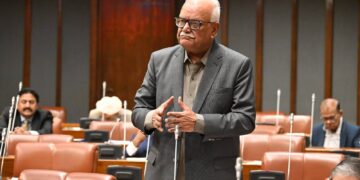


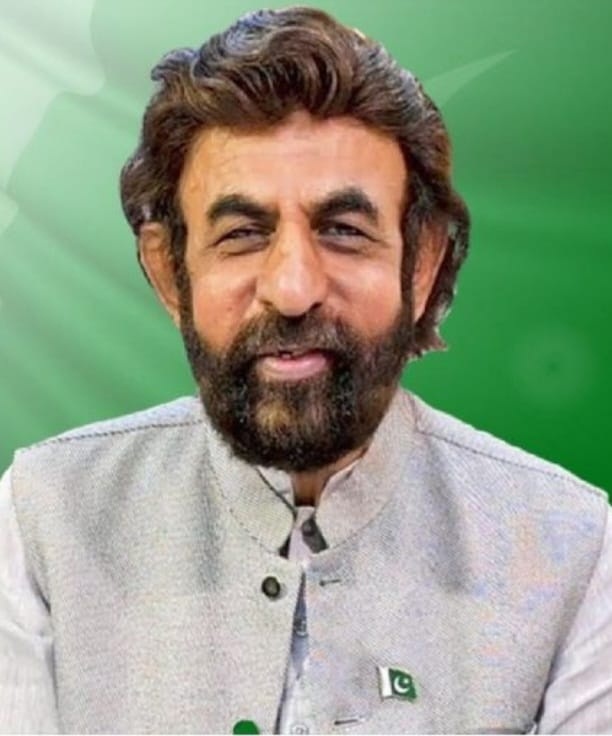
Karachi (November, 2025) – The Chairman of the Exchange Companies Association of Pakistan (ECAP), Malik Muhammad Bostan, expressed confidence in the reform program set by Federal Minister for Finance and Revenue Senator Mohammad Aurangzeb to strengthen Pakistan’s economy, restore investor confidence, and establish a framework for sustainable development. He emphasized the urgent need for adopting a governance model based on reforms.
Malik Muhammad Bostan stated that, like the rest of the world, there is a need in Pakistan to limit the government’s role and instead promote productivity-based growth under the leadership of the private sector. He noted that Pakistan’s economy is improving due to several positive factors, including success in the Pakistan-India conflict, a significant improvement in Pakistan’s global identity, and an increase in the value and prestige of the Pakistani passport. He also acknowledged the notable contributions of Field Marshal General Syed Asim Munir and Prime Minister Mian Shahbaz Sharif, who, for the first time in history, received praise from U.S. President Donald Trump, something that no previous U.S. President had done for Pakistan’s leaders.
He added that Pakistan has achieved macroeconomic stability, which has been internationally recognized, with major rating agencies improving Pakistan’s outlook. The second review under the IMF program was also successfully completed. He highlighted that Pakistan is in a strong position to leverage macroeconomic stability and geopolitical circumstances to transform bilateral cooperation into trade and investment flow, driven by the private sector. However, he pointed out that macroeconomic stability should not be the final goal, and that the best minds must be engaged for further improvements, with the government seeking the support of the private sector.
He stressed the importance of equipping young people with digital and technical skills, particularly in areas like coding, blockchain, and artificial intelligence, to help them access high-value opportunities in these fields.
Malik Muhammad Bostan also referred to the Ministry of Finance’s report for the fiscal year 2025, which revealed that government debt has increased by 3.6%, reaching 74.5% of GDP (9.3 trillion rupees), and that efforts are underway to reduce this to 70% of GDP by the end of the current fiscal year. The government aims to lower the debt ratio to 50% by 2035. He highlighted that the burden of interest on Pakistan’s debt has increased to the point that loans are being taken just to service the interest payments, a situation largely caused by the government’s low revenue and increasing expenditures.
To generate more revenue, he suggested prioritizing sectors like IT, agriculture, and industry. He also warned that the overburden of taxes imposed by the FBR, which accounts for more than 60% of the taxes, is driving multinational companies to leave the country. This, in turn, could lead to a reduction in revenue collection, increased unemployment, and greater poverty.