

KARACHI 03 April 2026: Mian Zahid Hussain, President Pakistan Businessmen and Intellectuals Forum & All Karachi Industrial Alliance, Chairman National Business Group Pakistan, Chairman Policy Advisory Board FPCCI, and Former Provincial Minister Information Technology, has expressed deep concern over the federal government’s decision to sharply increase petroleum prices, following the joint press briefing by Federal Minister for Finance Muhammad Aurangzeb and Federal Minister for Petroleum Ali Pervaiz Malik. The government has raised the price of petrol by Rs137.24 to reach Rs458.40 per liter, while high-speed diesel (HSD) has seen a staggering increase of Rs184.49, bringing it to Rs520.35 per liter. This unprecedented adjustment, triggered by global energy volatility and the Middle East conflict that has pushed global diesel above $250 per barrel, threatens to dismantle the fragile economic stability achieved over the past year.
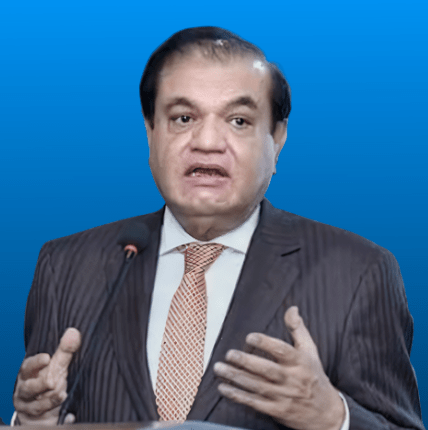
Mian Zahid Hussain
Mian Zahid Hussain said that the impact of this decision on the cost of doing business will be catastrophic, particularly for the industrial sector, which is already struggling with high power tariffs and interest rates. High-speed diesel is the backbone of the country’s transport and agriculture sectors; such a massive hike has led to a vertical increase in freight charges and production costs as Pakistan Goods Transporters have announced a 60 percent hike in fares. Pakistani exports, already facing stiff competition in international markets, will become uncompetitive due to the surge in logistics and operational costs. The government must realize that the industrial wheel cannot turn under the weight of such exorbitant energy costs, risking the shutdown of small and medium enterprises and a subsequent rise in unemployment.
Mian Zahid Hussain also noted that the Inflation, which was recorded at 7.3 percent in March 2026, is now expected to spiral into double digits as the second-round effects of this fuel hike permeate through the supply chain. The commoner, already burdened by a high cost of living, will face an unbearable increase in the prices of essential food items and daily commodities. While the government has announced a targeted subsidy of Rs100 per liter for motorcyclists and direct support of Rs. 70,000 per month for trucks and Rs. 80,000 for heavy-duty vehicles, these measures are temporary palliatives that do not address the systemic inflationary pressure. The middle class is being squeezed out of the economy, and the purchasing power of the masses is depleting at an alarming rate.
Mian Zahid Hussain suggested that to mitigate this crisis, the government must prioritize long-term energy security and structural reforms rather than relying solely on price pass-throughs. There is an urgent need to diversify energy imports and accelerate the transition to renewable energy sources to reduce vulnerability to global oil-market shocks. Furthermore, the government should drastically reduce non-developmental expenditures and administrative costs to provide genuine fiscal space for industrial relief. A more robust and transparent mechanism for targeted subsidies is required to ensure that the most vulnerable segments and key export-oriented industries are shielded from the full impact of global price hikes.
Mian Zahid Hussain also suggested that the way forward lies in a collaborative approach between the government and the business community to devise a sustainable economic strategy. The current practice of weekly or fortnightly price revisions creates a climate of uncertainty that discourages investment and disrupts planning. The government must focus on enhancing the productivity of the agricultural and industrial sectors through direct incentives and by ensuring a stable, affordable energy supply. Only by reducing the “cost of living” and the “cost of doing business” simultaneously can Pakistan navigate this global energy crisis without compromising its economic sovereignty or social stability.