

KARACHI 11 March 2026: Mian Zahid Hussain, President Pakistan Businessmen and Intellectuals Forum & All Karachi Industrial Alliance, Chairman National Business Group Pakistan, Chairman Policy Advisory Board FPCCI, and Former Provincial Minister Information Technology, has expressed grave concern over the mounting economic headwinds facing the country due to the ongoing conflict involving the USA, Israel, and Iran. Addressing the business community on Wednesday, he emphasized that the rapidly escalating geopolitical crisis demands unprecedented national unity and immediate economic adaptation to shield the populace and the industrial sector from a devastating global energy shock.
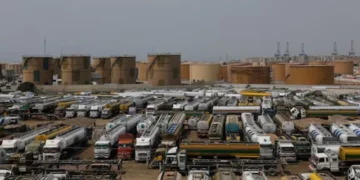
The Former Provincial Minister highlighted that the disruption of global supply chains, exacerbated by tensions near the critical maritime chokepoint, Strait of Harmuz, has disproportionately impacted import-dependent economies like Pakistan. With the country relying heavily on Gulf states for its foreign remittances, petroleum and almost entirely for its Liquefied Natural Gas (LNG) requirements, the sudden volatility in international energy markets is a cause for profound alarm. As Brent crude prices have surged well past the $80 per barrel threshold due to the conflict, the domestic market has been forced to absorb a staggering Rs 55 per litre increase in the prices of petrol and high-speed diesel.
Mian Zahid Hussain observed that the sharp rise in fuel costs is rapidly driving up inflation, expanding the already fragile current account deficit, and significantly raising business expenses in critical manufacturing sectors, which could affect Pakistan’s exports. Hence, the government needs to cover these additional costs using the contingency fund to keep exports at their current levels.
In light of these extraordinary fiscal challenges, the veteran business leader lauded the timely and decisive 18-point austerity plan recently unveiled by Prime Minister Shehbaz Sharif. He stated that the federal government’s proactive conservation measures are indispensable for keeping the fragile economy afloat without shifting the entire financial burden onto the struggling masses. Mian Zahid Hussain specifically commended the government’s pragmatic directives, which include mandating a 50 percent work-from-home policy for non-essential personnel, transitioning government offices to a four-day work week, and shifting educational institutions to online learning to drastically curtail nationwide fuel consumption and commuting costs.
Furthermore, he praised the stringent cuts to government expenditure, noting that the decision to ground 60 percent of official vehicles, slash government fuel quotas by half for the upcoming two months, and reduce non-salary departmental spending by 20 percent reflects a serious and much-needed commitment to fiscal discipline. He also deeply appreciated the leadership demonstrated by cabinet members who have chosen to forgo their salaries for two months, alongside the 25 percent salary deduction for Members of Parliament, calling it a vital show of solidarity with the public during an era of profound economic distress.
Concluding his address, Mian Zahid Hussain urged the broader business community and the general public to extend their full cooperation to the national fuel conservation drive. He cautioned that the State Bank of Pakistan faces renewed complexities, as sustained inflation and high energy costs will compress manufacturing margins and keep borrowing costs elevated, urging local industries to immediately optimize their energy consumption and localize supply chains wherever feasible to survive the prolonged international crisis.
—