


Karachi, Sindh, Pakistan — On March 12, 2026, The Pakistan Horticulture Development & Export Company (PHDEC) convened a webinar addressing mango malformation, a devastating fungal disease severely impacting mango production in Sindh. Experts stressed that timely preventive interventions and integrated disease management (IDM) practices offer effective control, helping growers mitigate losses amid escalating environmental pressures.
Dr. Gul BaharPussio, Senior Scientist at the Plant Disease Research Institute Tando Jam, described mango malformation as a critical challenge for Sindh’s mango farmers, intensified by shifting climate patterns. District-wise incidence includes Mirpurkhas at approximately 55–60%, Hyderabad 46–58%, TandoAllahyar 35%, Sanghar 30%, and Matiari and Shaheed Benazirabad 15–25%. Variety susceptibility varies, with Desi showing around 46%, Dusehri 38%, Chaunsa 30.4%, and Sindhri about 26%. The primary causal agent is Fusariummangiferae (with related Fusarium species in the complex), aggravated by nutritional deficiencies, environmental stress, high humidity exceeding 55–60%, temperature swings, and erratic rainfall that favor pathogen proliferation.
Climate change has amplified threats to Sindh’s mango orchards, disrupting phenology through prolonged heatwaves, unseasonal rains, droughts, storms, canal water shortages, and elevated humidity. These factors cause irregular flowering, poor fruit set, increased flower drop, reduced pollination, heightened pest and disease pressure—including malformation—and yield declines of 15–25% or more in recent seasons, as evidenced by reports of substantial losses from malformation and combined stresses in lower Sindh districts.
Pakistan ranks among the top global mango producers, with annual output around 1.8 million tons ,though diseases like malformation, alongside post-harvest issues, drive losses up to 40%, eroding farmer incomes and export viability.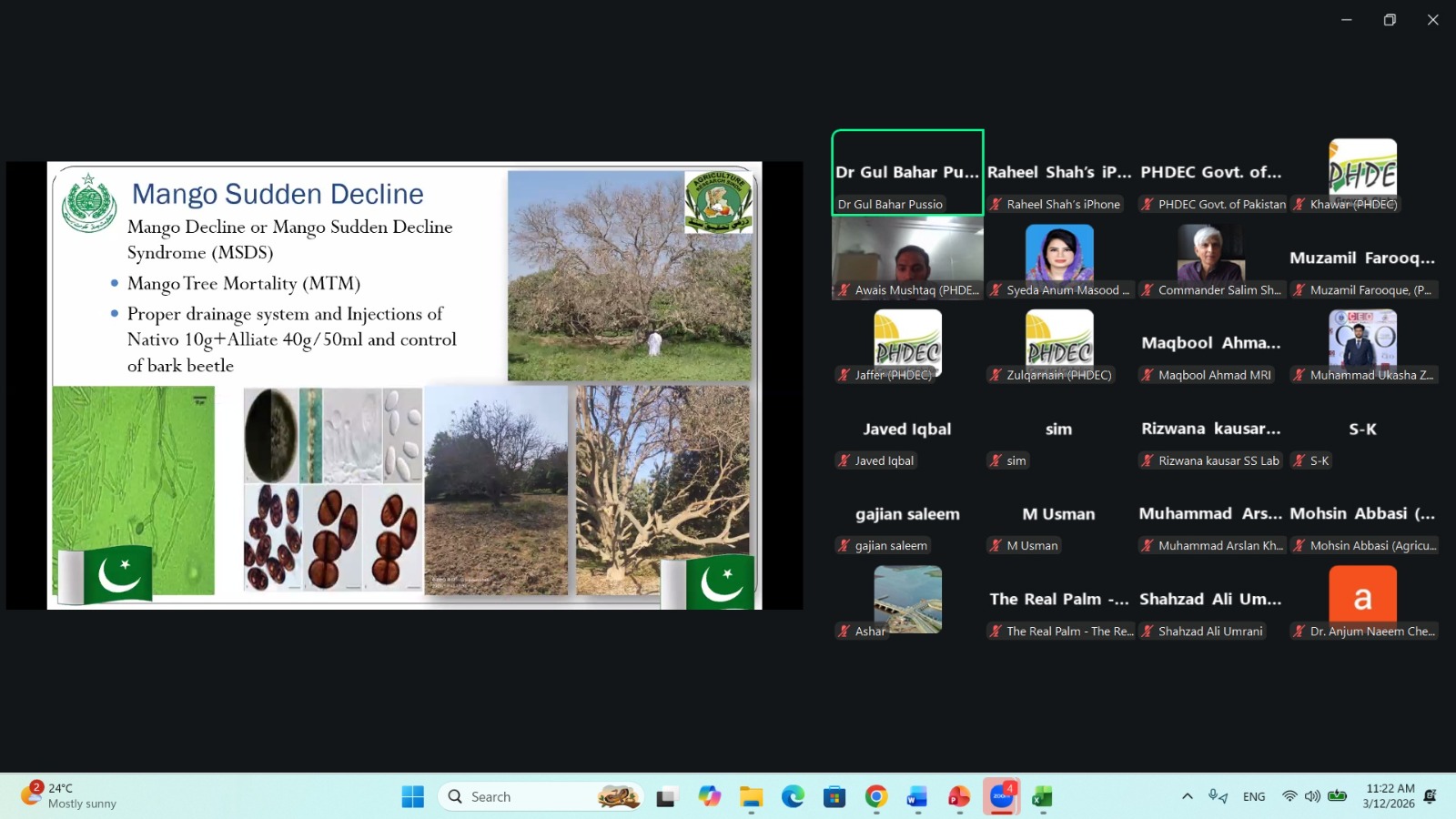
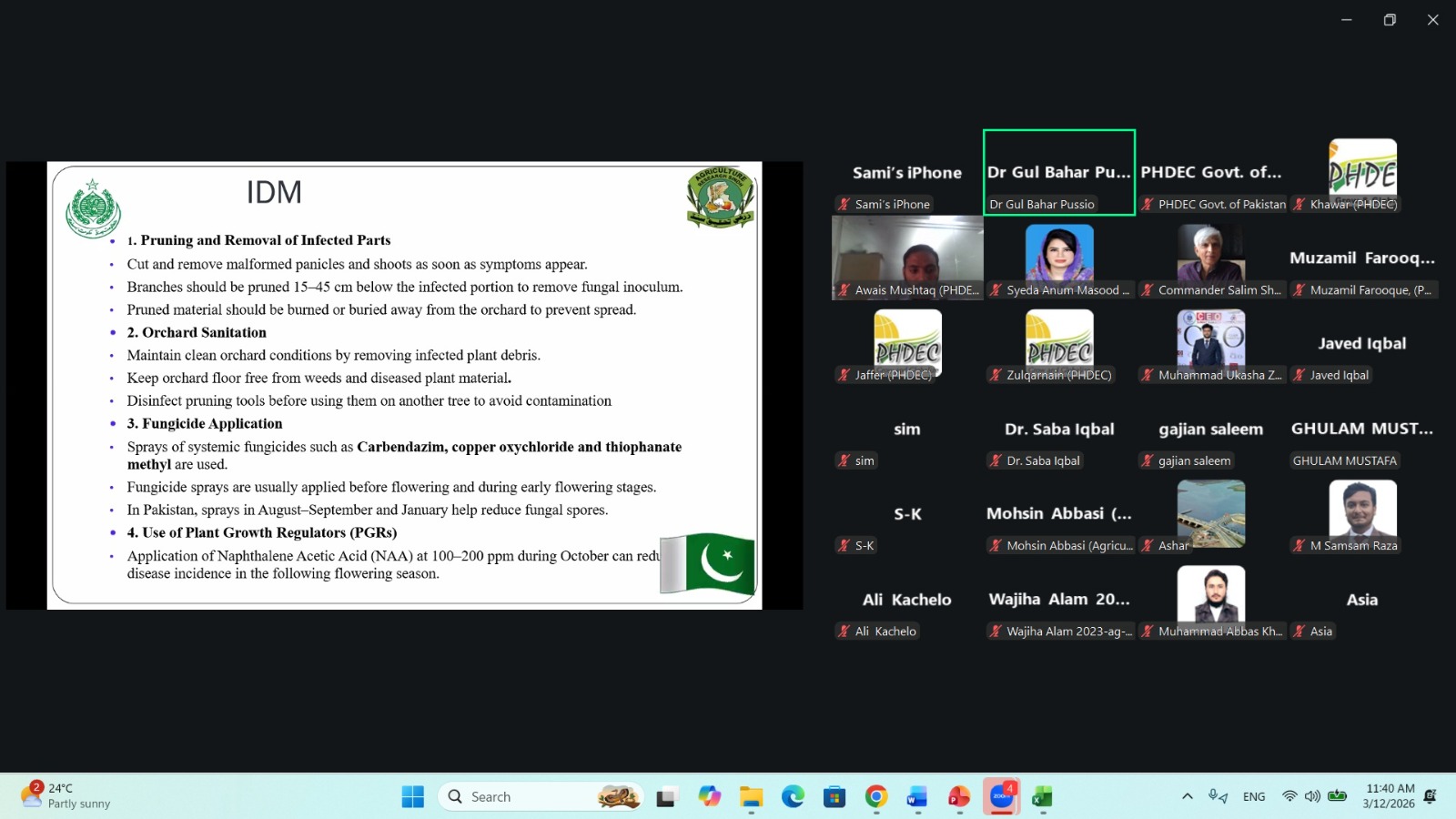
The webinar emphasized a robust IDM strategy for mango malformation control: pruning infected panicles and shoots in August–September before flowering, excising 15–45 cm below symptoms and burning or burying debris to eliminate inoculum; rigorous orchard sanitation, including debris removal and tool disinfection; balanced fertilization incorporating macronutrients and micronutrients (zinc, boron); optimal irrigation, tree spacing for airflow and humidity reduction; exclusive use of certified disease-free planting material; and targeted fungicide applications at early panicle stages when integrated with cultural practices. Early detection and adherence to these measures can markedly decrease incidence and boost productivity.
PHDEC announced its upcoming Horticulture Expo from June 29 to July 1, 2026, designed to highlight fresh and processed mango products, introduce AgriTech innovations, and arrange B2B linkages with global buyers to enhance Pakistan’s mango exports.
Experts concluded that close coordination among researchers, extension services, and farmers is essential to curb mango malformation, adapt to climate change, and secure the future of Sindh’s vital mango sector.