KATI Delegation Meets FBR Chairman to Address Industrial Tax Issues
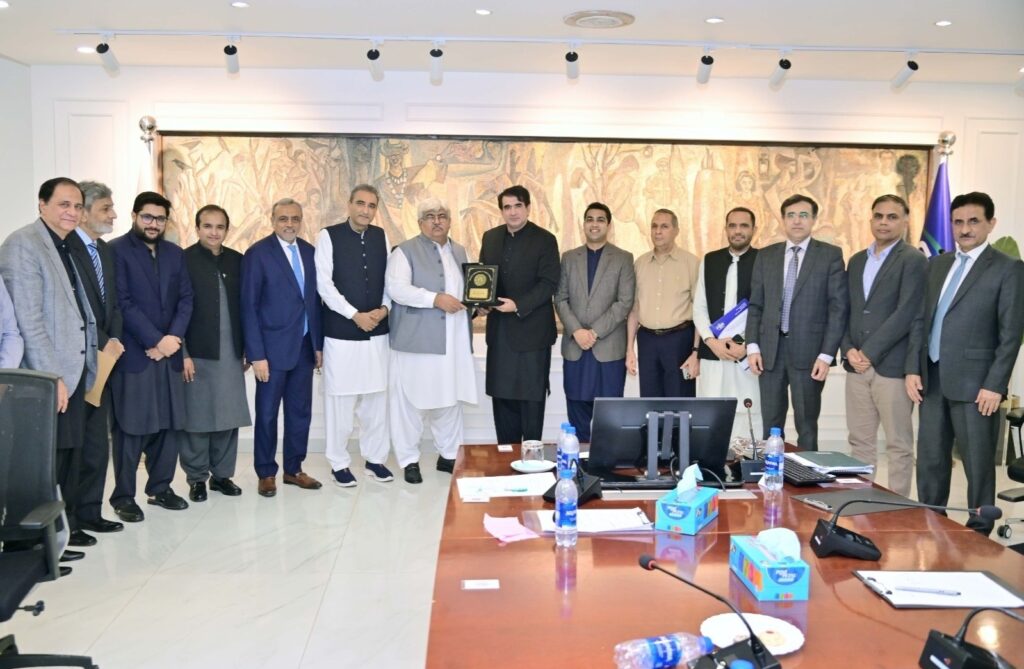
KATI President Sheikh Umer Rehan presents a commemorative shield to FBR Chairman Rashid Mahmood Langrial. KATI representatives, PVMA Chairman Naveed Ahmed, FBR officials and other industry representatives are also present.
The Korangi Association of Trade and Industry (KATI) has urged the government to simplify tax rules and resolve digital invoicing challenges. The association raised these concerns during a meeting with Federal Board of Revenue (FBR) Chairman Rashid Mahmood Langrial.
Led by KATI President Sheikh Umer Rehan, the delegation discussed export promotion, tax digitalisation, anti-smuggling measures and regulatory hurdles. Participants also highlighted problems affecting the ghee and edible oil, textile, pharmaceutical, packaging and plastics industries.
The delegation included Senior Vice President Syed Farrukh Ali Qandhari, Vice President Nasir Sheikh, KITE Limited Chairman Zahid Saeed and CEO Saleem-uz-Zaman. Former KATI presidents Masood Naqi, Tariq Malik, Ehteshamuddin and Rashid Ahmed Siddiqui also attended. Other participants included Pakistan Vanaspati Manufacturers Association (PVMA) Chairman Naveed Ahmed, Rashid Jan Muhammad and Afif Rashid.
Scouts Cadet College Batrasi Cadets Visit ISPR, Hold Special Session with DG ISPR
FBR Member Inland Revenue Operations Zubair Bilal and Member Customs Operations Wajid Ali joined the meeting with other officials.
FBR Calls for Higher Exports
FBR Chairman Rashid Mahmood Langrial urged exporters to expand their reach in international markets. He stressed the need to use available resources effectively to increase Pakistan’s exports.
The FBR will soon meet major exporters to review their concerns, Langrial said. These discussions will help identify barriers to export growth and explore possible solutions.
He added that the FBR was advancing tax digitalisation and automated systems. These measures aim to bring non-filers into the tax net. Langrial also proposed WhatsApp groups to improve communication between the FBR and business community. The groups would allow industrialists to share concerns and recommendations directly with relevant officials.
The chairman also stressed the need to curb smuggling and illegal trade. Such measures, he said, would protect local industries and support legitimate businesses.
Langrial listened to the delegation’s concerns and assured participants that the authorities would take appropriate steps. He also directed Member Inland Revenue Operations Zubair Bilal to meet KATI representatives and members of the ghee and edible oil industries. The meeting would examine their concerns and identify possible remedies.
KATI Seeks Digital Invoicing Support
KATI President Sheikh Umer Rehan said digitalisation was essential for a modern tax system. However, industries needed practical support to overcome difficulties during digital invoicing implementation.
He called for clear guidance, technical assistance and better coordination. Rehan stressed that tax transparency must improve without disrupting industrial and commercial activities.
The KATI president also called for a broader and fairer tax base. He argued that compliant businesses should not bear a disproportionate share of the tax burden. Instead, authorities should identify untaxed sectors and enforce tax laws consistently.
Simpler and more transparent tax procedures could also reduce business costs, Rehan said. He added that such reforms would help encourage investment and strengthen industrial activity.
Industry Demands Regulatory Relief
Rehan highlighted tax and duty-related challenges in the Korangi Industrial Area. He gave particular attention to the ghee and edible oil sector.
He urged the government to review unnecessary statutory regulatory orders (SROs). Complicated requirements, he said, can increase production costs and obstruct business operations. Rehan called for simpler, practical rules to improve the competitiveness of local industries.
The meeting also covered challenges facing the textile and pharmaceutical sectors. Rehan said direct consultations between industrialists and the FBR could help resolve problems linked to tax policy implementation.
Timely action on business concerns would strengthen trust between industry and government institutions, he added. It could also support industrial growth, trade and exports.
Zahid Saeed, Masood Naqi, Ehteshamuddin, Rashid Siddiqui and other participants also raised concerns affecting the pharmaceutical, textile, packaging, plastics and other industrial sectors.