


The events unfolding in early 2026 mark one of the most consequential geopolitical escalations in the Middle East in recent years. The confrontation between the United States, Israel, and the Islamic Republic of Iran is not an isolated military exchange—it is the culmination of years of strategic friction, proxy confrontation, nuclear brinkmanship, and regional distrust.
Within the framework of United States national interests, the analysis must remain grounded in deterrence, allied security, maritime stability, and the containment of coercive expansion beyond sovereign borders. Equally important is the moral distinction that this confrontation is directed at governing structures and policies—not at the people of Iran.
1. What Triggered the War
The immediate trigger appears to have been the collapse of diplomatic channels regarding Iran’s nuclear posture and escalating intelligence assessments about regional threat matrices. Following stalled negotiations, military actions were undertaken targeting strategic assets. Subsequent retaliation by Iran against U.S. and allied interests rapidly escalated the confrontation.
Energy markets reacted instantly, and maritime insurers and shipping companies began reassessing transit through critical waterways, especially the Strait of Hormuz [1][2].
This was not a spontaneous outbreak; rather, it reflects accumulated failures of deterrence and long-standing structural tensions.
2. The Geopolitical Ground Reality: A Sectarian Divide and Strategic Encirclement
Iran operates as a theocratic-authoritarian state in a region marked by a long-standing sectarian divide, surrounded by states that do not share its ideological model. In addition, it remains in an enduring strategic confrontation with Israel.
Over the decades, Iran has relied on an asymmetric doctrine—building proxy networks and influence corridors across borders to extend its leverage beyond conventional military reach [3]. This model has generated sustained suspicion among neighboring states, which view such expansion as interference in their internal sovereignty.
Even when periods of détente emerged, the structural distrust remained unresolved. The regional perception is not merely ideological—it is grounded in patterns of coercive state behavior.
3. Threat Perception Among Regional States
Several Gulf states have consistently interpreted Iran’s posture—whether through rhetoric, missile programs, or proxy engagements—as a strategic threat. This has resulted in:
•Defensive security compacts,
•Expanded intelligence coordination,
•Heightened maritime surveillance,
•Rapid-response civil defense advisories during escalation cycles [4].
This accumulated threat perception has hardened regional attitudes toward the current regime in Tehran. The resulting hostility is not solely sectarian; it is driven by security calculations and concerns about sovereignty.
4. Domestic Pressures in Pakistan and the Influence Debate
Pakistan’s strategic posture has historically oscillated between pragmatic engagement with the United States and resistance shaped by ideological narratives and regional alignments.
It is no secret that competing internal voices have influenced policy directions. Where proxy influence—whether informational, ideological, or financial—enters domestic discourse, it can complicate calculations of national interest. Iran’s documented regional reliance on proxy networks demonstrates how influence can operate beyond conventional statecraft [3].
During previous military administrations in Pakistan, state control mechanisms were often more centralized, limiting the operational space for militant or external ideological penetration. Whether one supports or critiques those eras, institutional consolidation was stronger.
5. Pakistan–Afghanistan Escalation: Strategic Containment
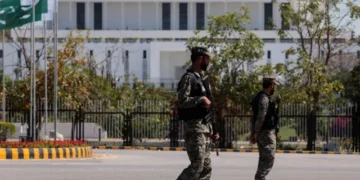
Pakistan’s concurrent military tensions along the western frontier cannot be dismissed as a coincidence. Escalation dynamics reported in late February 2026 indicate serious cross-border security concerns [5].
Strategically, it is logical for Islamabad to secure its western flank during a broader regional conflict. Preventing spillover, infiltration, or destabilization attempts during a regional crisis is a classic defensive doctrine.
This suggests strategic compartmentalization—not opportunism.
6. Regime Change vs. War on a Nation
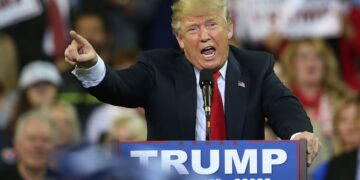
Statements by U.S. leadership have emphasized that the objective is not hostility toward the Iranian population, but opposition to coercive governance structures and destabilizing policies [6].
This distinction is crucial. A sustainable outcome requires:
· Separation of regime accountability from civilian identity,
· Avoidance of a humanitarian catastrophe,
· A pathway for political voice within Iran.
If regime transformation occurs, it must be Iranian-driven in legitimacy.
7. Energy Shock and Pakistan’s Vulnerability
Pakistan remains structurally vulnerable to energy price volatility. Any prolonged disruption in Gulf maritime traffic could trigger:
· Increased oil import bills,
· Inflationary pressure,
· Currency stress,
· Transport and electricity cost surges [1][2].
Even moderate sustained price spikes can materially strain Pakistan’s macroeconomic balance. The speed of conflict resolution is therefore economically critical.
8. Why China and Russia Cannot Simply Intervene
Conspiracy narratives frequently claim that China or Russia will decisively intervene militarily. Such assumptions ignore strategic realities:
· Direct confrontation with U.S. forces carries unacceptable escalation risk.
· Energy market instability also harms Chinese economic interests.
· Russia faces fiscal constraints and sanctions pressures that limit expeditionary capacity [7].
Neither state is structurally positioned for an immediate large-scale intervention that would alter battlefield dynamics without triggering global escalation.
9. Economic Impact on India and Russian-Aligned Economies
India, as a major energy importer, is sensitive to oil price shocks. Analytical estimates suggest that even incremental increases in crude prices can significantly increase India’s annual import burden [8][9].
While higher oil prices may temporarily cushion Russian export revenues, sanctions enforcement and fiscal constraints complicate long-term benefits [7].
Thus, no major economy escapes unscathed from prolonged instability in Gulf supply corridors.
10. Beneficiaries of the Current Regime—and the Future
Under the existing system, beneficiaries typically include:
· Security-linked institutions,
· State-aligned economic conglomerates,
· Sanctions-evasion networks,
· Proxy-aligned actors across regional theaters [10].
If structural change occurs, future beneficiaries could include:
· Iran’s entrepreneurial middle class,
· Diaspora-linked innovation networks,
· Regional trade partners seeking normalization,
· Youth demographics seeking economic integration.
The outcome depends entirely on the stability of post-conflict governance.
11. U.S. Strategic Position and Duration of Conflict
U.S. global leadership rests not on perpetual war but on the credibility of deterrence and trade-route security. If the conflict:
· Restores deterrence,
· Secures maritime corridors,
· Reduces proxy destabilization,
then U.S. strategic leverage may strengthen.
However, duration remains uncertain. The best-case scenario is rapid degradation of destabilizing capacity followed by de-escalation. The worst-case scenario is prolonged retaliatory cycles and maritime disruption.
Synthesis
This conflict represents a contest over regional order, deterrence credibility, and Iran’s political future. For Pakistan, economic stability and border security will be the immediate priorities. For the United States, strategic clarity and proportional containment are essential.
The moral distinction must remain firm: this is not a conflict against a people, but against coercive governance structures that have destabilized regional equilibrium.
References
1. Reuters. “Oil and Gas Majors Suspend Shipments via Hormuz After U.S. Attacks on Iran.” February 28, 2026.
2. Reuters. “Energy Markets React to U.S.–Iran Escalation.” February 2026.
3. Center for Strategic and International Studies (CSIS). “War by Proxy: Iran’s Growing Footprint in the Middle East.”
4. Reuters. “UK Urges Citizens in Gulf States to Shelter After Missile Attacks.” February 28, 2026.
5. Reuters. “Pakistan Strikes Afghanistan Targets as Clashes Intensify.” February 27, 2026.
6. Washington Post. “Trump Frames Iran Strikes as Freedom-Oriented Intervention.” February 28, 2026.
7. Reuters. “Russia Plans to Divert Oil Revenues Amid Fiscal Pressure.” February 2026.
8. India Today Insight. “How Crude Oil Surge Could Impact Indian Business.” February 2026.
9. Business Standard. “Israel–Iran Conflict Likely to Push Up Energy Prices, Hit India Supplies.” February 2026.
10. Critical Threats Project. “Supreme Leadership, Economics, and Power Structures in Iran.”
About the Author
Dr. Gholam Mujtaba, MS, MD, Ed.D., is Chairman of the Pakistan Policy Institute USA (PPI-USA), a U.S.-registered policy think tank focused on U.S.–Pakistan parliamentary diplomacy and strategic dialogue. He serves as Commissioner in the GOP County Committee and has led high-level inter-parliamentary engagement initiatives between members of the U.S. Congress and Pakistani legislators. A scholar of leadership studies with dual doctoral credentials, he has written extensively on governance, geopolitical strategy, and institutional reform. He is a Pakistani American committed to advancing U.S. national interests, democratic accountability, and regional stability.
Advertisements