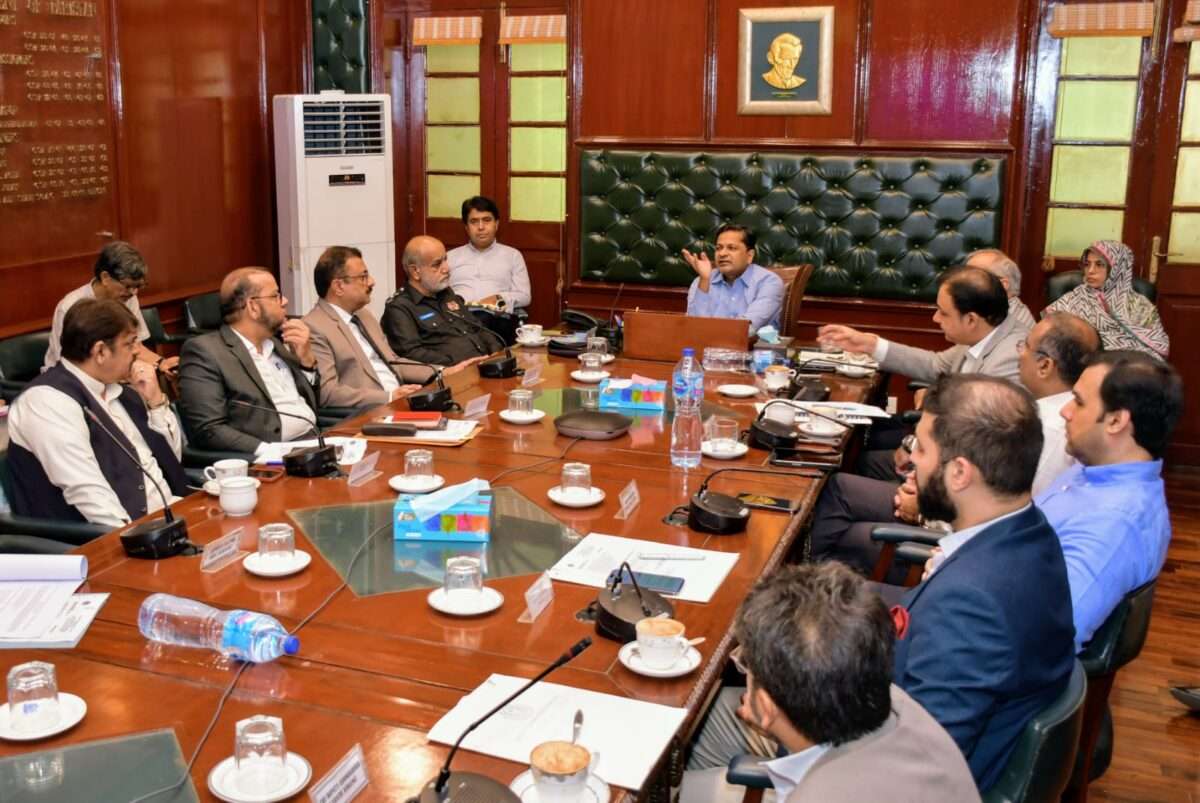


Karachi – July 31, 2025: The Institute of Cost and Management Accountants of Pakistan (ICMAP) has proposed the establishment of a Monetary-Fiscal Coordination Council (MFCC), jointly led by the State Bank of Pakistan (SBP) and the Ministry of Finance (MoF), to align fiscal and monetary policies and avoid conflicting actions that could undermine Pakistan’s fragile economic recovery. The recommendation is part of the latest ICMA MPS Review, released by the Institute’s Research and Publications Department, following the SBP’s decision to maintain the policy rate at 11 percent during its Monetary Policy Committee (MPC) meeting held on July 30, 2025.
ICMAP stressed that at a time when the government is pursuing fiscal consolidation with a 2.4 percent primary surplus target, a continued tight monetary stance could over-restrict economic activity. The proposed council would ensure coordinated policymaking, prevent macroeconomic overcorrection, and promote a balanced approach to inflation control and growth support.
The Institute’s analysis highlights a clear disinflationary trend in the economy. Headline inflation has dropped from 12.6 percent in June 2024 to 3.2 percent in June 2025, while core inflation has declined even more sharply from 21.1 percent to 3.45 percent. Despite this substantial decline, the policy rate has only gradually decreased from 20.5 percent to 11 percent, resulting in a real interest rate exceeding 7 percent—among the highest in the region. ICMAP views this as an unnecessarily tight stance, given the subdued demand and improving financial conditions.
To address this imbalance, ICMAP has reiterated its call for a phased reduction in the policy rate by 50 to 100 basis points per review, accompanied by clear forward guidance. This approach, it argues, would not risk reigniting inflation but would lower borrowing costs, support credit flows, and restore investor and business confidence.
In addition, ICMAP has recommended the implementation of a Targeted Liquidity Transmission Mechanism (TLTM) to ensure that monetary easing reaches priority sectors such as textiles, SMEs, and IT. Despite improved banking sector liquidity, credit transmission to these sectors remains weak. The Institute suggests deploying targeted refinance schemes and credit guarantees to direct resources where they are most needed.
ICMAP has also proposed the launch of a Business Confidence Recovery Program (BCRP)—a joint initiative of SBP and the federal government—to support private sector revival through regionally competitive interest rates, export incentives, and a reduced cost of credit. With inflation under control and demand pressures muted, such a program would help boost investment, expand exports, and generate employment without threatening price stability.
Ahead of the MPC decision, ICMAP conducted a poll to gauge market expectations. The results revealed that 35 percent of respondents anticipated no change in the policy rate, while 32 percent expected a moderate cut of 50 basis points, and 33 percent anticipated a larger cut of 100 basis points or more. These findings reflect broad support for a gradual and data-driven monetary easing path.
ICMAP concluded that Pakistan’s current macroeconomic environment presents a critical opportunity for coordinated policy action. A realignment of monetary and fiscal strategies—anchored by the proposed MFCC—combined with a phased rate cut, targeted liquidity, and confidence-building measures, would provide the necessary stimulus to support recovery while maintaining financial discipline.
ICMA MPS Review Download Link: https://www.icmainternational.com/News_Pdf/ICMAMPSReviewSeventeenthIssueJULY312025.pdf