

November 13-14, 2025: IBA proudly hosted the Fifth Annual International Conference on “A New Global
Order, Yet Again”, which was organized in collaboration with IBA’s School of Economics and Social Sciences
(SESS) and the IBA’s Center for Business & Economic Research (CBER).
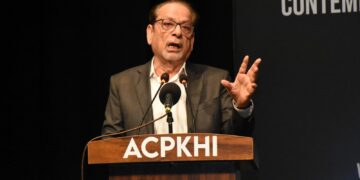
Dr. S Akbar Zaidi, Executive Director, IBA Karachi, in his opening remarks, expressed gratitude, acknowledged
the support of the World Bank Group and Asian Development Bank, and welcomed the participants to the
conference.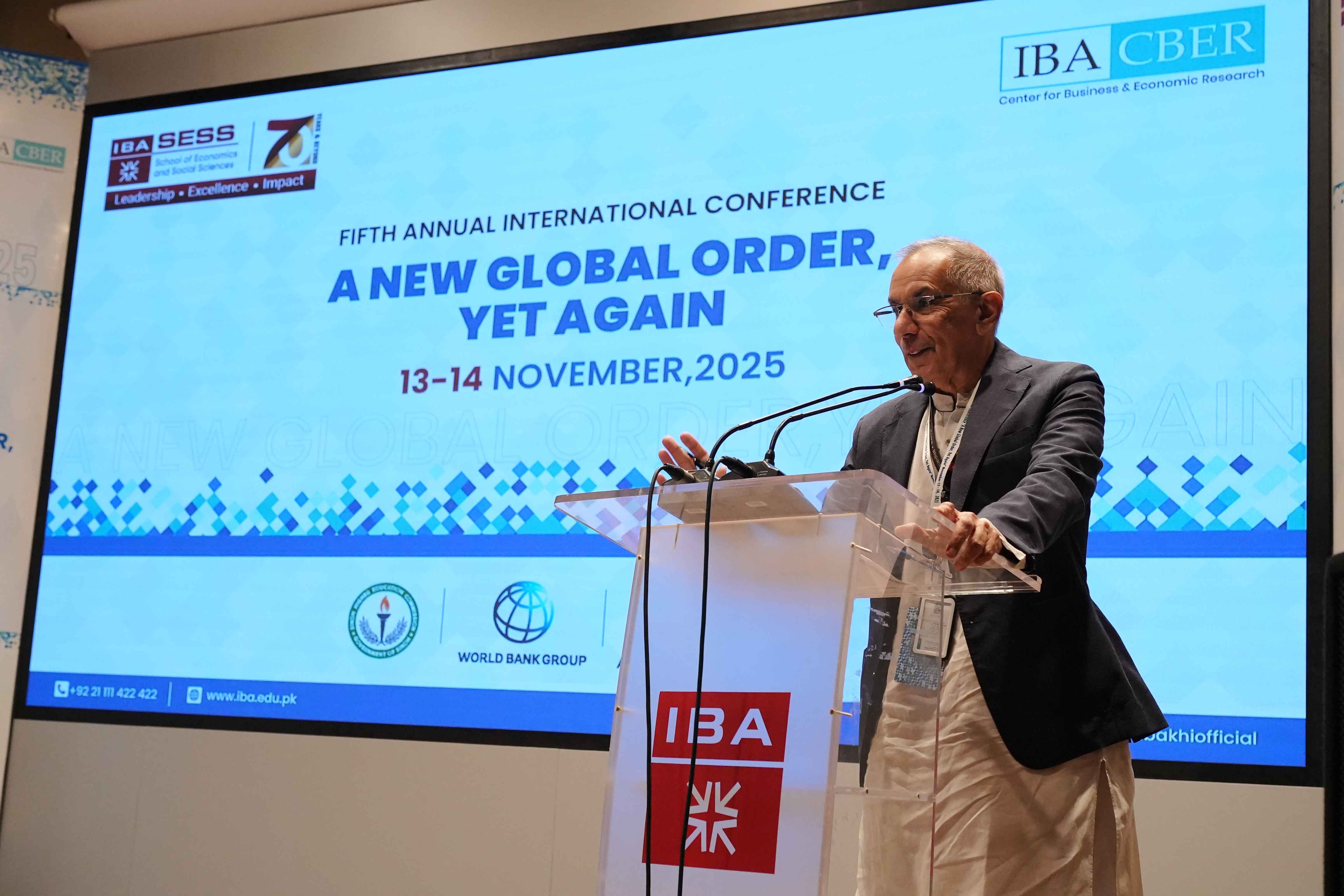
He reflected on the uncertainties of the emerging global order and stressed the importance of
strong institutions, climate resilience, and historical perspective in shaping future development pathways.
Hina Rabbani Khar, Chair of the National Assembly’s Foreign Affairs Committee and Former Foreign Minister of
Pakistan, highlighted the unraveling of the post-1945 global order, noting how unchecked UNSC vetoes
continue to block global accountability. She pointed to China’s rise—from under 5% of global manufacturing in
1995 to over 33% today, and from 8% to 22% of US imports—as a key shift redefining global power. She warned
that selective sanctions and fractured blocs are pushing the world toward a 2.6–3.6°C climate overshoot. For
Pakistan, she stressed acute climate vulnerability, the importance of strategic non-alignment, and emerging
technological opportunities. She called for a foreign policy rooted in national interest and a stronger Global
South voice.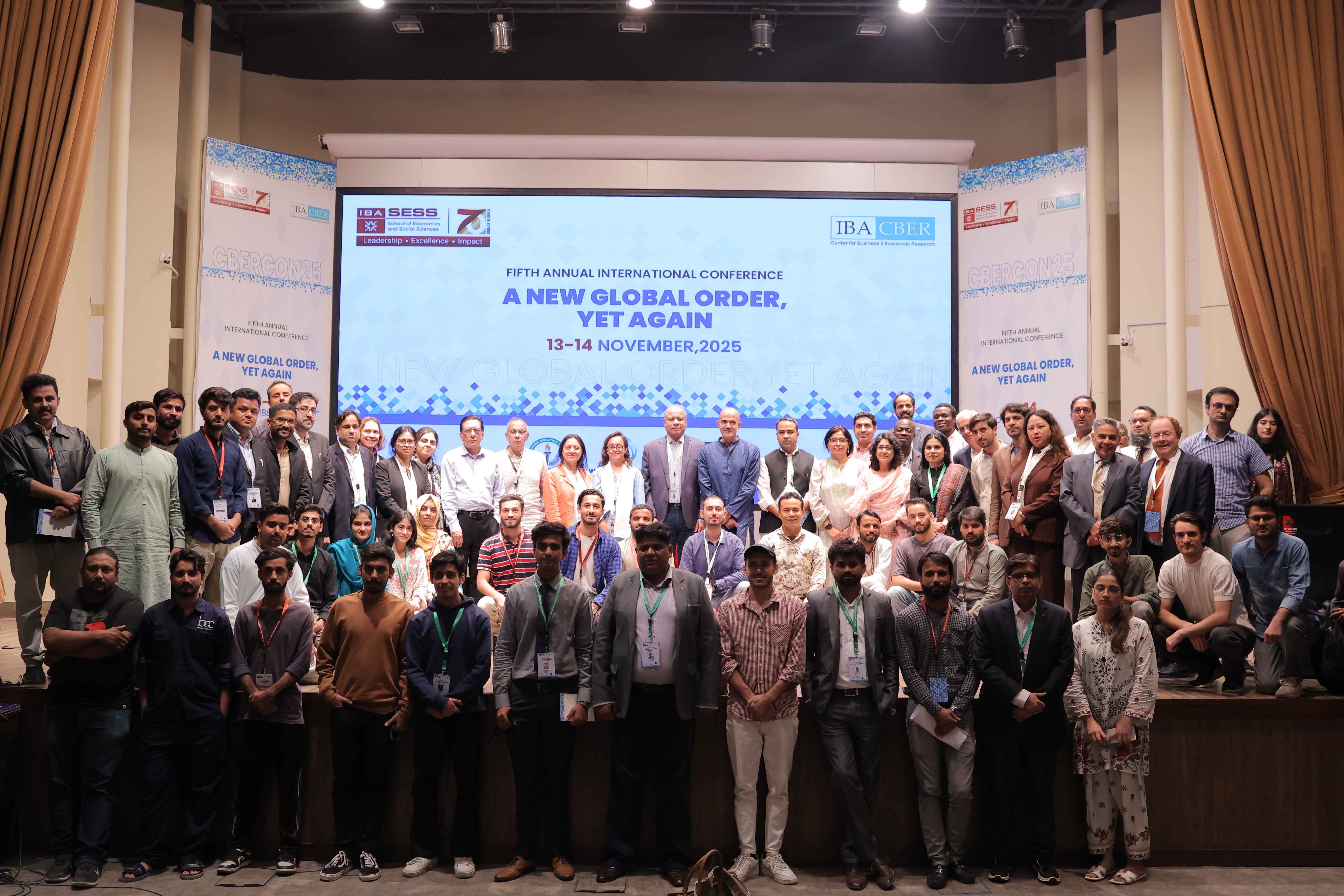
Prominent attendees included Bolorma Amgaabazar, Country Director for Pakistan, World Bank; Mahir Binici,
Resident Representative for Pakistan, International Monetary Fund; Farzana Noshab, Lead Economist, Asian
Development Bank, and Professor Adnan Qadir Khan, Professor, School of Public Policy, LSE, and Former Chief
Economist, UK’s Foreign, Commonwealth & Development Office.
The Conference featured thought-provoking panel discussions, beginning with Pakistan’s Poverty, Equity and
Resilience Assessment, followed by New Order, Old Debts—Can Pakistan Trade Its Way to Stability?, which
brought together experts from the IMF, ADB, OPM and LUMS. The final session, What is New in the New World
Order?, moderated by Dr. Zaidi, explored shifting geopolitical dynamics, rising multipolarity and the implications
for Pakistan’s future development. The panel discussion, “Climate Change and Social Protection”, was
moderated by Dr. Lubna Naz, Director, IBA-CBER, and the discussion focused on aligning Pakistan’s social
protection frameworks with escalating climate risks to safeguard the poorest households.
The parallel technical sessions across both days featured cutting-edge research on public finance and debt
sustainability, AI-driven economic policymaking, climate adaptation and financing, global trade and supply-
chain dynamics, institutional and inclusive growth, and the transformative role of technology in human
development.