

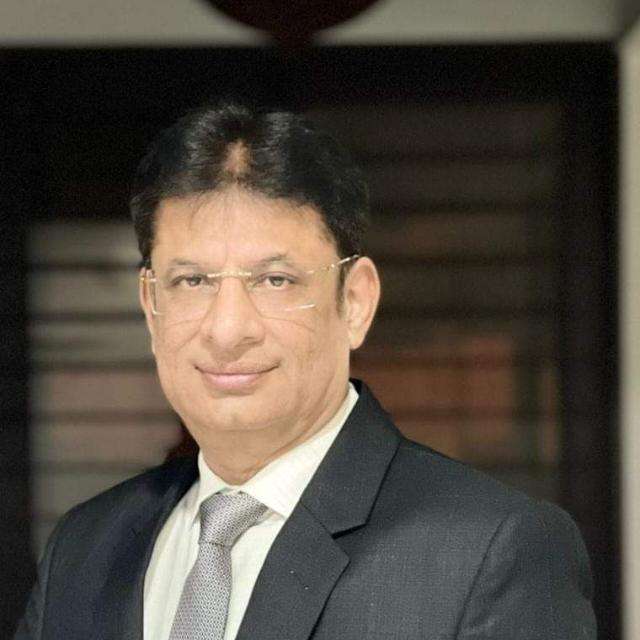
Hyderabad: Muhammad Farooq Shaikhani, President, of the Hyderabad Chamber of Small Traders & Small Industry, has voiced significant concerns over the government’s ineffective financial strategies. He has sharply criticized the recent fiscal policies and the alarming surge in national debt.
Shaikhani highlighted that in a short span, the government has borrowed a staggering 32 trillion rupees from local banks at an exorbitant interest rate of 22%, intensifying the nation’s financial strain. According to the latest State Bank data, the government’s borrowing averaged Rs 71.8 billion per day during this period, underscoring a dramatic increase in spending. Despite achieving a 30% growth, the government accumulated Rs 3.231 trillion in debt over the last 45 days of the fiscal year. This alarming scenario underscores a fundamental failure in the government’s fiscal strategies.
Shaikhani noted that during the 2024 financial year, loans from scheduled banks have reached unprecedented levels, posing significant risks to financial stability. In response to these challenges, the 2025 fiscal year budget proposes substantial tax increases to generate 40% more revenue than the previous year.
President Farooq Shaikhani criticized the government for indicating potential tax increases to boost revenue while failing to make serious efforts to control expenditures. He highlighted that despite the transfer of many ministries to the provinces following the 18th Amendment, these ministries continue to exist at the federal level. The government is spending billions annually on these federal ministries and is burdening the public with higher taxes to cover these costs.
President Farooq Shaikhani likened the government’s practice of borrowing from banks at a 22% interest rate to trying to collect water in a sieve. He expressed deep concerns that the government may struggle to repay these loans, given its lack of financial resources and a clear repayment strategy.
Shaikhani questioned whether the government’s approach to managing this debt will ever be sufficient. He also raised concerns about whether there will be adequate financial resources to repay the funds owed to the business community and the public, who have their money deposited in banks.
Shaikhani called on the government to urgently review its fiscal strategies and implement effective measures to ensure economic stability. He recommended several key actions: prioritizing long-term fiscal planning to minimize reliance on debt, cutting unnecessary expenditures to achieve savings, reforming the tax system to reduce evasion and boost revenue, and fostering private sector involvement to drive economic growth. Additionally, he suggested exploring new markets to enhance exports and improve product quality, and ensuring financial transparency to restore public confidence.
President Farooq Shaikhani emphasized the urgent need for a comprehensive economic management plan to address the current economic challenges. He stressed that achieving consensus among all state constituencies is crucial for developing such a plan. Despite the recent elections and the 2024-25 budget, political and economic stability remain elusive, posing a serious threat to the nation’s economy. This ongoing instability further complicates efforts to manage and repay the country’s mounting debts.