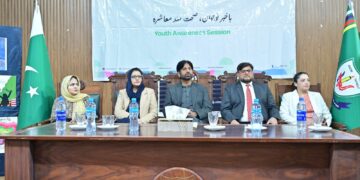


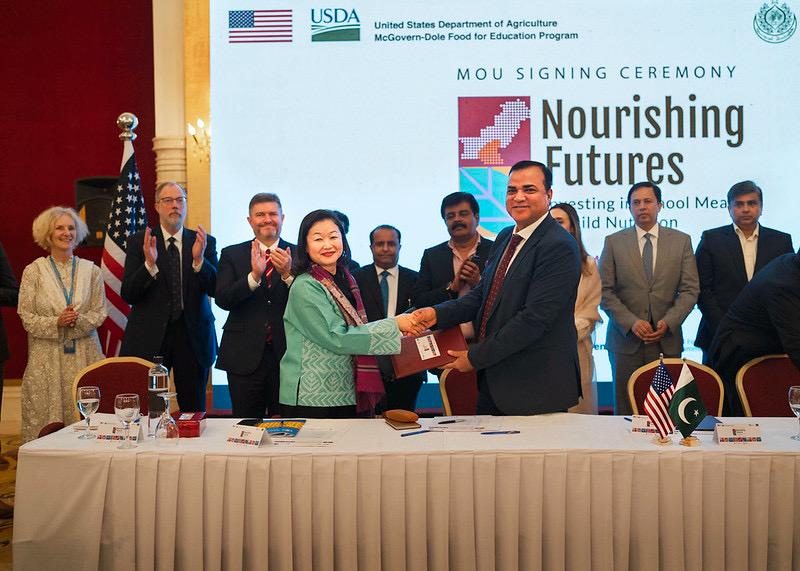
KARACHI, Pakistan (February, 2026) — The Government of Sindh and the United States Department of Agriculture’s McGovern-Dole International Food for Education and Child Nutrition Program today launched the Sindh School Meals Program, which leverages U.S.-provided commodities to deliver daily cooked meals and take-home rations to more than 200,000 students across nearly 1,300 primary schools in Sindh.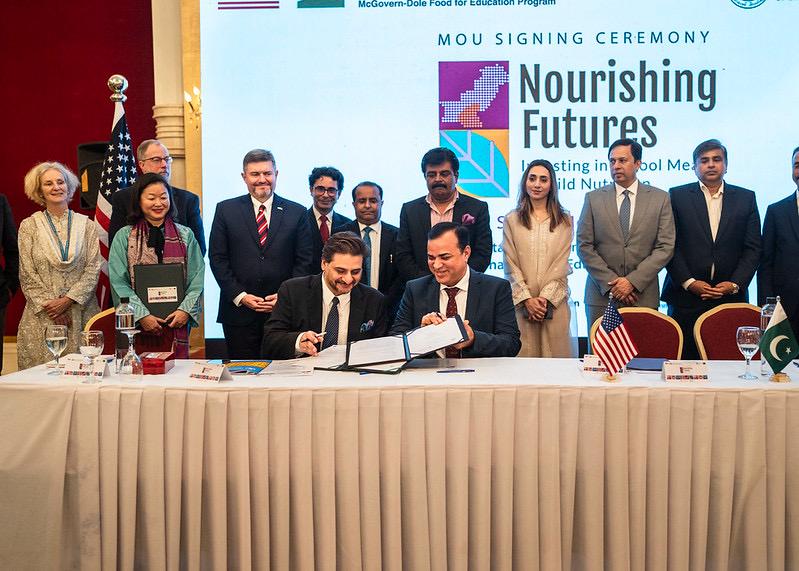
With a USD $80 million funding from the U.S. Department of Agriculture (USDA), the initiative will be implemented by Save the Children and the World Food Programme (WFP), in coordination with Sindh’s Planning and Development Department, School Education and Literacy Department, and provincial Food and Health departments, contributing to improved enrolment, attendance, and foundational learning.
The Sindh School Meals Program represents one of the largest regional investments in school nutrition to date and a major step forward in strengthening school nutrition and education outcomes in the province. By resolving nutritional deficiencies worsened by recent floods and economic downturns, this program will keep children in school and help them perform well academically.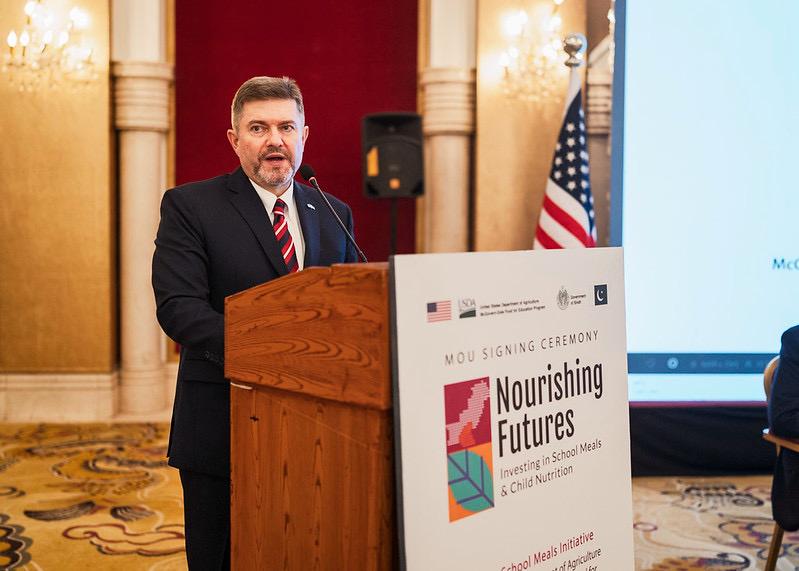
To ensure lasting impact and institutional ownership, the program includes significant investments in capacity strengthening at both school and district levels. Thousands of teachers, headteachers, School Management Committee members, and district officials will be trained in food safety, nutrition education, and monitoring. This is complemented by the rehabilitation of Water, Sanitation, and Hygiene (WASH) facilities in targeted schools, ensuring students’ access to a clean and safe environment for food consumption.
“The United States is proud that our farmers and agricultural producers can support the children of Pakistan by providing quality wheat, pulses, and cooking oil for school meals to feed over 250,000 school children in the next six years,” said Charles Goodman, U.S. Consul General in Karachi. “The?McGovern-Dole Food for Education Program?represents?true partnership?for shared prosperity. A winning plan?for children, for farmers in both our countries, and for the relationship between Pakistan and the United States.”
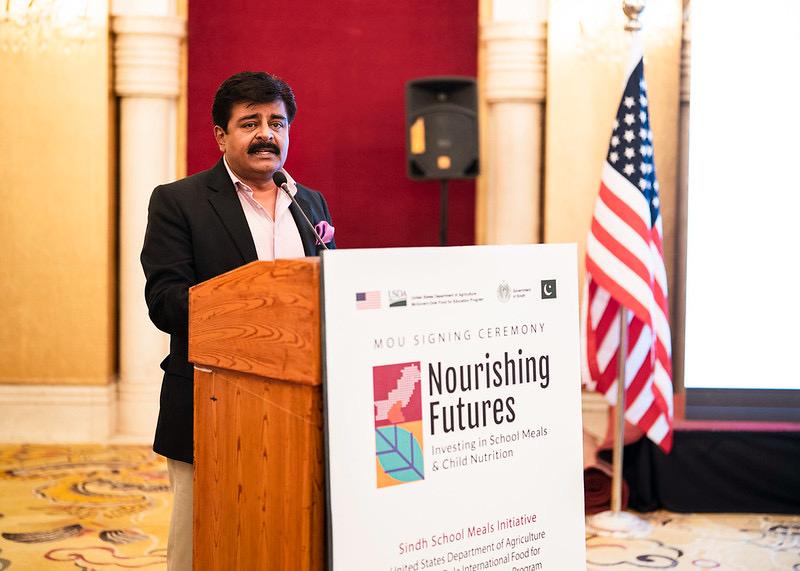
The Minister for Education, Sindh, agreed, noting that “Education is the engine of the nation’s growth and that this partnership fulfills a promise to give every child in Sindh a chance at a healthy, bright future.”
Muhammad Khuram Gondal, Country Director, Save the Children Pakistan reiterated that “For children in Pakistan, hunger stands in the way of learning. This initiative represents a powerful commitment to ensuring that children in Sindh can attend school regularly, concentrate in class, and grow up healthy.” He explained how, with support from the USDA McGovern-Dole Program, Save the Children together with the Government of Sindh and partners, “is working to create schools where children are nourished, protected, and supported to reach a bright and promising future.”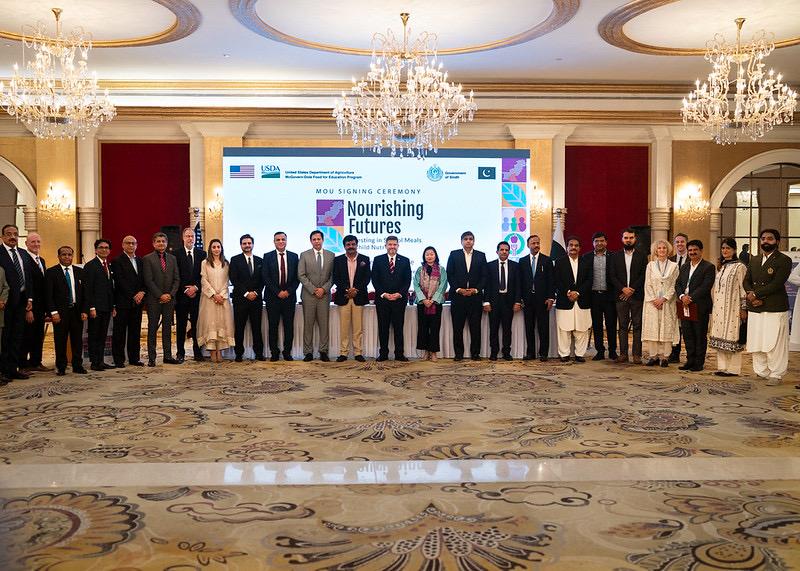
“In Pakistan, where 25 million children are out of school, school meals are a proven multisectoral game changer – providing healthy, nutritious meals, keeping children in school, and improving their ability to learn,” said Coco Ushiyama, World Food Programme Country Director and Representative in Pakistan. “WFP is proud to support the Government of Sindh, with USDA, in building a school feeding system that will ensure every child has the opportunity to learn, grow, and reach their full potential.”
To ensure the highest standards of transparency and provincial ownership, implementation will be overseen by a Joint Steering Committee comprising senior representatives from the Government of Sindh, WFP, Save the Children, and other national partners. Together, these efforts will help ensure that fortified U.S. wheat, vegetable oil, and pulses traveling from American farms—complemented by the local and regional procurement of fresh fruits and vegetables from Sindh’s own growers—reach schools across the province, delivering the nutrition students need to learn, grow, and thrive. By incorporating produce sourced from local farmers, the initiative not only strengthens school nutrition but also supports livelihoods and contributes to a more resilient provincial economy.