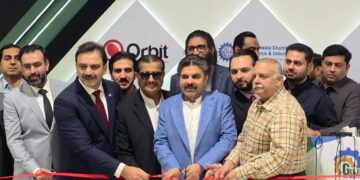


[Karachi – December 5, 2025]: The ICMA Research and Publications Department has developed a book titled “ICMA Diagnosis of Multinational Exits from Pakistan,” which was launched by Dr. Ishrat Husain, eminent economist, former Advisor to Prime Minister and former Governor, State Bank of Pakistan (SBP), on 3rd December 2025 at ICMA Head Office, Karachi.
This book explores the main trends affecting multinational companies in Pakistan, including why some are leaving or restructuring. It highlights the importance of understanding these dynamics, as multinational investments play a crucial role in Pakistan’s economic growth. The book also examines Pakistan’s price sensitive consumers and features case studies such as P&G’s operations and global changes. Further, it reviews MNC trends in South Asia, highlights opportunities in Pakistan, and provides actionable policy recommendations for policymakers and stakeholders.
In his speech, Dr. Ishrat Husain described the ICMA analysis as timely and commendable, noting the widespread confusion around multinational exits. “Many paint a gloom and doom picture, claiming multinationals are leaving Pakistan due to domestic push factors, while others argue that exits are driven by factors exogenous to Pakistan,” Dr. Ishrat Husain said.
Dr. Ishrat Husain emphasized that brands are always popular with the middle class, and in Pakistan, the middle class has shrunk over the last 3 to 4 years. Per capita income has remained stagnant, and the salaried class, which constitutes most of the middle class, is paying higher taxes, reducing disposable income. “When shopping, consumers choose between a pamper from P&G or one at half the price from a domestic manufacturer, due to limited resources,” Dr. Ishrat Husain explained.
Dr. Ishrat Husain highlighted that capital is now accumulating in the Middle East and Gulf States, and is not with the West now. “In Saudi Arabia, the public investment fund is one trillion dollars, and ARAMCO is the single largest company in the world. Qatar has the highest per capita income globally, and its Investment Authority is buying Heathrow Airport, seeking better returns. This is why MNCs are moving to the Middle East and Gulf States, where capital and higher returns are available,” Dr. Ishrat Husain said.
Dr. Ishrat Husain further explained that multinationals have adopted a management model detaching local knowledge from decision-making. “Previously, country heads managed relationships with the government, marketing, advertising, and all products. Now, product managers report directly to headquarters and assess returns without local insights. This detachment affects decisions in Pakistan, prioritizing rate of return over country interests. Private equity funds are flushed with liquidity, and Gulf and Middle East investors are acquiring most of these multinationals,” Dr. Ishrat Husain added.
Dr. Ishrat Husain concluded that these are the three primary factors driving multinational exits. He also urged looking at new company entries. “Chinese, Turkish, and Saudi companies are coming into Pakistan. Western companies may be exiting, but other nations are entering, giving a complete rather than partial picture. Exits should be viewed alongside entries to maintain a balanced perspective,” Dr. Ishrat Husain said. He also delivered a thought leadership lecture on the topic of ‘India, Pakistan and Bangladesh: Pathways to Development”.
Download Book: https://www.icmainternational.
Watch the Book Launch: https://www.youtube.com/live/