


KATI warns industries shutting down due to shortages and low pressure, President Muhammad Ikram
Rajput.
KARACHI: Sui Southern Gas Company Limited (SSGC) Chairman Asif Inam has reaffirmed the company’s
commitment to supplying gas to the industrial sector on a priority basis alongside domestic consumers,
stating that sustained industrial activity is critical for the country’s economic stability.
Addressing industrialists during a visit to the Korangi Association of Trade and Industry (KATI), the
chairman said that new members have recently joined the SSGC board, the majority of whom are
stakeholders well aware of the company’s operational issues and their possible solutions. He noted that
winter gas shortages had forced the company to temporarily suspend supplies to industry, as pressure
at gas fields declined and alternative arrangements could not be secured as expected.
“As part of future planning, SSGC will formulate a comprehensive winter gas load management plan in
consultation with industry to ensure uninterrupted industrial operations,” Asif Inam said.
The meeting was attended by KATI President Muhammad Ikram Rajput, Acting Patron-in-Chief Zubair
Chhaya, Senior Vice President Zahid Hameed, Vice President Muhammad Talha Ali, Standing Committee
Chairman Ehtishamuddin, CEO KITE Zahid Saeed, former chairmen and presidents including Junaid Naqi,
Farhan-ur-Rehman, Masood Naqi, Farrukh Mazhar and Rehan Javed, along with SSGC Acting Managing
Director Amin Rajput, Syed Fahad and other members of the business community.
SSGC Acting Managing Director Amin Rajput, in his address, said that Balochistan is currently
experiencing extreme cold with temperatures dropping to minus 10 degrees Celsius, making daily life
heavily dependent on gas. “Despite financial losses, SSGC remains bound on humanitarian grounds to
ensure uninterrupted gas supply to Balochistan,” he said.
He explained that the bulk of imported RLNG is allocated to Sui Northern Gas Pipelines Limited, while
SSGC draws gas only according to industrial requirements. However, during winter, even RLNG
availability becomes constrained. He added that the exit of captive power plants from the system has
reduced gas consumption by around 100 MMCFD, resulting in the loss of a consumer base that
previously purchased gas worth approximately Rs100 billion annually, posing a major challenge for the
utility.
Amin Rajput noted that domestic gas supply is declining at an annual rate of around eight percent, while
newly discovered gas takes nearly two years to be added to the system. He said the fertiliser sector,
which previously received about 60 MMCFD, is currently being supplied only 2 MMCFD. Expressing
cautious optimism, he said that gas demand peaks in January due to severe cold and is expected to ease
in February as weather conditions improve. He also cited research indicating that Pakistan may not
require RLNG imports after 2031, which is why the government has started diverting RLNG cargoes.
Earlier, KATI President Muhammad Ikram Rajput said that Chairman Asif Inam’s background in the
business community had raised industry expectations for effective resolution of longstanding issues. He
warned that gas shortages and low pressure had already forced industries to shut down, increasing
reliance on alternative fuels and sharply rising production costs. Continuous increases in gas prices, he
added, were also suppressing demand, and the government should reduce gas tariffs for industry.
Acting Patron-in-Chief Zubair Chhaya stressed that close consultation between industrialists and SSGC
could help resolve many issues. He expressed hope that the chairman would act as a bridge between
industry and the government, conveying ground realities to the relevant ministries. While
acknowledging SSGC’s constraints, he said that economic development without industrialisation was not
possible, especially amid rising energy costs.
Standing Committee Chairman Ehtishamuddin said this was the second consecutive week of announced
gas shutdowns for industry, exacerbating operational difficulties. He urged the government to prioritise
gas supply for industry alongside domestic consumers.
Vice Chairman of the Standing Committee, Rehan Javed, urged SSGC to review the decision to suspend
gas supply on Saturdays, suggesting that better pressure management or a partial shutdown of 50
percent could help avoid complete closures. He also challenged official claims of a 27 percent increase in
energy demand, stating that data analysis shows a 12 percent decline in annual demand if captive power
consumption is excluded.
CEO KITE Zahid Saeed said captive power plants had effectively become scrap due to prolonged
shutdowns and erratic gas pressure, making gas an unreliable energy source. He questioned the
government’s stance on increasing gas shortages while simultaneously diverting RLNG cargoes. He
added that industry was willing to purchase gas at government-notified prices, provided uninterrupted
supply was ensured, and complained of delayed notifications regarding shutdowns, which left no time
for alternative arrangements.
Former KATI President Masood Naqi highlighted wide disparities in gas pricing and called for a uniform
policy for the sector. He urged immediate resolution of gas pressure issues, rationalisation of tariffs,
provision of gas to captive power plants at grid-equivalent rates, and settlement of pending litigation.
He also emphasised that balanced pricing and sound policymaking could help curb gas theft.
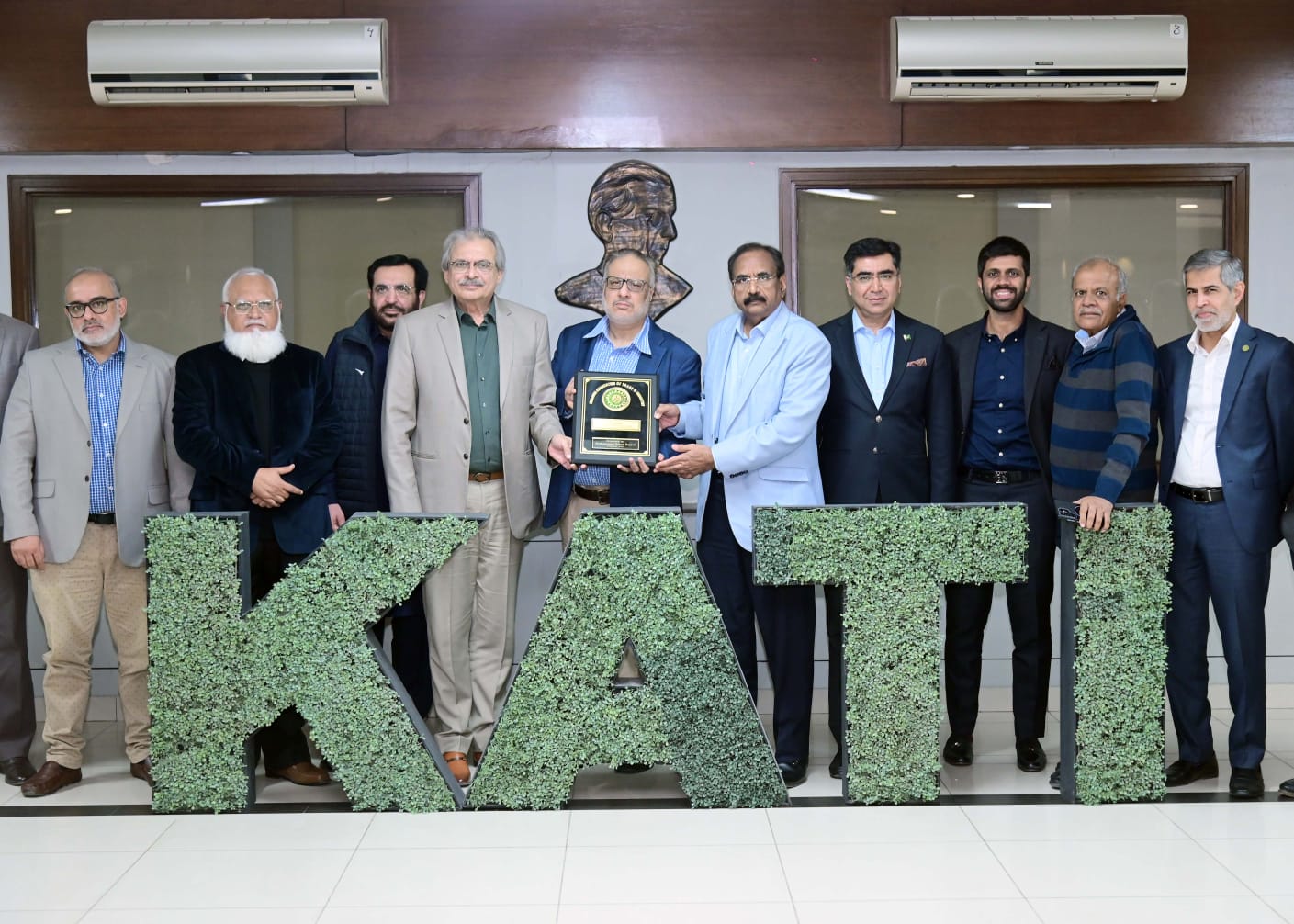
Photo caption: KATI President Muhammad Ikram Rajput and Acting Patron-in-Chief Zubair Chhaya
presenting shield to SSGC Chairman Asif Inam. Zahid Hameed, Muhammad Talha Ali, Ehtishamuddin,
Zahid Saeed, Junaid Naqi, Syed Farukh Mazhar and Rehan Javed are also present.