

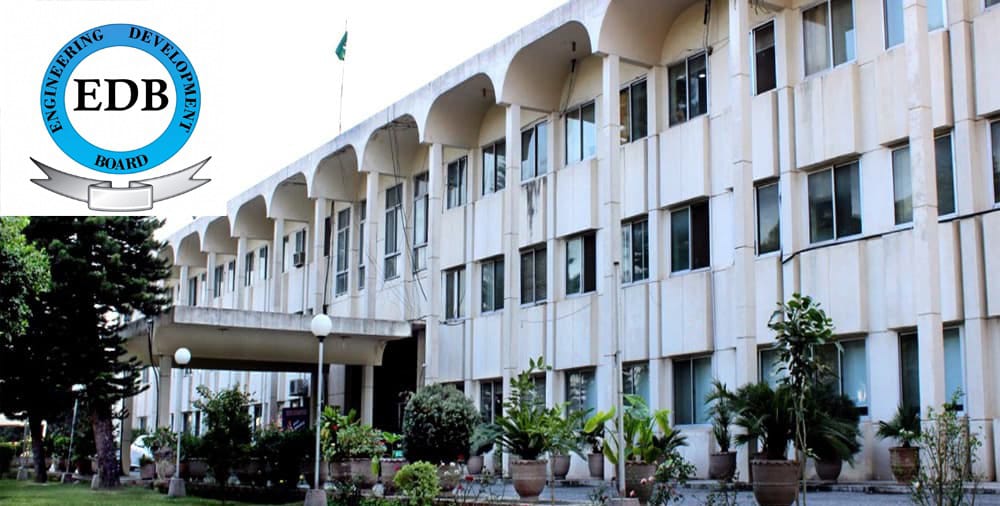
Islamabad — A parliamentary probe and a damning special audit report have together laid bare what officials describe as one of the most serious governance failures in a key federal institution, exposing years of alleged unlawful deputation, unauthorized promotions, regulatory manipulation, and massive financial damage to the national exchequer.
The case centers on a senior officer at the Engineering Development Board (EDB), originally inducted on deputation from the State Engineering Corporation in the early 2000s, whose continued presence, absorption, and rise to the top echelons of the organization have now been declared irregular by audit authorities and questioned by the National Assembly Standing Committee on Industries and Production.
Deputation That Never Ended
Under Pakistan’s Civil Establishment Code (ESTA Code, Vol-I), deputation is capped at three years, extendable to a maximum of five years with proper approval. Beyond that period, an officer must either be repatriated to the parent department or lawfully absorbed through a transparent and approved process.
Audit records reveal that the officer remained in EDB for nearly two decades — far exceeding the statutory limit — without any documentary evidence of approval for extension, lawful absorption, or repatriation. Despite repeated scrutiny, the department failed to produce any record justifying the continuation.
The audit bluntly raises the question: On what legal authority did the officer continue to serve?
Absorption Without Rules, Authority, or Approval
Even more troubling is the claim that the officer was “absorbed” into EDB. Audit scrutiny found no formal absorption order issued by a competent authority, no approval from the Federal Government — a mandatory requirement — and no change in service status from deputationist to regular employee.
Compounding the irregularity, audit noted that EDB itself had never framed or obtained approval for its service rules, as required under the Rules of Business, 1999. In the absence of approved service rules, auditors observed, there was no lawful mechanism for absorption, promotion, or career progression at all.
Yet the promotions continued.
Promotions on a Legally Non-Existent Foundation
Despite unresolved questions about his service status, the officer was successively promoted over the years — eventually rising to senior-most management positions.
Audit findings state that:
• Promotions were granted without lawful absorption.
• No approved service framework existed to support such promotions.
• One promotion was made against a post that did not even exist in the approved organizational structure.
• No record of creation or sanctioning of this post by a competent authority was produced.
Promotion against a non-sanctioned post, auditors warn, constitutes an irregular upgradation with direct financial implications, unlawfully burdening the public exchequer.
Promoted While Under Inquiry
The Departmental Accounts Committee (DAC), in August 2021, directed a de novo inquiry to determine the legality of the officer’s continuation and promotions. Audit records show that:
• The inquiry was never conducted.
• The DAC’s directive was ignored.
• Promotions were granted despite unresolved scrutiny.
Public service rules clearly prohibit promotions when an officer’s eligibility is under active inquiry. Audit officials described this as a clear breach of administrative safeguards.
Parliamentary Showdown and Court Shield
These findings came sharply into focus during a meeting of the National Assembly Standing Committee on Industries and Production on February 26, 2026. The committee summoned the officer to explain his position amid allegations of corruption, misuse of authority, and illegal overstay.
However, proceedings stalled when it emerged that the officer was operating under a court-issued stay order. The committee chair barred him from presenting any explanation until the stay order was withdrawn, signaling parliamentary concern that judicial cover was being used to evade accountability.
Billions Lost, Industry Undermined
Beyond service irregularities, the committee was briefed on a much wider pattern of alleged abuse: frequent and unlawful exemptions from customs duty, additional customs duty, and regulatory duty on raw materials, semi-finished, and finished goods.
Lawmakers were told that these exemptions — allegedly granted over a 15-year period — may have caused losses running into hundreds of billions of rupees, while simultaneously damaging local industry and distorting competition.
Investigators described the operation as a systematic capture of regulatory authority, benefitting select importers at the expense of the national economy.
A Systemic Failure, Not an Isolated Case
The combined audit and parliamentary findings paint a stark picture:
• Illegal continuation beyond deputation limits
• Absorption without authority
• Promotions without service rules
• Upgradation against non-sanctioned posts
• Defiance of DAC directives
• Use of court protection to delay accountability
Officials say the case reflects not a single administrative lapse, but a systemic collapse of governance, oversight, and internal controls within the institution.
Questions That Refuse to Go Away
The audit and the Standing Committee have now placed pointed questions before the government:
1. Who authorized the illegal continuation beyond five years?
2. Who approved promotions without lawful absorption?
3. Who allowed the use of a non-sanctioned post?
4. Why was the DAC’s inquiry order ignored?
5. What is the full financial cost to the exchequer?
As a new administration at EDB begins to unearth past decisions, the case has become a litmus test for transparency and accountability.
This is no longer just about one officer.
It is about whether the system itself will finally be held to account.