

By Manzar Naqvi
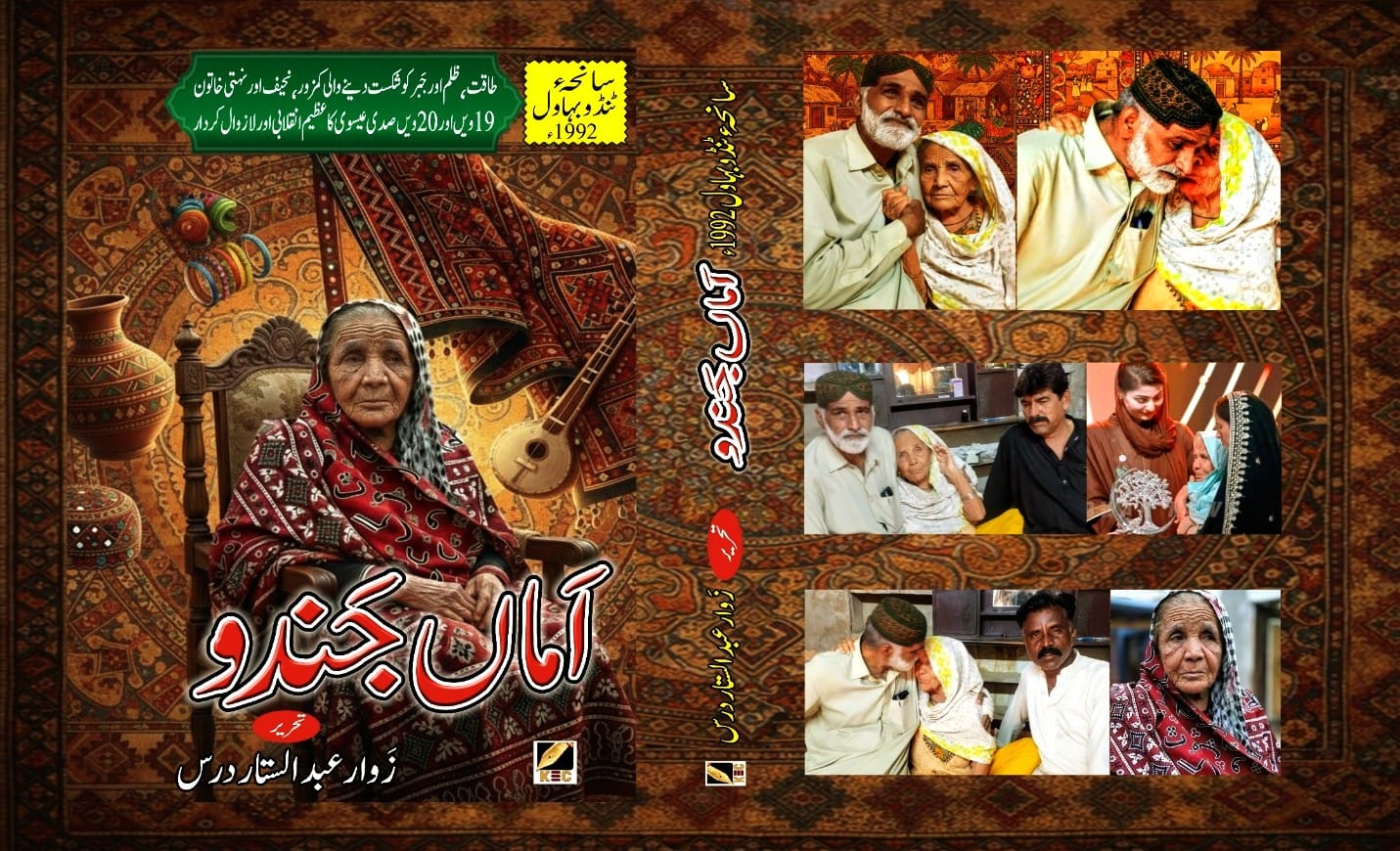
The history of Sindh is filled with numerous events and characters that have been buried under the dust of time, yet their echoes continue to stir the human conscience. The book “Amman Jando” by Zawwar Abdul Sattar Dars is a serious and commendable effort to revive one such forgotten story. Zawwar Abdul Sattar Dars, the author of over 178 books, whose writings encompass Sufism, religious themes, regional history, the culture of Sindh and figures such as Maharaja Dahir, has, in this work, illuminated a deeply sensitive and painful chapter of history.
“Amman Jando” is not merely a book but a historical testimony. It narrates the story of a ????? woman whose struggle, sacrifice and unwavering resistance against ??? have become exemplary. The author meticulously compiles a series of events, including judicial proceedings, social reactions and the shortcomings of the state apparatus. The details and references presented throughout the book clearly establish that it is not just a narrative but an authentic historical record preserved for future generations. One can only imagine the challenges the author must have faced in gathering and documenting these facts. Undoubtedly, the completion of this work stands as yet another significant contribution of Zawwar Abdul Sattar Dars to the people of Sindh.
One of the most compelling aspects of the book is that it not only tells the story of an individual but also reflects the broader societal structure. The struggle of Amman Jando represents all those oppressed individuals who wander for years in search of justice. The book courageously highlights how institutions of justice, social frameworks and administrative systems sometimes fail, leaving ordinary citizens alone to raise their voices. This remarkable woman carried forward a five-year-long protest movement demanding justice for her innocent victims. When despair began to set in due to the denial of justice, she, along with her two young daughters, resorted to the extreme act of self-immolation. While she survived with severe injuries, both of her daughters lost their lives. In doing so, she not only demanded justice for the innocent blood of her loved ones but also sacrificed the lives of her two daughters in this painful struggle.
The significance of this work also lies in the courage of the author to choose such a difficult subject. The book reminds us that history is not shaped solely by kings and rulers but also by the sacrifices and struggles of ordinary people. The manner in which the author presents this account deeply moves the reader and compels reflection on where we stand as a society.
The language of the book is simple yet profoundly impactful, making it accessible to readers from all walks of life. The author has presented even complex realities in a way that is both understandable and emotionally resonant, a quality that distinguishes this work from conventional historical writings.
For the people of Sindh in particular, this book holds the status of an important document. It is not only a part of Sindh’s history but also strengthens the collective consciousness of its people. The story of Amman Jando teaches future generations the importance of raising one’s voice against injustice, regardless of how difficult the circumstances may be.
In conclusion, it would not be an exaggeration to say that “Amman Jando” is a work that is not just read but felt.h Through this book, Zawwar Abdul Sattar Dars has given voice to a silent story and eternal life to the struggle of an oppressed individual. His effort is a valuable addition not only to the literary and historical heritage of Sindh but of the entire country, and it will be remembered for a long time.

By Manzar Naqvi