
What Samosas Taught Me about Ramadan in Isolation
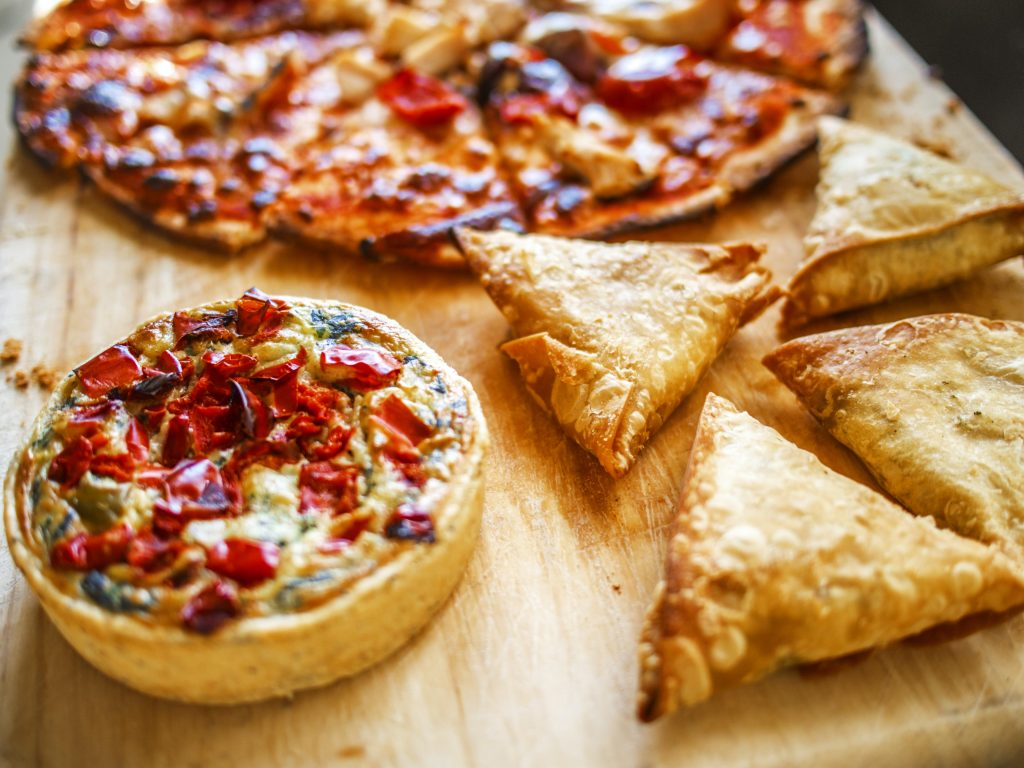
Samosas – the crispy, triangular pastries stuffed with spiced beef, or depending on your style, tarty potatoes – are a staple of Ramadan in Pakistani culture. My childhood memories of samosas are all linked with Ramadan: learning how to fry them in the karahi, timing it to where they’d still be piping hot at iftar, the smell of them while impatiently waiting for sunset. Samosas were emblematic of the month, a way to distinguish it and celebrate it.

Photo by Brett Jordan on Unsplash
This year, though, it’s different. There are no gatherings at the mosque or at friends’ homes for me to get my iftar fix. I won’t be relishing any of my mother’s samosas, socially-distanced not just six feet away but in another state. With coronavirus and quarantining, what’s been made noteworthy about this year’s Ramadan is what’s missing. Nighttime prayers at the mosque are suspended. There are no communal iftars. The Ka’bah is without worshippers. It is a loss, one which alters the spirit of Ramadan for many.
However, the absence of large gatherings, fundraisers and lectures makes room for something else: solitude. Ironically, solitude is an oft-forgotten but integral part of the history of Ramadan; Muslims believe that the Prophet (S) himself had taken to reflecting alone in nature, and it is during one of those times that the Qur’an was revealed to him — within Ramadan. Before there were today’s super-mosques and behemoth congregations, there was Muhammad, isolated, in Cave Hira.
Despite enjoying samosas over so many Ramadans, I had never actually learned how to make them myself until this year. I never felt like I had the time to learn; it was always so busy. With a quiet weekend indoors this Ramadan, and the alternative being 30 samosa-less dinners, I finally learned — and made three dozen. I learned because I want to pass down the legacy of my mother when I have children. I made them so that my husband, who is Jordanian, could share in my culture with me our first Ramadan together. I made them because they are so woven into the fabric of the month, that these glorious treats could still make it feel like Ramadan within my home.
Ramadan has just as much to give us through isolation as it does through community. We can try and virtualize it with Zoom iftars, with video lectures, with online prayers. Or, we can simply embrace the reality that we have a more disconnected month this time around – from others, but not from our faith. While it’s under unfortunate circumstances and through a forced choice, it remains that this holiday month, we can allow ourselves to take isolation as a gift and with it, the joy it can bring. Untethered from the community, that now-unoccupied space is where we can shift focus to connecting instead with ourselves, our home, God. We have time with which we can instead reflect, create, learn, form new traditions and memories with our partners and children.
Here’s another thing about samosas: they don’t look perfect. Their edges don’t always line up; try as you might, the equilateral triangle may just fold scalene. But once you bite into it, it doesn’t matter — the filling inside makes the samosa. Without it, it’s just an empty shell.
Life’s given us some lemons, but this Ramadan, we can make lemon juice. And use it for the samosa filling.