
Iran-Pakistan Ties Take Centre Stage in Karachi Talks
Iranian Consul General Akbar Essa Zadeh highlights trade, energy, ports, tourism and cultural cooperation during a meeting with a Pakistan Council for Foreign Relations delegation
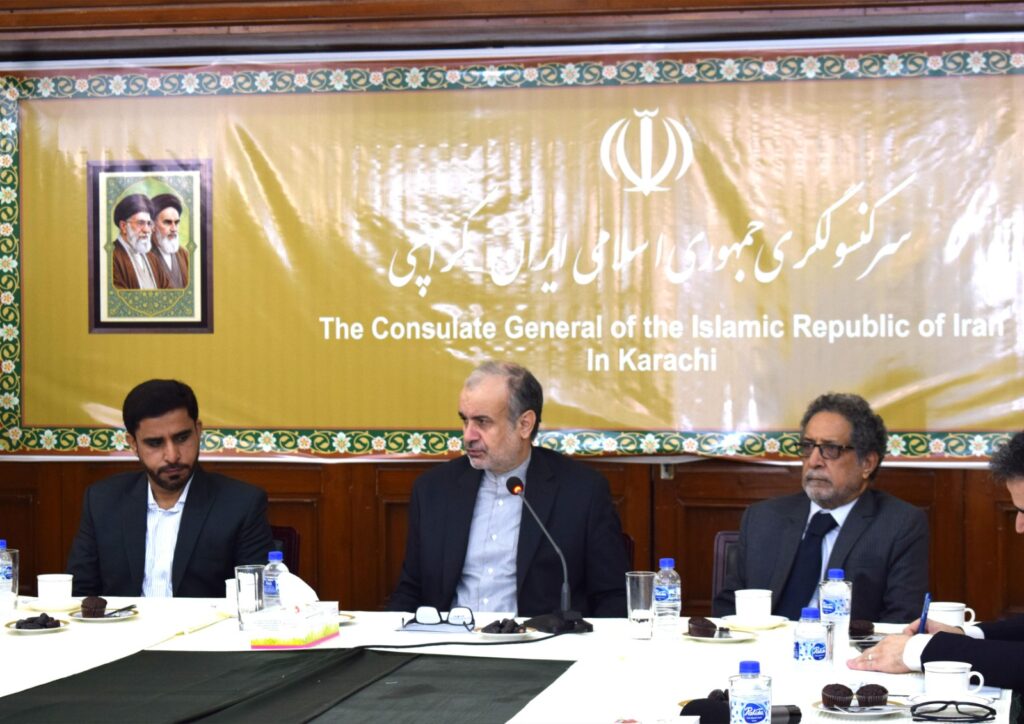
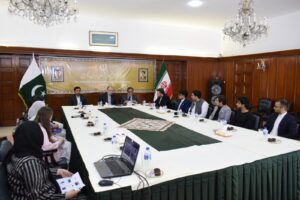
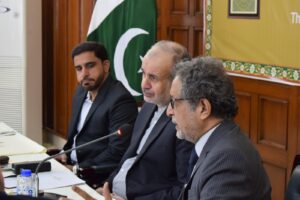
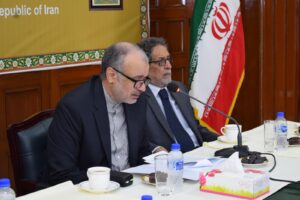
Pakistani and Iranian officials discuss stronger bilateral cooperation in Karachi
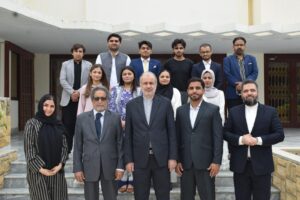
A delegation from the Pakistan Council for Foreign Relations (PCFR), comprising political science and economics students and researchers, visited the Iranian Consulate in Karachi and held discussions with Iranian Consul General Akbar Essa Zadeh. The meeting focused on the evolving regional situation, the Makkah Agreement and ways to strengthen bilateral relations between Pakistan and Iran.
The delegation was led by PCFR Secretary General Dr Hasan Habib. During the meeting, the Iranian consul general outlined Tehran’s emphasis on stronger ties with neighbouring countries and discussed a range of security, economic and diplomatic issues affecting the region.
Zadeh said recent developments involving Iran and what he described as US and Israeli aggression had demonstrated that the presence of foreign military forces and bases in regional countries could not, by itself, guarantee their security.
He stressed that prioritising relations with neighbouring states remains an important pillar of Iran’s foreign policy. He also described the Makkah Agreement as a defence-oriented understanding among three Islamic countries and said it reflected a desire for greater regional security and stability without relying heavily on external powers.
The Iranian diplomat expressed hope that the agreement would contribute to preventing further regional escalation and serve as an obstacle to what he described as US and Israeli aggression and the expansion of Israel’s influence in the region.
Economic cooperation also featured prominently in the discussion. Zadeh said Pakistani and Iranian authorities had expressed a commitment to increasing bilateral trade to $10 billion in the coming years. He said achieving that target would require better infrastructure, effective planning and greater participation from the private sector.
Iran-Pakistan economic cooperation, he added, could be expanded through several areas, including energy, agriculture, transport and trade. He pointed to the proposed Iran-Pakistan gas pipeline as a project that could contribute to the development and stability of both countries if completed.
The consul general also suggested that Pakistani ports could play a greater role in expanding commercial links between the two neighbours. He noted that Pakistan’s maritime infrastructure, together with its geographical proximity to Iran’s border regions and the wider Chabahar area, could create additional opportunities for imports and exports.
According to Zadeh, the two economies have complementary needs. Iran could increase exports of energy-related products to Pakistan, while Pakistan could supply agricultural commodities such as rice, meat and maize.
Tourism was another area identified as having significant potential. Zadeh said bilateral tourism could extend beyond religious pilgrimage to include medical and general tourism, offering opportunities for greater people-to-people contact.
He also called for stronger cultural cooperation through festivals, artistic exchanges and programmes celebrating prominent figures and poets from both countries. The promotion of Persian language studies in Pakistani educational institutions and the production of joint films were among the ideas discussed for deepening cultural links.
Education, science and technology were also highlighted as areas where cooperation could be expanded. Zadeh proposed greater collaboration between science and technology parks in Iran and Pakistan, including joint courses, training programmes and exchanges of expertise.
He said cooperation could also encourage joint ventures and the creation of companies capable of increasing economic output, particularly in the information technology sector.
The Iranian consul general further referred to the emphasis placed by Iran’s late Supreme Leader Ayatollah Ali Khamenei on harnessing the potential of young people for national development. He said the role of youth remained crucial to achieving economic, technological and social progress.
The Karachi meeting underlined the broad range of issues shaping Iran-Pakistan relations, from regional security and trade to energy, tourism, culture, education and technology. Both sides’ discussions pointed to opportunities for deeper engagement, although turning proposed targets into practical outcomes will depend on infrastructure, private-sector participation and sustained bilateral cooperation.