Business Leaders Urge Growth-Focused Budget in Meeting with Finance Minister Amid Rising Inflation
Web Desk May 4, 2026A high-level delegation of Pakistan’s business community met with Muhammad Aurangzeb Khan, the Federal Minister for Finance and Revenue, to push for a growth-oriented federal budget for fiscal year 2026–27 amid mounting economic challenges and rising inflation.
A high-level delegation of Pakistan’s business community met with Muhammad Aurangzeb Khan, the Federal Minister for Finance and Revenue, to push for a growth-oriented federal budget for fiscal year 2026–27 amid mounting economic challenges and rising inflation.
ROWA Expands Global Footprint with Pakistan Launch, Targets Affordable Premium Segment
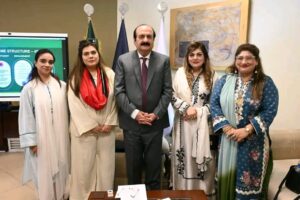
The meeting, held in Islamabad on April 30, was attended by Atif Ikram Sheikh, President of the Federation of Pakistan Chambers of Commerce & Industry, and Mian Zahid Hussain, along with senior officials including Dr. Najeeb.
During the discussions, business leaders highlighted the pressing challenges faced by the industrial and commercial sectors. They pointed to a mixed macroeconomic outlook, where projected GDP growth of around 3.5% for 2026 is overshadowed by a sharp rise in inflation, which reached 10.9% in April. This surge, they noted, is eroding consumer purchasing power and significantly increasing production costs.
The delegation also raised concerns over high energy tariffs, tight monetary policies, and elevated borrowing costs, warning that these factors are undermining Pakistan’s export competitiveness in global markets.
Mian Zahid Hussain emphasized the urgent need for structural reforms in the taxation system, particularly within the Federal Board of Revenue (FBR). He argued that overburdening existing taxpayers to meet revenue targets is counterproductive and called for broadening the tax base by bringing untaxed and under-taxed sectors into the formal economy.
The business community stressed that a pro-growth budget is essential to generate employment, revive industrial activity, boost exports, and strengthen fiscal stability in the face of global economic uncertainties.
On the government’s side, officials outlined ongoing reforms, including digitization initiatives aimed at improving tax collection efficiency and reducing leakages. Key issues discussed included rationalizing import duties on raw materials, addressing anomalies in the sales tax regime, and ensuring timely processing of refunds through the FASTER system to ease liquidity pressures, particularly for small and medium-sized exporters.
The delegation also submitted proposals advocating simplified tax filing procedures, increased digitalization of business transactions, and the removal of discretionary powers of tax officials to reduce administrative hurdles.
Finance Minister Aurangzeb assured participants that the government is fully aware of the business community’s concerns and remains committed to implementing business-friendly policies. He reiterated that Pakistan’s economic strategy is centered on private-sector-led growth and promised that stakeholders’ recommendations would be carefully considered in the upcoming finance bill.
The meeting concluded on a positive note, with both sides agreeing to maintain close coordination to support long-term economic stability and sustainable growth.