Iran Warns “No Port Will Be Safe” as US Moves Ahead with Blockade Plan
Iran Warns “No Port Will Be Safe” as US Moves Ahead with Blockade Plan
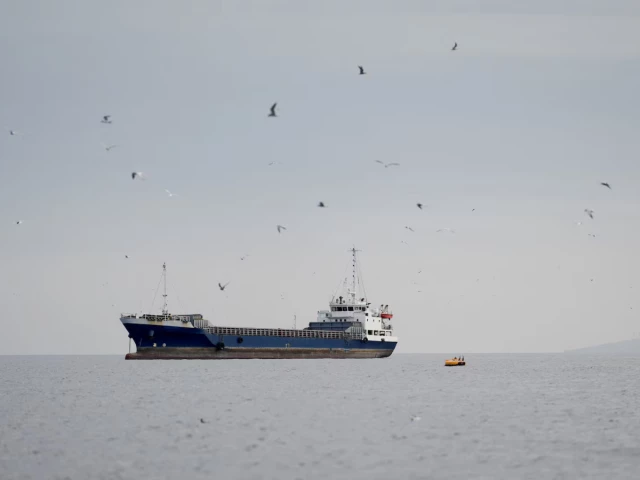
Iran’s armed forces have issued a strong warning over maritime security in the region, declaring that ports in the Arabian Gulf and Sea of Oman are “either for everyone or for no one,” amid escalating tensions with the United States.
Global Powers Urge US-Iran Ceasefire Extension After Islamabad Talks End Without Breakthrough
According to Iranian state broadcaster IRIB, the military emphasized that defending national sovereignty in territorial waters is a “natural and legal duty.” The statement, reported by Al Jazeera, added that while vessels would be allowed to pass through the Strait of Hormuz under Iranian regulations, “enemy-affiliated” ships could face restrictions.
Tehran also condemned Washington’s planned maritime blockade as illegal, describing it as “piracy,” and warned that if Iranian ports were threatened, no port in the region would remain secure.
The escalation follows reports that US President Donald Trump is considering limited military strikes on Iran alongside a naval blockade. The US military has confirmed that it will begin enforcing restrictions on vessels entering or leaving Iranian ports starting Monday.
US Central Command stated that the blockade would apply to ships of all nations operating in Iranian coastal areas, including the Arabian Gulf and Gulf of Oman. However, vessels transiting the Strait of Hormuz to non-Iranian ports would not be impeded.
Trump also warned that US forces could intercept vessels in international waters suspected of paying tolls to Iran, while the US Navy is preparing to clear mines allegedly placed in the strategic waterway — a key route for nearly 20 percent of global energy supplies.
The developments come after the Islamabad Talks 2026 — the first direct high-level engagement between Washington and Tehran in more than a decade — ended without a breakthrough. The talks followed a fragile two-week ceasefire aimed at halting weeks of conflict that has killed thousands and disrupted global energy markets.
Despite some progress, major disagreements persist, particularly over Iran’s nuclear programme and control of the Strait of Hormuz. Iranian Foreign Minister Abbas Araghchi accused the US of adopting “maximalist” positions and shifting demands, saying an agreement had been close before negotiations stalled.
Meanwhile, Iran’s Revolutionary Guards warned that any foreign military presence near the strait could be treated as a violation of the ceasefire, raising fears of further escalation.
Global markets reacted sharply to the developments, with oil prices surging above $100 per barrel and shipping traffic through the Strait of Hormuz declining as vessels avoided the ??????? ahead of the blockade.
Analysts caution that even if the ceasefire holds, disruptions to energy flows could persist, contributing to inflation and economic uncertainty worldwide.
Despite the tensions, Trump indicated that negotiations could continue, describing the Islamabad talks as “very friendly,” though he later signaled indifference about whether Iran would return to the table.
Iranian leadership, including Parliament Speaker Mohammad Bagher Ghalibaf and President Masoud Pezeshkian, has called for a “balanced and fair agreement,” stressing that progress depends on the US returning to international legal frameworks.