No Breakthrough in US-Iran Talks, but Fragile Ceasefire Holds After Islamabad Meeting
No Breakthrough in US-Iran Talks, but Fragile Ceasefire Holds After Islamabad Meeting
The latest round of negotiations between the United States and Iran concluded in Islamabad without a major breakthrough, though both sides avoided a complete collapse in dialogue. Delegations from Washington and Tehran departed Pakistan on Sunday after nearly 21 hours of discussions.
US Announces Naval Blockade of Iranian Ports After Pakistan Talks Collapse
Despite the lack of a formal agreement, a fragile two-week ceasefire brokered by Pakistan remains in place, raising cautious optimism that an immediate return to hostilities may be avoided — at least for now.
The talks, which followed 40 days of intense conflict triggered by US and Israeli strikes on Iran, were seen as a critical opportunity to de-escalate tensions. While President Donald Trump issued strong rhetoric after the negotiations, no immediate military action was announced, suggesting a possible willingness to keep diplomatic channels open.
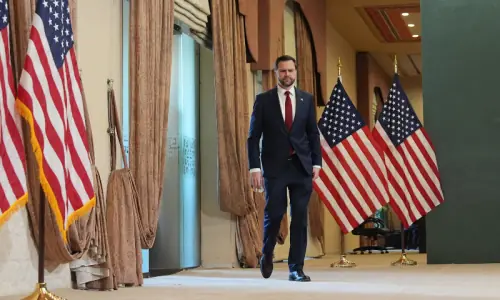
The high-level representation from both sides underscored the seriousness of the effort. Iran was represented by Parliament Speaker Mohammad Bagher Ghalibaf and Foreign Minister Abbas Araghchi, while US Vice President JD Vance led the American delegation.
Speaking after the talks, Vance acknowledged the “bad news” of no deal, while Iran maintained that expecting a comprehensive agreement in a single round of negotiations was unrealistic.
Key sticking points remain unresolved, particularly Iran’s nuclear programme and the status of the Strait of Hormuz, a vital global energy route. However, analysts suggest that both sides appear to be seeking an exit from the costly conflict, with the United States especially under pressure after failing to achieve decisive military objectives.
Pakistan’s Foreign Minister Ishaq Dar emphasized that it is “imperative” for both parties to uphold the ceasefire, while regional mediators, including Oman, have also urged continued engagement to prevent further escalation.
Regional stakeholders remain deeply concerned that renewed conflict would severely disrupt global energy supplies and trade, particularly through the Strait of Hormuz, exacerbating economic instability worldwide.
Observers argue that confidence-building measures — such as easing US sanctions on Iran and halting Israeli military operations in Lebanon — could create a more conducive environment for sustained peace talks.
For now, a narrow window for diplomacy remains open. Whether it leads to a lasting resolution or gives way to renewed conflict will depend on the willingness of both sides to show flexibility and move beyond entrenched positions.