
Pakistan’s Diplomatic Role Questioned Amid Mixed Signals on US-Iran Crisis
Pakistan’s Diplomatic Role Questioned Amid Mixed Signals on US-Iran Crisis
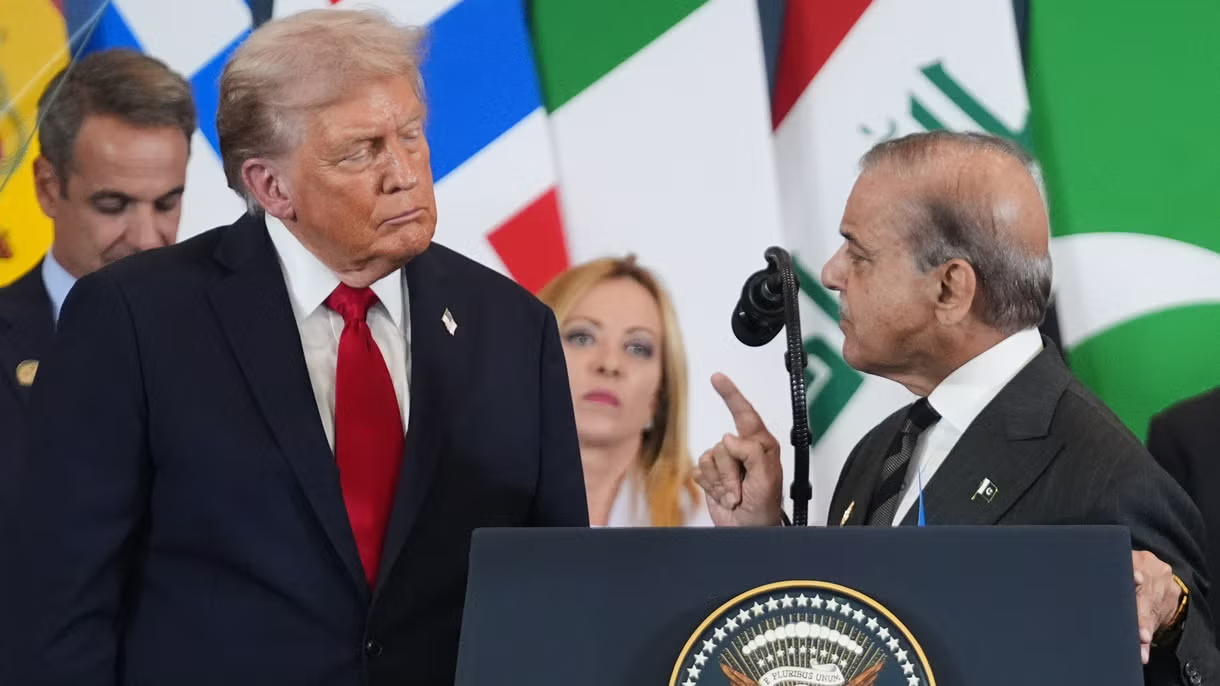
ISLAMABAD: Pakistan’s diplomatic posture during the recent US-Iran crisis has come under scrutiny, with critics arguing that inconsistencies in policy signals and civilian decision-making have raised questions about the country’s credibility as a neutral mediator.
Hotel One Gujranwala — Your New Home in a Major Industrial Center (Soft Opening)
In a critical assessment, Dr. Gholam Mujtaba said that while Pakistan has been portrayed domestically as a key diplomatic player, developments surrounding the Islamabad talks suggest a gap between perception and reality.
The analysis points to the brief visit of the US delegation, led by Vice President JD Vance, which concluded in under 24 hours despite expectations of extended negotiations. This, according to the critique, indicated a lack of substantive groundwork ahead of the talks.
It further argued that Pakistan’s call for a two-week ceasefire — initiated through public messaging — lacked structural depth and consensus, particularly as it linked broader regional issues such as Lebanon, which reportedly did not align with Washington’s position.
Additional concerns were raised over public statements by Pakistani officials, including remarks by the defence minister on Israel, which critics say may have undermined perceptions of neutrality at a sensitive diplomatic moment.
Pakistan’s decision to abstain from a United Nations Security Council-related stance concerning the Strait of Hormuz was also highlighted as contributing to ambiguity in its foreign policy posture. Analysts note that while abstention can be strategic, in this context it added to perceptions of mixed signaling.
The commentary also referenced regional developments, including increased engagement with Gulf countries such as Saudi Arabia and Qatar, alongside reports of defence coordination, suggesting Pakistan’s proximity to evolving regional security dynamics.
According to the analysis, these developments indicate that the region remains on edge, with risks of broader escalation still present despite ongoing diplomatic efforts.
The critique also pointed to internal challenges, including governance issues and the role of narrative-building in shaping public perception, warning that an overemphasis on “optics” rather than substantive policy could undermine Pakistan’s long-term strategic position.
However, it acknowledged Pakistan’s institutional strengths, particularly within its strategic and defence framework, while stressing the need for greater policy coherence and clarity in high-stakes diplomacy.
The assessment concluded that in an increasingly volatile global environment, consistent and transparent policymaking would be essential for Pakistan to maintain credibility and effectively navigate complex geopolitical challenges.