PMD Forecasts Nationwide Rain, Thunderstorms and Hail from April 1 to 4
Web Desk March 30, 2026ISLAMABAD — The Pakistan Meteorological Department (PMD) on Monday issued a nationwide weather advisory forecasting rain, wind, and thunderstorms, along with isolated heavy falls and hailstorms, from April 1 to April 4.
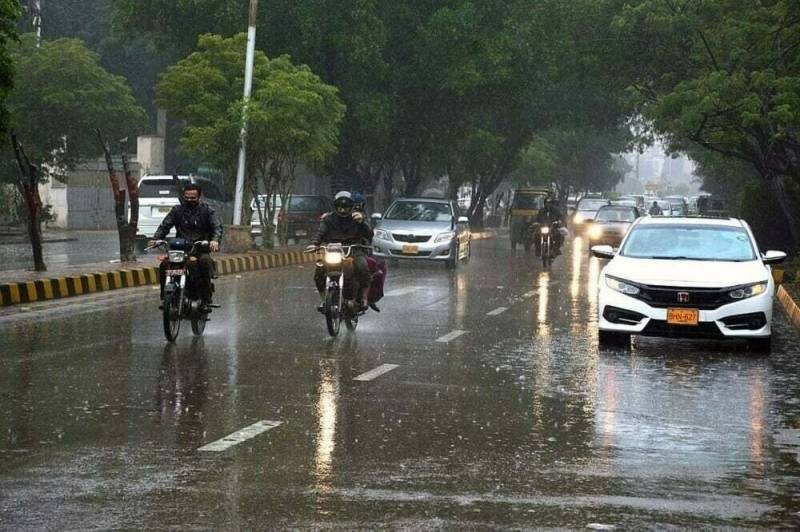
ISLAMABAD — The Pakistan Meteorological Department (PMD) on Monday issued a nationwide weather advisory forecasting rain, wind, and thunderstorms, along with isolated heavy falls and hailstorms, from April 1 to April 4.
US Nearing Objectives in Iran, Says Rubio as Regional Tensions Escalate
According to the advisory, a strong westerly wave is expected to enter southwestern Balochistan on April 1 and persist until April 4, impacting multiple regions across the country.
In Balochistan, widespread rain and thunderstorms with isolated hailstorms are expected in areas including Panjgur, Turbat, Kech, Awaran, the Makran coast, and Lasbella, with occasional gaps during the period.
Parts of Khyber Pakhtunkhwa are also likely to experience rain, thunderstorms, and snowfall over mountainous regions such as Chitral, Dir, Swat, and Kalam. Heavy rainfall and hailstorms may occur in isolated areas.
In Punjab and Islamabad, rain, wind, and thunderstorms are forecast in Murree, Galiyat, Rawalpindi, Lahore, and Sargodha, with heavier downpours expected in Dera Ghazi Khan and adjoining regions.
The forecast further indicates that Gilgit-Baltistan and Azad Jammu and Kashmir will receive rain, thunderstorms, and snowfall in higher altitudes, along with isolated heavy falls and hailstorms.
Meanwhile, Sindh — including Karachi, Thatta, Badin, Hyderabad, and Sukkur — is expected to witness rain and thunderstorms with isolated hailstorms between April 2 and April 4.
The PMD warned of possible flash floods in northeastern Balochistan and local streams in Khyber Pakhtunkhwa, while landslides may occur in vulnerable areas of upper K-P, Gilgit-Baltistan, and Azad Kashmir. Windstorms and hail could damage weak structures such as electric poles, billboards, and solar panels.
Farmers have been advised to take precautionary measures to protect crops, while tourists and travelers are urged to avoid unnecessary movement during the period. Daytime temperatures are also expected to drop across the country.
Authorities have been directed to remain on high alert and take preventive steps, as the weather system may persist beyond April 4.