Autobiography “Teh-e-Gard” by Dr. Fayaz Ahmed Sheikh Launched at Arts Council of Pakistan Karachi
By Manzoor Alam Balakoti
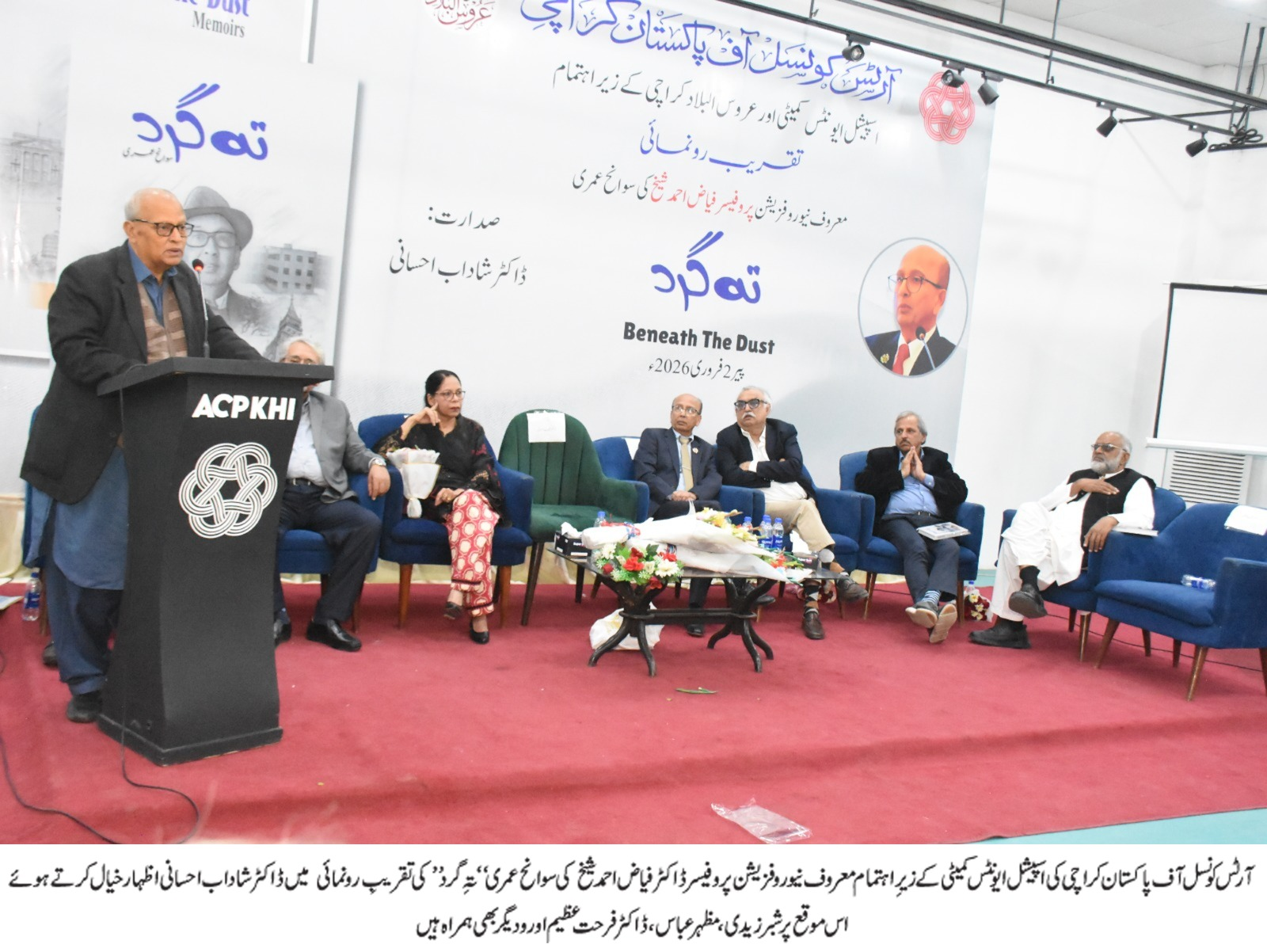
Karachi: Arts Council of Pakistan Karachi ‘s Special Events Committee organized the book launch ceremony of “Teh-e-Gard”, the autobiography of renowned neurophysician Professor Dr. Fayaz Ahmed Sheikh, at Haseena Moin Hall. The event began with the recitation of the Holy Quran, followed by a showreel highlighting Dr. Sheikh’s distinguished academic and professional journey.The ceremony was presided over by Dr. Shadab Ehsani, while Sohail Yaqoob Performed the Duties of moderator. Eminent speakers including Iqbal Latif, Dr. Iqbal Hashmani, Shabar Zaidi, Mazhar Abbas, Iqbal Rehman Mandovia, Dr. Farhat Azim, and the author himself shared their insights on the book and Dr. Sheikh’s life and achievements. In his presidential address, Dr. Shadab Ehsani remarked that true knowledge lies in recognizing both what one knows and what one does not. He explained that the book is structured around three major phases of Dr. Sheikh’s life: his early years in Pakistan, his struggles in the United Kingdom, and his professional career as a consultant. He emphasized that Dr. Sheikh’s personality was shaped by his family values, social environment, and unwavering commitment to his purpose. Iqbal Latif highlighted the Arts Council’s achievements, stating that following the successful World Culture Festival, the institution has been nominated for the Guinness Book of World Records—a testament to the visionary leadership of Arts Council President Ahmed Shah. He added that over the past 25 years, a strong and dedicated team has strengthened the institution, with Karachi’s youth now contributing nearly 70 percent of its activities, breathing new life into literature, culture, music, and the fine arts. Dr. Iqbal Hashmani described “Teh-e-Gard” as an honest and compelling account of the author’s life, noting that sincerity is the book’s greatest strength. Iqbal Rehman Mandovia praised Dr. Sheikh’s God-gifted abilities and said the book effectively portrays the hardships of poverty, written in a simple, graceful, and reader-friendly style. Shabar Zaidi, expressing his interest in biographical literature, said the book vividly captures the journey of a middle-class boy from Kharadar to Canada and the United Kingdom. He stressed that Dr. Fayaz Ahmed Sheikh’s success is the result of personal effort and perseverance, without reliance on privilege or patronage. Dr. Farhat Azim remarked that the love and respect Dr. Sheikh has earned from people is his greatest legacy—one that cannot be inherited, transferred, or divided. She added that becoming a meaningful personality requires enduring hardships, challenges, and relentless struggle. Mazhar Abbas observed that the book is not a conventional autobiography but a collection of writings presented from multiple perspectives. Commenting on the title, he suggested that “From Kharadar to Buckingham Palace” might have been more appealing, and described the contributions by the author’s wife and daughter as emotional and deeply personal. Concluding the ceremony, Dr. Fayaz Ahmed Sheikh expressed gratitude to the organizers and participants. He shared that he began writing after opting for partial retirement as part of a reflective journey. Writing mostly at night, he later compiled his Facebook columns into book form. He emphasized that the book’s proceeds are dedicated to charity: income from the Urdu edition will be donated to Indus Hospital, while proceeds from the UK edition will support The Migraine Trust.