
Second Day of 18th Aalmi Urdu Conference 2025 Jashan Pakistan Features 17 Sessions and Aalmi Mushaira
By Manzoor Alam Balakoti.
Karachi: On the second day of the four-day 18th Aalmi Urdu Conference 2025 – Jashan-e-Pakistan, organized by the Arts Council of Pakistan Karachi, 17 sessions were held covering literature, arts, culture, media, and an international mushaira.
The second day of the conference began with a session on “Urdu Tanqeed wa Tehqeeq” Other sessions included Urdu Nazam, Taqdeesi Adab, Siraiki Adab wa Saqafat, Anwar Sen Roy: Shakhsiyat wa Takleeqat, Hilal Naqvi aur Marsiya Nigari, “Hum Dekhenge – Faiz Ahmed Faiz,” Khawatein. Taraqi, Qiyadat aur Adab ka Safar, Bacho ka Adab, Future Leaders in the Digital Era, Sindhi Adab and Saqafat, Kitabon ki Ronomai, Urdu ka Shahkar Mizah, TV ka Safar, The Role of Traditional Media in the Digital Age,
A large number of people attended the special interactive session “ Bushra Ansari sa Mulaqat ” Eight books were also launched during the day. The second day concluded with a grand International Mushaira, where poets won the hearts of the audience with their poetry.
During the session “The Role of Traditional Media in the Digital Age,” speakers Ghazi Salahuddin, Wusatullah Khan, Owais Tohid, Riffat Saeed, and Waseem Badami shared their views, stating that traditional media was once considered modern media itself. They highlighted that many women are now running businesses through digital media. The speakers cautioned against the illusion that digital media is completely free, noting that content can be removed at any time.
The second day of the conference began with a session on “Urdu Tanqeed wa Tehqeeq” Other sessions included Urdu Nazam, Taqdeesi Adab, Siraiki Adab wa Saqafat, Anwar Sen Roy: Shakhsiyat wa Takleeqat, Hilal Naqvi aur Marsiya Nigari, “Hum Dekhenge – Faiz Ahmed Faiz,” Khawatein. Taraqi, Qiyadat aur Adab ka Safar, Bacho ka Adab, Future Leaders in the Digital Era, Sindhi Adab and Saqafat, Kitabon ki Ronomai, Urdu ka Shahkar Mizah, TV ka Safar, The Role of Traditional Media in the Digital Age,
A large number of people attended the special interactive session “ Bushra Ansari sa Mulaqat ” Eight books were also launched during the day. The second day concluded with a grand International Mushaira, where poets won the hearts of the audience with their poetry.
During the session “The Role of Traditional Media in the Digital Age,” speakers Ghazi Salahuddin, Wusatullah Khan, Owais Tohid, Riffat Saeed, and Waseem Badami shared their views, stating that traditional media was once considered modern media itself. They highlighted that many women are now running businesses through digital media. The speakers cautioned against the illusion that digital media is completely free, noting that content can be removed at any time.

They emphasized that every new medium changes the world and that journalism fundamentally depends on the importance of language. They added that artificial intelligence is now being used in newsrooms and stressed the need to adopt the digital media revolution positively. Issues such as Balochistan, canal disputes, and the suffering of the Palestinian people were highlighted globally through social media. The panellists agreed that instead of criticizing social media, there should be scrutiny of both positive and negative content, warning that without defining boundaries, challenges will continue to grow. It was stated that nearly 85 percent of digital content is based on misinformation.
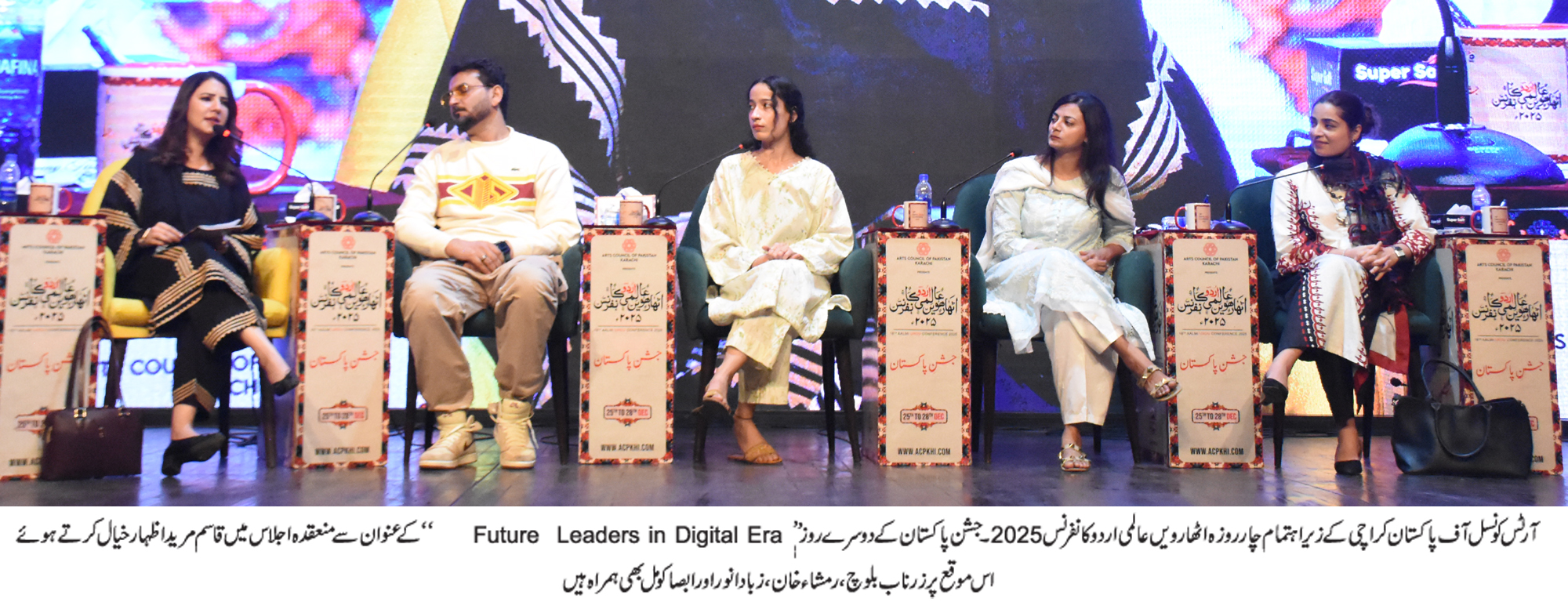
In the session “Future Leaders in the Digital Era,” speakers said that the concept of video on demand, especially platforms like YouTube, has completely transformed content creation and distribution. While artificial intelligence can generate images, it cannot understand human emotions and feelings. They noted that storytelling today reflects what audiences want to hear, adding that wars once fought on battlefields are now fought on screens. The digital era was described as a strong example of democracy and a valuable opportunity for small artists who lack access to major platforms.
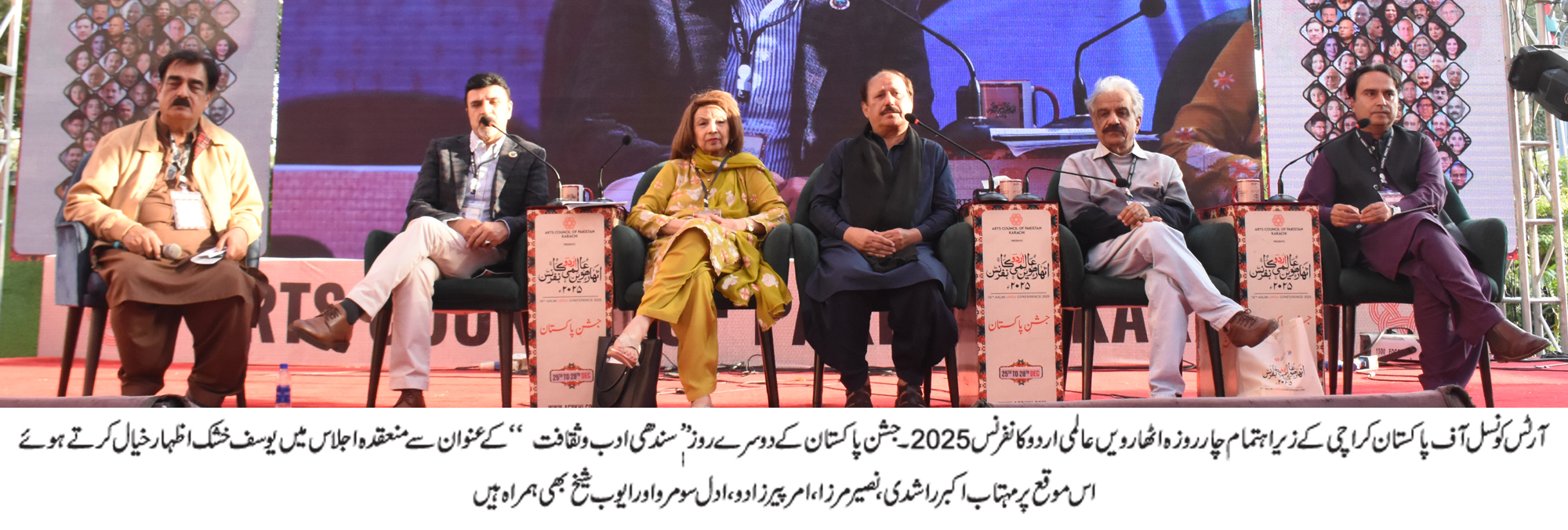
In the session “Khawatein.. Taraqi, Qiyadat aur Adab ka Safar” held to pay tribute to great women in Pakistan’s history, Uzma-ul-Kareem remembered Benazir Bhutto, Fatima Jinnah, and other prominent women, stating that the ability to raise one’s voice today is the result of their sacrifices. Mehtab Akbar Rashdi remarked that many men feel uncomfortable when women prove to be more intelligent and capable. Bee Gul said that women are disconnected from their roots and are often criticized even for their clothing. Harris Khalique noted that Fatima Jinnah was among the first to openly oppose dictatorship.
A lively and engaging session titled “Bushra Ansari sa Mulaqat ” featured Pakistan’s renowned actor Bushra Ansari, who responded to questions posed by Yasir Hussain. She said that people today are reluctant to engage in deep conversations and that directing requires strictness, which she feels she lacks. She expressed her admiration for Madam Noor Jehan and recalled that the late Zia Mohyeddin would often request her to sing, though she felt nervous at the time. Bushra Ansari also expressed regret that despite possessing a rich musical archive, PTV failed to utilize it effectively. On audience demand, she sang several Urdu and Punjabi songs, including melodies by Madam Noor Jehan, delighting the attendees.
The second day concluded with a grand Aalmi Mushaira presided over by Peerzada Qasim Raza Siddiqui. Poets including Anwar Shaoor, Firasat Rizvi, Shadab Ehsani, Asghar Nadeem Syed, Mir Ahmed Naveed, Rehana Roohi, Fazil Jameeli, Ali Zaryoun, Alauddin Khanzada, Kashif Hussain Ghair, Khalilullah Farooqi, Waheed Noor, Ghazal Ansari, Farzana Naina, Rehana Qamar, Saman Shah, Najma Usman, Bina Govindani, Khalid Moeen, Kamran Nafees, Umair Najmi, Uzma Jaun, Rahat Zahid, Shaista Mufti, Sabeen Saif, Hidayat Sair, Hina Ambreen, Neena Adil, Naeem Sameer, and Abdul Rehman Momin presented their poetry. The mushaira was moderated by Shakeel Khan.
Held at Jaun Elia Lawn, the Aalmi mushaira drew a large audience who enthusiastically applauded and appreciated the poets’ performances.
In the session “Future Leaders in the Digital Era,” speakers said that the concept of video on demand, especially platforms like YouTube, has completely transformed content creation and distribution. While artificial intelligence can generate images, it cannot understand human emotions and feelings. They noted that storytelling today reflects what audiences want to hear, adding that wars once fought on battlefields are now fought on screens. The digital era was described as a strong example of democracy and a valuable opportunity for small artists who lack access to major platforms.

In the session “Khawatein.. Taraqi, Qiyadat aur Adab ka Safar” held to pay tribute to great women in Pakistan’s history, Uzma-ul-Kareem remembered Benazir Bhutto, Fatima Jinnah, and other prominent women, stating that the ability to raise one’s voice today is the result of their sacrifices. Mehtab Akbar Rashdi remarked that many men feel uncomfortable when women prove to be more intelligent and capable. Bee Gul said that women are disconnected from their roots and are often criticized even for their clothing. Harris Khalique noted that Fatima Jinnah was among the first to openly oppose dictatorship.
A lively and engaging session titled “Bushra Ansari sa Mulaqat ” featured Pakistan’s renowned actor Bushra Ansari, who responded to questions posed by Yasir Hussain. She said that people today are reluctant to engage in deep conversations and that directing requires strictness, which she feels she lacks. She expressed her admiration for Madam Noor Jehan and recalled that the late Zia Mohyeddin would often request her to sing, though she felt nervous at the time. Bushra Ansari also expressed regret that despite possessing a rich musical archive, PTV failed to utilize it effectively. On audience demand, she sang several Urdu and Punjabi songs, including melodies by Madam Noor Jehan, delighting the attendees.

The second day concluded with a grand Aalmi Mushaira presided over by Peerzada Qasim Raza Siddiqui. Poets including Anwar Shaoor, Firasat Rizvi, Shadab Ehsani, Asghar Nadeem Syed, Mir Ahmed Naveed, Rehana Roohi, Fazil Jameeli, Ali Zaryoun, Alauddin Khanzada, Kashif Hussain Ghair, Khalilullah Farooqi, Waheed Noor, Ghazal Ansari, Farzana Naina, Rehana Qamar, Saman Shah, Najma Usman, Bina Govindani, Khalid Moeen, Kamran Nafees, Umair Najmi, Uzma Jaun, Rahat Zahid, Shaista Mufti, Sabeen Saif, Hidayat Sair, Hina Ambreen, Neena Adil, Naeem Sameer, and Abdul Rehman Momin presented their poetry. The mushaira was moderated by Shakeel Khan.
Held at Jaun Elia Lawn, the Aalmi mushaira drew a large audience who enthusiastically applauded and appreciated the poets’ performances.