

KARACHI/LAHORE/GILGIT/ISLAMABAD/DI KHAN: Ten people were killed in Karachi and two in Islamabad as protests erupted countrywide against the assassination of Iranian Supreme Leader Ayatollah Ali Khamenei in US-Israeli attacks.
The situation warranted Interior Minister Mohsin Naqvi to issue an appeal, urging people to remain peaceful.
“Today is a sorrowful day for the entire Muslim ummah, Pakistan’s public and Iran’s public,” he said in a video statement.
Stating that every Pakistani citizen was as aggrieved as Iranians, Naqvi said, “My only request is that we all stand with you, but please do not take the law into your hands. You may protest but peacefully.”
Karachi clashes
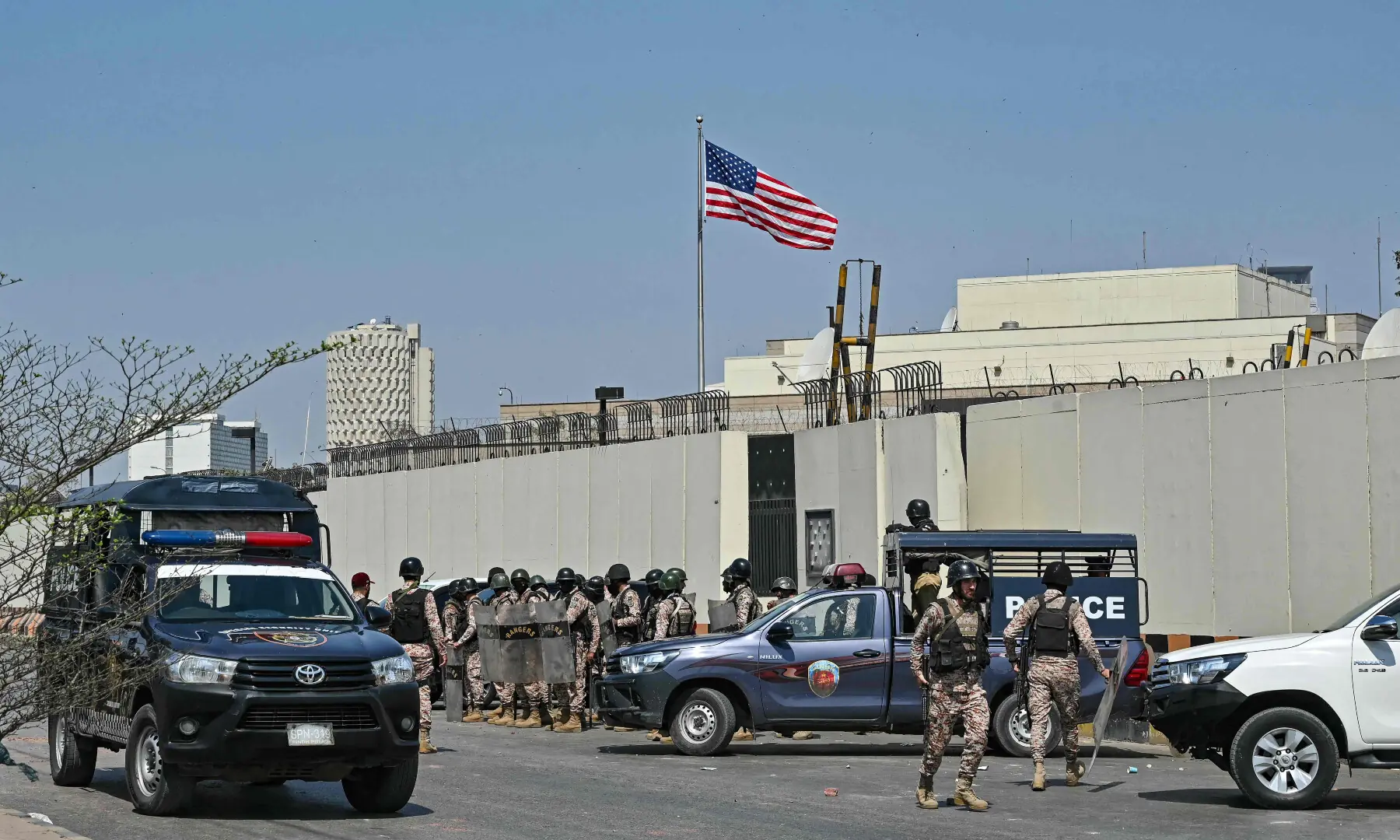
In Karachi, protesters clashed with law enforcement personnel near the US Consulate on Mai Kolachi Road. Law enforcement personnel resorted to teargas shelling and baton-charge to control the situation.
Subsequently, Section 144 was also extended across Sindh. According to the Home Department, all kinds of wall chalking, protests, demonstrations, sit-ins, rallies, and display of arms were banned throughout the province for one month, effective from March 1.
However, the guards of registered private security companies were allowed to carry weapons at places of duty during work hours, but they were prohibited from displaying or brandishing weapons during movement in vehicles.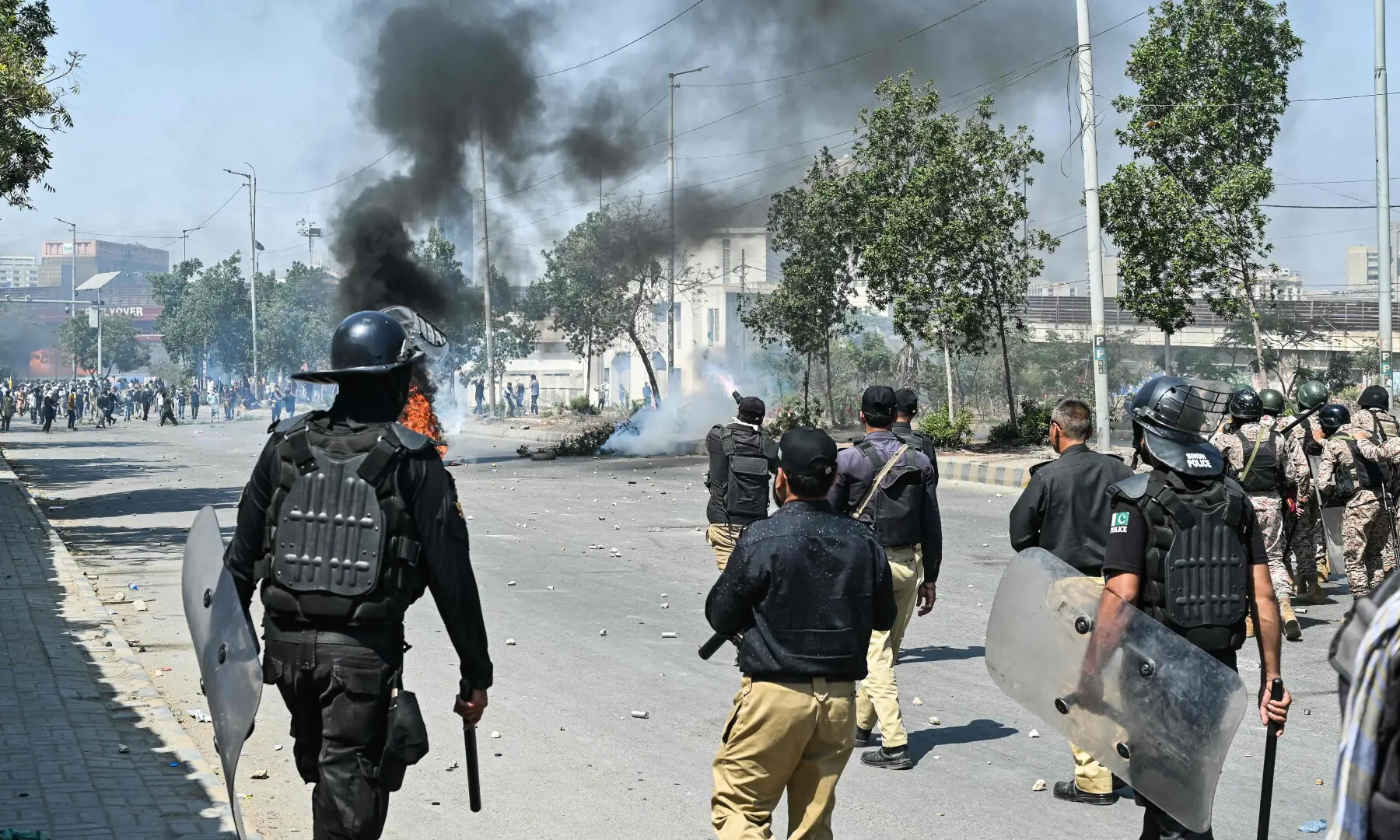
According to a statement by Police Surgeon Dr Summaiya Syed listing all casualties, eight bodies were brought to Civil Hospital Karachi (CHK), while two succumbed to their injuries, taking the deaths in the US Consulate incident to 10.
A total of 62 people were injured near US Consulate, with 41 taken to CHK’S SMBBIT, seven taken to Jinnah Postgraduate Medical Centre (JPMC), eight taken to Aga Khan University Hospital (AKUH), and six taken to Fatimiyah Hospital.
Separately, eight persons injured during protests at Native Jetty and Numaish Chowrangi were brought to SMBBIT, while three wounded in a protest in Paposh Nagar were taken to JPMC.
This took the total number of people injured in protests across the metropolis to 73, Dr Syed’s statement said.
Out of them, 14 remained admitted in hospitals, while the rest were discharged after treatment, it added.
Of those admitted, six were in a critical condition — two at SMMBIT, two at AKUH and one at JPMC.
In its statement, the US Embassy in Islamabad said: “We are monitoring reports of ongoing demonstrations at the US Consulate Generals in Karachi and Lahore, as well as calls for additional demonstrations at the US Embassy in Islamabad and the Consulate General in Peshawar.
“We advise US citizens in Pakistan to monitor local news and observe good personal security practices, including being aware of your surroundings, avoiding large crowds, and ensuring your STEP (Smart Traveller Enrollment Programme) registration is up to date.”
In view of the arising security situation, roads near the US Consulate were closed off to traffic.
Later in the day, when authorities tried to place containers to block the roads near the US Consulate, protesters pelted stones, leading to more clashes.
In an official statement, shared by the information minister’s spokesperson Husain Mansoor, the Sindh government expressed “deep grief” over the loss of lives in the clash.
“The protesters entered after breaching the security cordon of the US Consulate and committed vandalism,” the statement said.
However, the government put the number of deaths at six, adding that “several” were injured.
It formed a high-level joint investigation team (JIT) to “impartially review all aspects of the incident”. The JIT will “assess the circumstances under which the incident occurred and what its causes were”.
The JIT will also determine “who was responsible” for the incident.
While the government affirmed the public’s constitutional right to protest, it stressed that “maintaining a peaceful environment was everyone’s shared responsibility”.
“Any kind of vandalism, violence or taking the law into your own hands is inappropriate,” it noted.
The government requested citizens to “express their emotions only in peaceful and legal ways”.
Citizens are urged to express their feelings only in peaceful and legal ways.
“The government wants to keep the situation under control,” the statement said, adding that while citizens had the right to peacefully protest, no one should take the law into their hands.
In his statement, Sindh Chief Minister Murad Ali Shah termed the incident “extremely tragic” and expressed his deep grief over Khamenei’s death.
“In this hour of grief, the people of Sindh stand in equal solidarity with Iran and all those who are mourning,” he said.
He directed that an impartial investigation be conducted into the US Consulate incident.
“At a time when the country is facing a war-like situation, it is inappropriate to sabotage peace and order,” CM Murad said.
He contacted various religious leaders, including Allama Shahenshah Naqvi, Allama Shabbir Maisami, and others, to urge them to ensure that public sentiments were controlled at all costs.
Allama Naqvi and others spoke about holding a majlis (gathering) at Numaish, the CM Office statement said, adding that Murad directed the administration and the police to provide full security for it.
CM Murad appealed to all religious scholars and people of different schools of thought to guide the public toward maintaining peace and order.
Expressing his deep sorrow over the loss of lives in the US Consulate incident, he said the government cannot allow anyone to take the law into their own hands.
In a video statement, Allama Naqvi termed the consulate clashes “painful” and urged the public to remain peaceful.
He noted that the Muslim community was saddened over Khamenei’s “martyrdom”, adding that people should voice their grief “keeping in mind the sorrow of Karbala”. thanks dawn.com