

(December 15, 2025) Mian Zahid Hussain, President Pakistan Businessmen and Intellectuals Forum & All Karachi Industrial Alliance, Chairman National Business Group Pakistan, Chairman Policy Advisory Board FPCCI, and Former Provincial Minister Information Technology, today has expressed deep concern over the precipitous decline in bilateral trade and transit volumes between Pakistan and Afghanistan. He warned that the recurring border closures, triggered by recent clashes and terrorist infiltration, are inflicting irreparable damage on the regional economy.
Mian Zahid Hussain, stated that while national security is paramount, the economic fallout requires urgent mitigation strategies. Citing data derived from the Pakistan Bureau of Statistics (PBS) and State Bank of Pakistan (SBP), Mian Zahid Hussain highlighted that bilateral trade volume, which stood at approximately $1.45 billion in FY 2024-2025, has witnessed a sharp contraction in the first half of FY 2025-2026.
“Current projections suggest that if the intermittent closures at Torkham and Chaman continue, total bilateral trade could shrink to under $800 million by the end of this fiscal year,” Mian Zahid Hussain noted. He added that Pakistan’s exports, particularly cement, pharmaceuticals, and perishable food items, have seen a decline of 35% year-on-year.
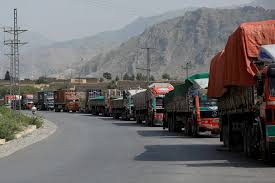
Touching upon the Afghan Transit Trade (ATT), the veteran business leader noted a significant diversion of cargo. “In FY 2024-2025, Pakistan handled over 35,000 containers annually for Afghan transit. However, in the current fiscal year (2025-2026), nearly 60% of this volume has diverted to the Chabahar port in Iran due to the unpredictability of the Pakistani route,” he observed. This shift represents a revenue loss of millions of dollars for Pakistan’s logistics and transport sectors.
Mian Zahid Hussain, elaborated on the devastating impact on Pakistani importers and exporters. “Hundreds of trucks laden with perishable goods—specifically kinnow and vegetables—are rotting at border terminals. Exporters are facing demurrage charges exceeding Rs. 50 million daily during closures, while the loss of the Central Asian market to competitors is becoming permanent,” he warned.
Conversely, he highlighted the impact on Afghan traders, noting that the suspension of supply lines has triggered a 20-30% spike in inflation for essential food items in eastern Afghanistan. Afghan exporters of fresh fruit and coal are facing total capital erosion as their goods cannot reach Pakistani markets in time.
Mian Zahid Hussain concluded by urging the government to implement a ‘Smart Border Management’ system. He suggested that while security forces must respond robustly to terrorist infiltration by adopting a hot pursuit strategy, a mechanism for secure, scanned commercial convoys must be maintained to prevent the total economic collapse of the Pakistani traders.