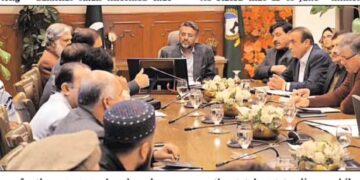


The Monetary Policy Committee has decided to keep the policy rate unchanged at 10.5 percent in its meeting held on January 26, 2026.
Subsequent to strong calls from the business community for a significant reduction in the interest rate, expectations were high that the monetary policy would bring much needed relief to support industrial revival and job creation. However, to the surprise of both experts and the business community, the State Bank of Pakistan, in its recently announced monetary policy, decided to keep the policy rate unchanged at 10.5 percent said ateeq ur rehman (economic and financial analyst).
In fact, SMEs which are the back bone of the country’s economy suffer most when policy rates do not come down. They face the high cost of credit, limited loan approvals, cash flow stress, slow expansion, low competitiveness, fewer jobs. Its means SMEs always stays in survival mode instead of growth mode. SMEs has mostly vanished due to inflationary pressures, high cost of energy like electricity & gas, increasing petroleum and transportation prices, also the higher policy rates, etc. Thus, the poverty level is going down day after day.
Under the current situation we are losing foreign direct investment due to the corporate tax rate which has gone up as 54 to 65%, therefore brining FDI on such high tax rate is almost impossible and then again the higher policy rate makes it extremely difficult. While the central bank’s caution reflects a desire to contain inflationary pressures and preserve macroeconomic stability, many economists argue that the high policy rate environment continues to stifle investment, industrial productivity and employment generation ateeq added.
The decision to maintain the policy rate has sparked mixed reactions across economic circles. Businesses facing escalating costs of production and limited access to affordable credit fear that the unchanged rate may slow down the pace of economic recovery, particularly in the manufacturing and export oriented sectors that urgently require liquidity support to regain competitiveness.
It is suggested that the policy rate should be reduced to single digit in order to create opportunities for easy loans to business and farmers. The easy financial support to businessmen and small farmers should remain top priority for business and agriculture growth.