

A three-point protocol will be adopted for environmental sampling, Secretary Environment Zubair Ahmed Channa and DG SEPA Waqar Hussain Phulpoto.
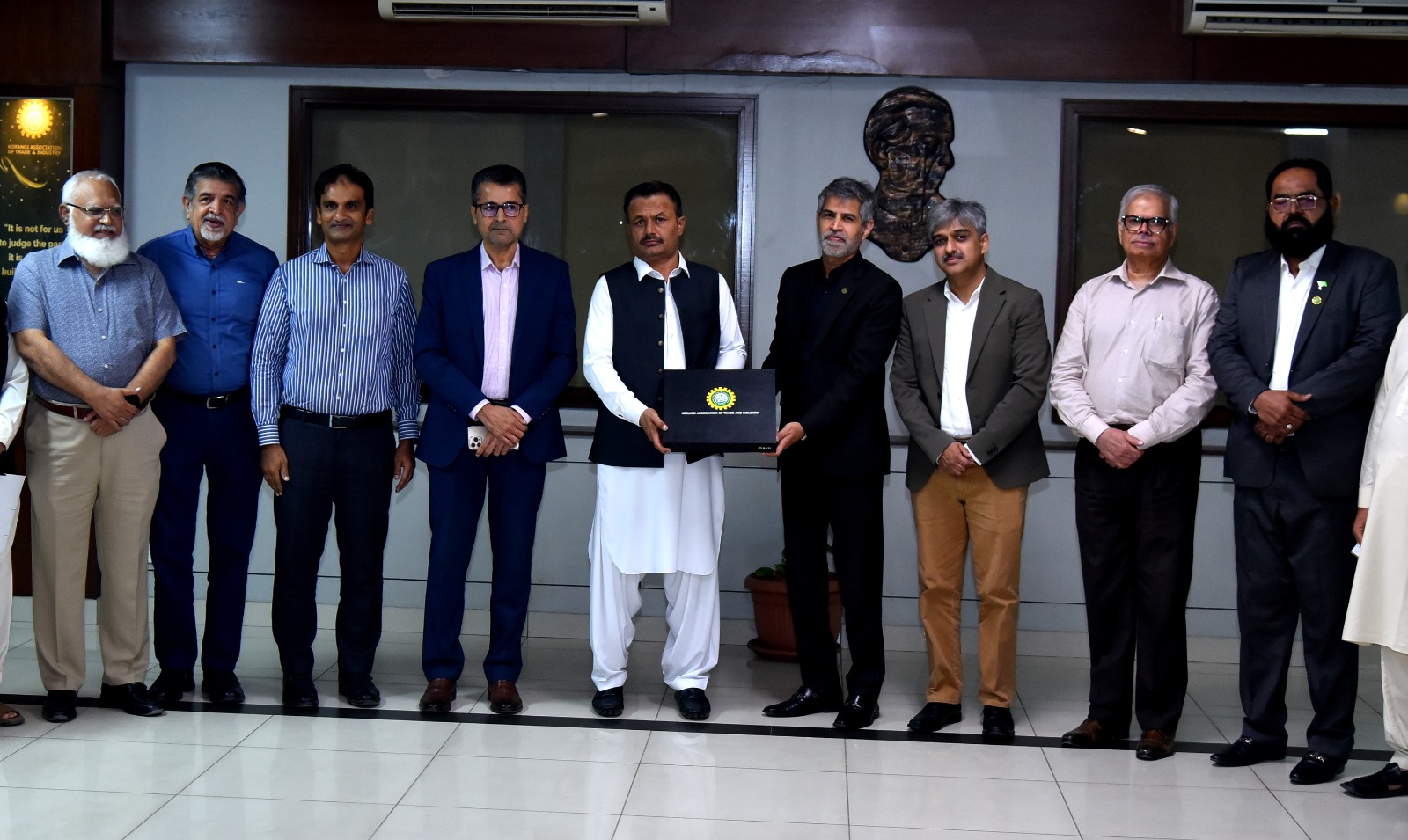
KARACHI: The Sindh government will install ten modern air quality monitoring stations in Karachi to accurately measure pollution levels and enhance environmental oversight. This was announced by Dost Muhammad Rahimoon, Advisor to the Chief Minister Sindh on Environment, Climate Change, and Coastal Development, during his visit to the Korangi Association of Trade and Industry (KATI). He assured the business community that no harassment by Sindh Environmental Protection Agency (SEPA) officials would be tolerated under the pretext of environmental enforcement.
The meeting was attended by KATI President Junaid Naqi, Deputy Patron-in-Chief Zubair Chhaya, Senior Vice President Ejaz Shaikh, Vice President Tariq Hussain, KITE CEO Zahid Saeed, Standing Committee Chairman Saleem-uz-Zaman, former presidents Masood Naqi, Ehteshamuddin, Sheikh Fazal-e-Jalil, Razzaq Paracha, Secretary Environment Zubair Ahmed Channa, DG SEPA Waqar Hussain Phulpoto, and other senior officials and members of the association.
Speaking on the occasion, Advisor Rahimoon said the time for blame games is over and that collective action is now essential. He reiterated that the Sindh government is fully committed to environmental improvement, stating that the authorities are not against industry but will take action against those who violate the law.
KATI President Junaid Naqi expressed concern over Karachi’s deteriorating environmental condition, citing excessive deforestation that has turned the city barren. He said satellite imagery shows a lack of green cover in the city, and this must be addressed urgently. Naqi said Pakistan contributes less than one percent to global emissions, yet it remains among the most climate-vulnerable countries. He welcomed the plastic bag ban imposed by the government but emphasized that the ban would remain ineffective unless practical alternatives are provided to the public. He further offered to launch a free-of-cost 42-kilometre urban forest plantation drive along the Malir River in Korangi, entirely funded by KATI’s industrialists. He urged the government to remove administrative obstacles so the project could proceed without delays.
Zubair Chhaya stated that over 200 industries in Karachi are already compliant with environmental standards, yet government inefficiency continues to hinder progress. He recalled that four combined effluent treatment plants (CETPs) were proposed during the Musharraf era, but none have been approved or implemented. He proposed setting up a SEPA help desk at KATI to ensure faster resolution of industrial concerns.
Saleem-uz-Zaman said polluted water and liquid waste remain major concerns. He cited the Sector 7A treatment plant as a successful example, adding that more such units are urgently needed. He noted that KATI was the first industrial zone to sign environmental improvement agreements and said that everyone must now play their role to protect the environment.
Secretary Environment Zubair Ahmed Channa informed the gathering that SEPA is undergoing full digitalisation, starting with Karachi. Each industry will be assigned a unique identification code to improve traceability and compliance monitoring. He announced the introduction of a “three-point sampling protocol,” under which environmental samples will be tested independently by SEPA, the respective industry, and a mutually agreed third-party lab. He clarified that SEPA’s role is not to harass but to ensure lawful compliance and transparency. He said visible colored waste in city drains is a clear sign of pollution that cannot be ignored. He encouraged industries to submit detailed proposals for carbon reduction and urban forestry projects, assuring them of full government support. He also disclosed that Rs. 28 billion has been allocated for solid waste removal across Sindh, and efforts are underway to reduce carbon emissions from public transport systems.
DG SEPA Waqar Hussain Phulpoto said that personal hearings conducted by SEPA should not be interpreted as harassment. These are meant to give industries a fair opportunity to present their case. He confirmed that enforcement action will only be taken in response to verified and documented complaints. He added that SEPA is in the process of installing modern systems for monitoring waste, air, and water quality.
The event also featured addresses by KITE CEO Zahid Saeed and former KATI presidents Masood Naqi and Ehteshamuddin, who shared proposals to enhance environmental standards through public-private collaboration.
Advertisements