

By Dr. Gholam Mujtaba, MS, MD, Ed.D.
Author’s Introduction.
Dr. Gholam Mujtaba is a Pakistani-American political leader, scholar, and Chairman of the Pakistan Policy Institute USA. For over fifteen years, he has been engaged in Track I. 5 diplomacy between Pakistan and the United States. His efforts span formal and informal channels to restore institutional dialogue during periods of severe bilateral strain.
Most notably, substantive diplomatic discourse between Pakistan and U.S. stakeholders was historically conducted in Islamabad rather than in Washington. In contrast, the institutional groundwork for engagement at the Rayburn House Office Building and the National Press Club (NPC) in Washington, D.C. was laid only recently—last week—exclusively through Dr. Mujtaba’s initiative. Prior to this, neither venue had been meaningfully engaged by Pakistani officialdom for structured parliamentary or policy discourse.
Earlier, in 2011–2012, Dr. Mujtaba convened a major Pakistan–U.S. diplomatic conference amid intense bilateral pressure. In that context, he directly engaged U.S. Senate leadership and, at his request, Senator Daniel K. Inouye, then Chairman of the U.S. Senate Appropriations Committee, withdrew a proposed Pakistan-sanctions provision, averting serious diplomatic and economic consequences.
This analysis is therefore offered from the perspective of institutional memory, firsthand engagement, and demonstrated diplomatic outcomes.
The Core Argument
Diplomacy is not measured by announcements, travel itineraries, or ceremonial access. It is measured by outcomes, message discipline, institutional continuity, and narrative control.
When official outreach in Washington produces public political slogans hostile to Pakistan’s stated position—such as “Free Imran Khan”—the failure is not imposed externally. It is self-generated.
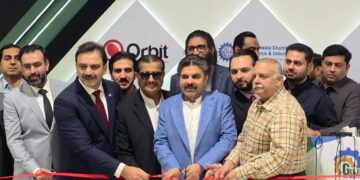
This reality became evident when Pakistani officials arranged meetings in Washington with U.S. lawmakers, only for Representative Joe Wilson and Representative Jack Bergman to publicly issue statements demanding “Free Imran Khan.” Instead of advancing Pakistan’s diplomatic agenda, these encounters internationalized Pakistan’s internal political disputes and projected strategic incoherence.
This was not TAZLEEL (humiliation inflicted by others).?This was TAZHEEK—avoidable diplomatic self-ridicule stemming from inadequate preparation and absent narrative control.
Access Without Narrative Control
Following meetings arranged by Pakistani officials in Washington:
•Rep. Joe Wilson issued the public statement “Free Imran Khan” shortly after engagement with Pakistani representatives [1].
•Rep. Jack Bergman echoed and reaffirmed the same demand in Pakistan-related contexts [2][3].
No joint statement followed.?No diplomatic clarification was issued.?No institutional correction was attempted.
Instead of advancing bilateral priorities—trade, security cooperation, or regional stability—Pakistan’s domestic politics were exported into U.S. political discourse, to Pakistan’s detriment.
This is not diplomacy.?This is TAZHEEK.
Five-Year Washington Scorecard (2021–2025):
High-Level Pakistani Engagement — U.S. Only
(All references below are limited strictly to engagements inside the United States. All foreign venues, including Islamabad, are excluded for analytical clarity.)
1. Chief of Army Staff — Gen. Asim Munir
•Meeting: President Donald J. Trump, White House, Washington, D.C. (2025)
•Outcome: Restoration of top-tier access after prolonged drift
2. Prime Minister — Shehbaz Sharif
•Meeting: President Donald J. Trump, White House, Washington D.C. (September 2025)
•Outcome: First Pakistani civilian White House meeting since 2019
•Result: No trade agreement, economic roadmap, or strategic communiqué?Assessment: Delayed access, limited dividends [5]
3. Foreign Minister — Bilawal Bhutto Zardari
•Meeting: Secretary of State Antony Blinken, Washington, D.C. (2022)
•Outcome: Diplomatic normalization without continuity?Assessment: Symbolism without strategy [6][7]
4. Interior Minister — Mohsin Naqvi
•Meeting: Rep. Joe Wilson, Washington, D.C. (2025)
•Outcome: Immediate hostile political statement?Assessment: Diplomatic backfire — TAZHEEK [1][8]
5. Deputy Prime Minister
•Meetings in Washington: Zero?Assessment: Strategic absence at the senior policy level
6. Chairman, Senate of Pakistan
•Meetings in Washington: Zero?Assessment: Institutional non-participation in legislative diplomacy
Correcting the Record: NPC and Rayburn
It is important to state clearly:
•No substantive diplomatic discourse previously occurred at the National Press Club (NPC) in Washington on Pakistan–U.S. relations.
•No structured parliamentary discourse previously occurred at the Rayburn House Office Building involving Pakistani officialdom.
These venues were not engaged—they were avoided or neglected.
Only last week, through the initiative of Dr. Gholam Mujtaba, was the foundation formally laid for:
•Parliamentary-level discourse at Rayburn, and
•Policy-media engagement at the National Press Club.
This distinction matters because institution-building precedes outcomes. Without foundations, there can be no discourse.
The Lobbying Paradox: Millions Spent, Institutions Ignored
Pakistan’s Washington strategy has relied heavily on registered lobbying firms under FARA:
•Approx. USD 5 million in disclosed lobbying contracts [9][10]
•Approx. USD 600,000 per month across multiple firms (? USD 7.2 million annualized) [11]
•Individual contracts reaching USD 1.5 million per year [12]
Yet despite this spending:
•No sustained congressional discourse was institutionalized
•No media narrative was anchored at the NPC
•No parliamentary mechanism was embedded at Rayburn
Money was spent. Institutions were ignored.
Final Judgment
TAZLEEL is inflicted by adversaries.?TAZHEEK is afflicted by neglect, vanity, and incompetence.
When:
•Meetings generate hostile slogans,
•Senior offices show zero engagement,
•Institutions remain unused, and
•Foundations are laid only by private citizens,
…the failure is systemic.
Until Pakistan replaces checkbook diplomacy with institution-centric statecraft, Washington engagements will continue to produce noise without leverage.
References (Numbered Only)
[1] Rep. Joe Wilson public statement: “Free Imran Khan” (2025)?[2] Rep. Jack Bergman public statement: “Free Imran Khan”?[3] Subsequent reaffirmation of Bergman’s statement?[4] Reporting on COAS Gen. Asim Munir meeting President Donald J. Trump at the White House?[5] Reuters reporting on PM Shehbaz Sharif White House meeting with President Trump?[6] U.S. State Department reporting on Blinken–Bilawal meeting?[7] Independent policy analysis on limited outcomes?[8] Timeline confirmation of Naqvi–Wilson meeting preceding statement?[9] FARA disclosure summaries on Pakistan lobbying (~USD 5m)?[10] NYT-cited international summaries of lobbying contracts?[11] Monthly lobbying expenditure estimates (~USD 600k/month)?[12] Dawn report on USD 1.5m annual lobbying contract
Advertisements