

Majyd Aziz
It was a bit more than three decades ago when Rwanda fell into the abyss of darkness. In April 1994, the unscrupulous Government led by the majority Hutu ethnic group killed an estimated over one million minority Tutsis and moderate Hutus in one of the darkest episodes in world history. Ethnic cleansing, ethnic genocide, and ethnic superiority are no more new global attitudes, and it takes decades or maybe never to end these.
Even if sanity returns, the wounds are deep, from humanity point of view and from the damage caused to institutions, unity, and the country’s reputation. However, the time came when Rwanda commenced the resolve to get out of the deep black hole.
This herein lie the measures initiated by the government led by effective strength, inclusive leadership, and visionary governance. The overarching mission was to formulate citizen-centered policies and to ensure full implementation. The momentum began with restoration of peace, security of people and nation, fair justice, and importantly, reconciliation though an indigenous home grown judicial system. The Rwandans were all on the same page to promote national unity and resilience at all cost and fully committed that such atrocity of genocide would ‘Never Again” be allowed.
Rwanda is in central east part of Africa, a country many may have never heard about. It is landlocked and bordered by Uganda to the North, Tanzania to the East, Burundi to the South, and the Democratic Republic of Congo to the West. The population is over 13 million and the gender ratio is 51.50% women and 48.50% men with a youth bulge of 70%. Rwanda is rich in resources and produces some of the best tea and coffee that are real treats for the discerning consumers. Rwanda’s temperate climate and elevation of 1,000–4,500 meters above sea level are ideal for tea cultivation while a nutrient-rich volcanic soil gives Rwandan tea a unique flavor profile. Rwanda is steadily increasing tea production and today it produces over 40,000 tons. Tea is a major export commodity for Rwanda and 97.3% of Rwanda’s tea exports is in raw form. Black CTC tea is the predominantly type of tea produced in Rwanda, making it suitable for use in blends popular in most black tea markets. Other types like Green tea, White tea, Orthodox tea, and Organic tea are also produced. Since Rwanda does not have a Port,
the tea is exported through Mombasa in Kenya or Dar es-Salam in Tanzania. The annual quantity of coffee produced in Rwanda ranges from 20,000 to 22,000 metric tons. Rwanda has favorable conditions and infrastructure for growing high-quality Arabica coffee. Coffee and tea are important to the
economy, contributing 60% and 30% to Rwanda’s export earnings and supporting over 400,000 farmers plus their families and farm workers.
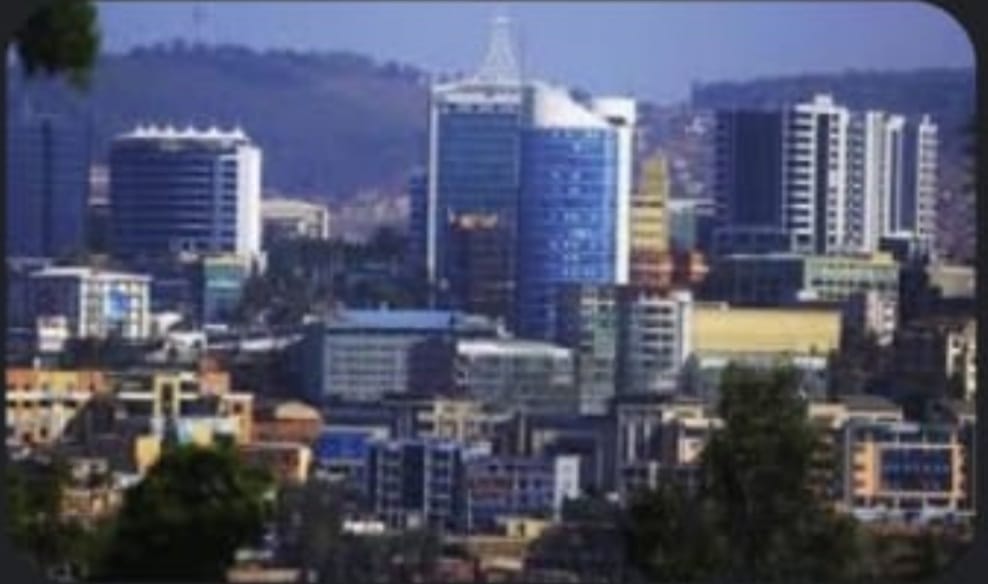
The economic progress of Rwanda in three decades is impressive and there has been a fabulous, continued GDP growth of nearly 8% that Pakistanis are dreaming of since many years. Real GDP increased by 9.7% in the first half of 2024. The economy of Rwanda comprises of 27% agriculture, 21% industry and 44% services. The services sector is the largest and most dynamic sector in Rwanda’s economy, contributing almost half of the country’s gross domestic product. The country’s priorities include innovation, climate change, inclusive growth, and investment in ICT, infrastructure, and tourism. Citizens have universal access to health and education through an insurance scheme and twelve years of basic education for all. Rwanda was the first
country in the world to ban plastic bags, and this was ensured through a well-structured homegrown solution.
Rwanda has been recognized for its extensive 10-year doing business reforms, making it the second-best place to do business in Africa. Tourism is being promoted extensively. Rwandans are among the most hospitable in the world, and the gorgeous landscapes, incredible wildlife, and colorful fabric of history and culture make it a fabulous country to visit. Minerals are another future resource that can create an upward trajectory for the
economy. Geological surveys have indicated that Rwanda possesses huge deposits of tin, tantalum, tungsten, and gold. Rwanda is now home to three state-of-the-art mineral value-addition facilities which include a gold refinery, a tantalum refinery, and a tin smelter.
The Rwandan Parliament has a gender ratio of 64% women and 36% men and the first country in the world to have a majority of women in Parliament, and this participation is based on merit, integrity, and service. Even people with disabilities are encouraged to be part of the decision making process. There is zero tolerance for corruption, and every citizen has to be accountable. Strong anti-corruption laws and institutions, transparent procurement systems and audits, and high-level political will to fight corruption at all levels are firmly established. All these also lead towards national unity. Power and resources are devolved to local governments, and citizens from villages and provinces are actively involved in planning and budgeting processes. Today, there is a global presence of Rwanda in over 200 leading international organizations, and the nation is the fifth largest contributor of personnel to UN peacekeeping missions.
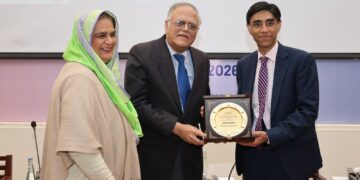
In 2024, Rwanda established its High Commission in Islamabad and appointed a dynamic, vibrant, and farsighted H.E. Harerimana Fatou as the first High Commissioner. During her visits to Karachi Chamber of Commerce and Industry and English Speaking Union of Pakistan, she said with conviction that the opening of a High Commission in Islamabad is a manifestation of the desire to enhance bilateral trade and investment between both countries. She invited businessmen to visit Rwanda and ascertain for themselves the trade and investment potential available in Rwanda. She mentioned that Pakistan has a capability to share this potential with Rwanda and East African Countries. She added that all approvals and facilities are being provided in fast
mode to foreign investors. Moreover, Rwanda is an ideal destination for tourism.
The credit for Rwanda’s transformation goes to the visionary leadership of President Paul Kagame who was a Commander in Chief and stopped the Genocide against the Tutsi in 1994. He has pledged to make Rwanda as the Singapore of Africa within the next decade. He remarked that “We choose to stay together; our unit to be accountable and to think big.” Vision 2050 is the roadmap to elevate the nation to upper-middle income status by 2035 and high-income status by 2050 through achieving sustainable economic growth. President Kagame recently stated, “We cannot remain the same Rwandans, the same Africans, we were 100 or even 50 years ago. We must evolve.” One nation, one voice, one vision have got Rwanda out of abyss of darkness and into