

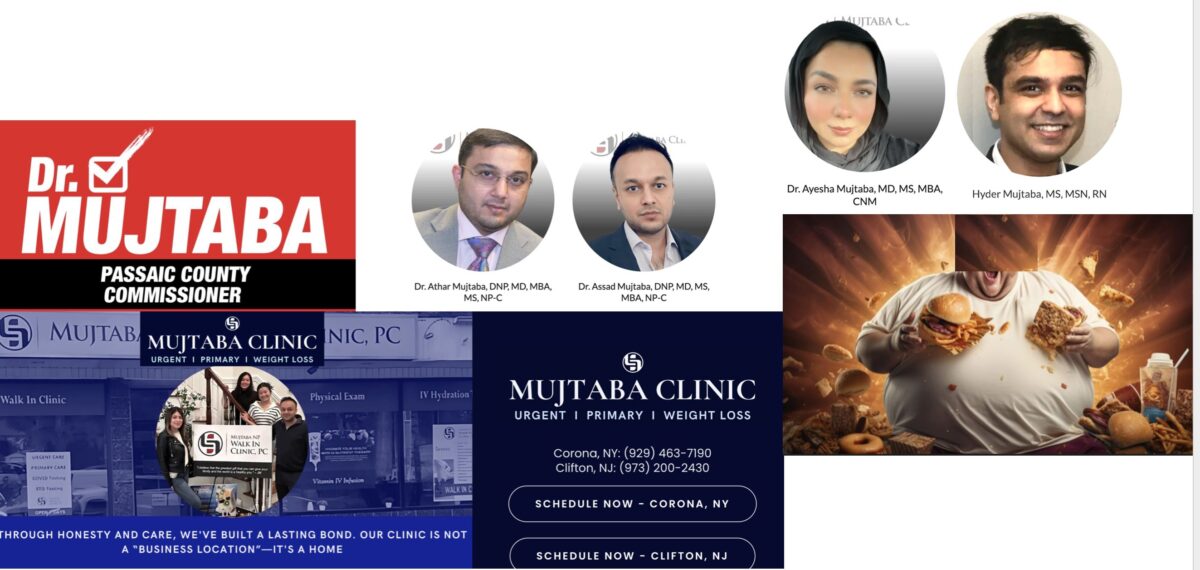
Athar Mujtaba, MBA, M.S., MD, DNP, NP-C (Endocrinology, Duke University, Family Practice)
Assad Mujtaba, MBA, MS, MD, DNP, NP-C (Family Practice & ER)
Ayesha Mujtaba, MBA, MS, MD (Women’s Health & Family Practice)
Hyder Mujtaba, MS, MS, NP-C candidate (Infectious Diseases)
(Mujtaba Clinics, Corona, New York, Clifton, and Bergen County, New Jersey)
Introduction
The global obesity epidemic continues to present significant health challenges, leading to a surge in research and development of effective weight loss treatments. Recent advances have brought new pharmacological options, improved surgical techniques, and innovative approaches that promise to enhance weight management outcomes. This article reviews some of the most notable developments in weight loss treatment regimens as of 2023.
Pharmacological Advances
One of the most significant breakthroughs in weight loss treatment is the advent of new pharmacological agents that target obesity at the hormonal level. Medications like liraglutide (marketed as Wegovy) and tripeptide have shown remarkable efficacy in promoting weight loss. Semaglutide, initially developed for diabetes management, has been repurposed for obesity treatment and has demonstrated an average weight loss of 15-20% in clinical trials. Tirzepatide, another promising drug, has shown even more significant potential, with patients losing an average of 21% of their body weight in recent studies. These drugs mimic gut hormones that regulate appetite, offering a more physiological approach to weight loss than traditional methods.
Surgical Innovations
Bariatric surgery remains one of the most effective interventions for severe obesity. Recent advancements have focused on refining these procedures to increase safety and efficacy. For instance, minimally invasive techniques such as laparoscopic sleeve gastrectomy have become the standard, reducing recovery time and complications. Additionally, newer endoscopic procedures, such as the AspireAssist device, which involves reversible gastric emptying, offer less invasive alternatives with promising results. These innovations benefit patients who may not qualify for or prefer to avoid traditional surgery.
Behavioral and Lifestyle Interventions
While pharmacological and surgical options are critical, behavioral interventions remain a cornerstone of weight management. The integration of digital health tools, such as mobile apps and wearable devices, has enhanced the ability of patients and healthcare providers to monitor and manage weight loss progress. These tools offer personalized feedback, track dietary intake and physical activity, and provide real-time support, which can significantly improve adherence to weight loss programs. Additionally, structured programs that include nutritional counseling, meal replacements, and physical activity have shown increased efficacy when combined with pharmacotherapy.
Challenges and Future Directions
Despite these advances, challenges remain in ensuring long-term weight loss maintenance. The high cost of new medications and the need for lifelong treatment pose significant barriers to widespread adoption. Additionally, the social and psychological aspects of obesity, such as stigma and mental health, require more comprehensive approaches that go beyond physical treatment.
Future research will likely focus on developing more cost-effective medications, refining surgical techniques to reduce invasiveness further, and integrating multidisciplinary approaches that address the complex nature of obesity. As understanding the biological mechanisms underlying obesity improves, more targeted therapies are expected to emerge, offering hope for more effective and sustainable weight loss solutions.
Conclusion
The recent advances in weight loss treatments represent a significant leap forward in combating the obesity epidemic. With the development of highly effective medications, innovative surgical techniques, and enhanced behavioral interventions, a growing arsenal of tools is available to help individuals achieve and maintain healthy body weight. However, the ongoing challenge will be to make these treatments accessible and sustainable for the broader population.
References
1 Beyond Ozempic: brand-new obesity drugs will be cheaper and more effective. Nature (2023).
2 The first medical guideline recommends new prescription weight loss medication and ranks the most effective drugs. American Gastroenterological Association (2023).
3 Weight management treatments increase weight loss in patients with obesity. Medical Xpress (2024).


ADVERTISEMENT